|
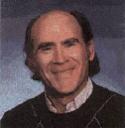
Ken Byers holds a Ph.D. in psychology with an
emphasis in Men's Studies, one of the few ever
awarded in the U.S. Ken is a full time Certified
Professional Life Coach specializing in working
with men in any form of transition and an
instructor of design at San Francisco State
University.
His books, "Man
In Transition" and "Who
Was That Masked Man Anyway" are widely
acknowledged as primers for men seeking deeper
knowledge of creating awareness and understanding
of the masculine way. More information on Ken, his
work and/or subscription information to the weekly
"Spirit Coach" newsletter which deals with elements
of the human spirit in short commentary, check the
box at www.etropolis.com/coachken/
 or www.etropolis.com/coachken/what.htm
or www.etropolis.com/coachken/speak.htm
or E-Mail
You are welcome to share any of Ken's columns with
anyone without fee from or to him but please credit
to the author. Ken can be reached at:
415.239.6929.
or www.etropolis.com/coachken/what.htm
or www.etropolis.com/coachken/speak.htm
or E-Mail
You are welcome to share any of Ken's columns with
anyone without fee from or to him but please credit
to the author. Ken can be reached at:
415.239.6929.
"Did I just see that
tombstone move?"
Excellence vs.
Perfection
50 Reasons We're Glad to Be
Men
50 More Reasons We're Glad to
be Men
The Genealogy of
Ancestors
The
Grandfather
Herstory/History
The Holidays
The Hot Dog
Man
Men &
Friendship
Men & Friendship:
Mush, where are you?
Men & Friendship
3
Men and Money
The Men's
Group
The Men's Movement:
A Short History of
The Music
Man
My Fathers
Tree
Our Gift to The
World
Passion
The Peeing
Tree
Pilots
The Prisoner
Randy's
Suicide
Rites of
passage
A Short History of The
Men's Movement
Story
Telling
Suicide
Tribute to Dad
Wear Sunscreen
Other Transition Issues,
Books
A Short History of The
Men's Movement
What ever happened to the men's movement? What the
hell are men's issues anyway?
This may surprise many readers, but during the
mid to late 1980's and for most of the 1990's there
was a movement across America, Canada and much of
Europe known as the Men's Movement. I remember it
because I was very active in it. It was largely a
response (rather than a reaction) to the Women's
movement of the same time period and was largely
supportive of it but far less vocal. Unlike the
women's movement which had a fierce political
agenda of equality and recognition, the men's
movement was unled and issue fractured. It had many
branches that spoke to many different issues such
as custodial rights, parenting, addiction, abuse,
friendship, veterans affairs, issues of male
disability, spirituality, parenting, age
discrimination, violence, prison reform, rites of
passage, gay issues, step-parenting, health issues,
career issues, and many more. Far and away the most
popular format for addressing these issues came
from the academic arena and became known as the
"Mythopoetic" movement. It was led to some large
degree by poet Robert Bly and based in the poetic
and mythological interpretation of gender reality
and guided by Jungian psychological theory and
practice. It found its greatest support in the
academic world, that was already having its own
problems relating to society on an everyday basis.
It's lack of longevity is probably laid to the fact
that it is hard to explain to a man who has just
lost his job, his wife, his passion for life, that
the solution to his problems lie in examining the
literary search for the holy grail.
All this activity followed a decade of great
social upheaval and an opening of issues for
discussion that had heretofore been labeled taboo.
It was an opportunity for men to grow and expand
under the same banner of open debate that reflected
the interests of feminist rights, desegregation and
religious tolerance. But somewhere along the way,
much like the feminist movement, it got bogged down
in social apathy and special interests and lost its
direction. It was also a victim of the negative
media which found it more profitable to base sitcom
jokes and story lines on self- denigration rather
than men's desires to understand themselves and
their world. It is very difficult to address
serious inner issues while the world is laughing at
you regardless of the fact that most of the
laughter was previously recorded and applied to the
film track. The image of bafoon has had its lasting
effect on the national male psyche.
The next major effort was, and still is, in the
area of child custody rights. This is a very
sensitive problem with thousands of men who have,
like may women, been subjected to a court system
that suffers an intellectually incestuous and
critical level of cranial-rectosis which proclaims
that under no circumstances does a man have the
capacity to be an adequate single parent. A more
argumentative position is equally visible around
the idea that being forced to give up 60 to 75
percent of what might be only a meager income to
spousal & child support serves some kind of
social purpose and is supportive in some obtuse way
of family values and fostering responsible action.
These are not easy questions and their refusal to
support easy answers attests to the attention that
needs to be applied to them for solution.
There was, however, one major positive trend
that developed out of this era. That was the
creation of a small but effective network of men's
support groups. The nature of women makes it
relatively easy for them to gather in like kinds
and discuss/process the issues that concern them.
They have, after all, been doing it since the dawn
of time as they tended the fires and children. It
is quite another story for men. Our early
forefathers spent their lives hunting. Knowing that
animals have sensitive hearing, they spoke only
when necessary. It came quite naturally to them and
became our legacy. We find it far easier to stuff,
fret and just ignore the emotional concerns that we
don't understand until we are faced with divorce
papers, unemployment or multitudes of crises of
another nature. Men's groups offer the opportunity
to look at problems in a perspective that allows
emotional responses and support but most
importantly it gives us access to other men who can
listen to us empathetically. These groups, although
not as popular as they were ten years ago, are now
the only generally available avenue for men to vent
and gain growth in community. Therapy is generally
not an available venue because of its cost and the
fact that these problems are for the most part
cultural not behavioral. Personal life coaching has
rapidly become another option, particularly because
it is openly embraced by the corporate world, but
even there the field is deficient in coaches who
can truly appreciate the needs that exist.
In a true reflection of the American way, the
lack of a unifying political agenda has doomed the
men's movement as we understand it. The only way to
cure the ills and change the relationships that rob
us all of our happiness potential is to create our
own individual movement; to begin to value personal
growth and awareness of our physical and emotional
world as a worthwhile priority; to join in
community with other like minded men to support
each other as valued, honorable, strong, willful
and successful, humans being, rather than just men
doing.
My Fathers Tree
I have no idea how I happened to find him. I'd
never been there before, I just knew I would. I
didn't even know what I looking for. Wherever he
was though, I was sure he hadn't moved for
forty-eight years. I didn't even know the name of
the cemetery. Well, actually, I thought I knew at
least that much.
He had been buried in the Detroit, Michigan
Masonic cemetery in 1949. Problem was, as I found
out, the Masonic cemetery was sold to a private
concern many years ago. Somehow, it seems a
ludicrous and heretic act to sell a cemetery to
anyone, but then it is after all, America.
I had been called from my home in San Francisco
to attend an all day meeting on Saturday in Detroit
and was ticketed to return home late Sunday
afternoon. I decided this was something I had to
do. It never occurred to me that there would be no
personnel working there on Sunday to help someone
find a burial site which, of course, turned out to
be the case. Fortunately, after a half dozen phone
calls I was able to find a man at a funeral home
that remembered the Masonic facility and knew to
whom it had been sold and where I could find it.
I drove around the perfectly manicured drive
reading headstones as I went. I had arrived around
10:00 am and was the only one there which, for some
unknown reason, I was very grateful for. The
Detroit Red Wings had just won the Stanley Cup the
night before and the town went mad, and I assumed
that one should not expect visitations to the
dearly departed in times of such momentous cultural
importance.
I was just ten years old when he died and my
family moved away from Detroit less than a year
later. This was the first occasion I had found to
be in Detroit in all those years. I drove my rental
Plymouth around for almost twenty minutes. I got
out once to get a feel for the place and noted that
the earliest stones in that particular area were
dated from 1965 to present. I figured I needed to
find an older area and returned to the
Plymouth.
I hadn't asked for a Plymouth at the rental
agency but as I got in I recalled that my father
had loved Plymouths. During my young life, until he
died, we had owned two of these things. A black
1941 and a gray 1946. I recalled that the 1946 was
purchased new for $695. I really have no idea why I
remembered that.
Well, I drove around for another ten minutes or
so and suddenly just stopped along the edge of the
gravel road. The monument stones were all shiny and
well maintained and no part of the park looked
older than any other. I just had a feeling. I
walked to the passenger side of the Plymouth, up a
slight incline about ten yards and stopped. There
he was. A simple, flat brass plaque in the ground.
It was covered with ingrown grass except for his
first and middle names. I sat down and began to
pull the tightly woven grass from the surface and
exposed the full twelve inch by eighteen inch
plate. Forty-eight years of patina had given a
beautiful warmth to the simple finality of the
metal marker. I noticed I was glad that it was not
a large marble stone that might still look new and
fresh.
I spoke to him for a while, as most people speak
to the memory of a lost loved one. I suddenly
realized that this man, this enigma to a ten
year-old boy, had been gone a year less than he had
lived. I cried as much for his loss as I did for
the waste. I do remember a few things about him. He
was a good man. He loved his wife, his two
children, his job, his country, his friends, his
fishing. His passion was for life itself not the
things in it. The summer he died I was spending the
time at his sisters farm in Indiana. I did not get
to go to his funeral to say goodby. By the time I
returned home, mother, doing what she thought best,
had removed all memory of him. I never saw her cry
although she loved him more than life itself, and
although a beautiful woman and only thirty-eight
herself at the time, she never even considered
dating another man for the rest of her life. It
took me half a lifetime to learn to celebrate the
grief of his loss but eventually I did. Over those
years I had gotten to know him pretty well. Some of
that knowing was experience, some stories from
others, a lot was fantasy but it didn't really
matter. I had my story and that was that.
I miss my father most, of course, around Fathers
Day. At some level I always miss my father, yet
because of this visit, it will now be different
than it has ever been. There is a tree next to his
grave that could not have been more than a seedling
when they first met. The tree has given him shade
which I am sure he would have enjoyed as no one
else could. Somehow, I am also sure, he has
nourished that tree in return. I wished him Happy
Fathers Day and talked to him about his
grandchildren and all kinds of things that I
thought he might like to know.
And I showed him the new Plymouth, but I didn't
tell him it cost $20,000 now.
So, maybe in another time/space/life I'll see
him again, right there, where somehow I knew he
would be. A little brass plaque in the ground,
between the marble monoliths of Bowers,
Chappin/Welsh and Cook, McIntosh, Anderson and
Guy...guarding his tree.
Tribute to Dad
A I received the following note from Ms. Lynn
Harden, Development Officer at The Union Institute
in Cincinnati , Ohio. It so moved me that I asked
her permission to share it with you.
She responded: "Dear Ken, I/we are grateful that
you "received" Dad into your heart. Of course you
may share his tribute with others. I believe that
there are many fathers out there who need to know
how deeply they imprint the lives of their children
and continue to do so long after they are gone.
They are so vital to our selves. Yes, this is a
rather intimate story, yet it is a truth that I am
so grateful to hold. If it helps any one person
connect, then what an affirmation, and what an
honor to my dad. He'd smile to know that he is
still teaching."
It is my honor to present it to you.
MARCH 27, 1999 - South Bend, IN
It is a great comfort to be back in this church
today. This is where Dad wanted to be too. And we
cannot thank you enough for all you have done to
keep him connected to his community and to this
church. He received every letter from you, each
telephone call with genuine joy and gratitude.
Over the last few days, Gayle and I have
struggled to write a tribute that could come close
to sharing the incredible legacy of Clinton Harden.
We know he has touched the lives of people in this
church and this community in important ways--ways
that might be impressive to some. Dad had so many
talents that he shared freely. You can read about
those things in his obituary. But our father was
just Dad to us and that is who we want you to know
today.
He had a gift for being many things; a skilled
molder of steel, a polished politician, a joyful
singer in the church choir, an orator, a ballroom
dancer, a gardener, a golfer, and a fisherman. But
he was always himself, and he was always our Dad.
And his magnificent gift to us was to teach Gayle
and me that being our true selves is enough for
anyone, anything or any place.
Dad had a way of teaching us with little
fanfare. He was so smooth at making his point that
we never really recognized the lessons until long
after they were given. But we continue to remember
them when we need them the most.
One of our most vivid lesson and memory of him
is about something that occurred when we were
little girls. A tornado blew up one spring
afternoon. The day suddenly turned into night. The
contrast of the dark sky against the green trees
and grass created an eerie atmosphere. As the wind
started to howl, we became afraid. We ran about
looking for a place to hide in the small,
wood-frame house with no basement, which offered
little protection from the storm.
But Dad walked over to the door, opened it, and
called us over saying, "Come. Look at this! This is
Mother Nature. This is God at work."
We stood there with him, hand in hand that day,
calmly watching the fury rage outside as the
tornado moved across the sky a mere two blocks
away.
You see, when we were very young, Dad taught us
that sometimes we have to face a storm, not run
from it. By doing so, we can better understand its
nature and ride it out. And that sometimes, we have
to humbly accept that which we cannot change, but
that we can do so with dignity, not hiding in the
dark.
Today, we marvel at how this man had the wisdom
at such a young age to open the door to that storm.
How did he feel as a parent, as a man knowing that
he could not better protect his girls? In a broader
sense, how did he so gracefully overcome the
bigotry that denied him an adequate job, housing
and opportunity? What tornadoes did he face
everyday that we never saw, never held his hand
through, never fully understood? Yet, he prepared
us for so much with such gentle understanding,
unconditional love, boundless pride in our efforts
and accomplishments, lots of hugs and laughter, and
often saying, " I love you no matter what 'cause
you're mine, Baby."
Dad had no fear of that tornado long ago, only
total respect and awe of the All Mighty at work.
And so it was last Sunday as he watched God
preparing a room for him out of the storm.
He called us to his bedside and announced it was
time for him "go home". He held our hands and the
three of us, in the midst of his storm, laughed,
prayed, sang his favorite songs, and told one
another how much we loved each other.
He told his twin brother Clifton and us that "it
would be awhile before he would see us again." He
thanked Gayle and me for taking such good care of
him, and for making him proud to be our father.
Then Dad settled back and waited with the same
respect and awe he showed during that long-ago
tornado. He left us early the next morning to meet
his Maker, his face filled with sunlight. Again, he
showed us how to ride it out and how to accept the
power of Life.
You see, Dad was the first man we ever loved. He
taught us to tie our shoes, ride a bike, hook a
fishing line, start a lawn mower, paint, change a
tire and drive a nail. We learned to ballroom dance
by standing on his feet. It was Dad who showed us
how wonderful being a wife could be as we witnessed
the delight on Mom's face every time he came home
from work, and the laughter the two of them so
often shared. We used to peek at them dancing in
the living room when they thought we were
asleep.
It was Dad who poured our first drink and Dad
who showed us that liquor was nothing to be
impressed by…but used responsibly, was a
wonderful way to celebrate a special occasion.
He taught us that dreams were worth going after.
And he loved us enough to let us make our own
decisions-even if they were wrong ones for us. He
only insisted that we learn from them.
Getting an education, however, was not an
option. It was a mandate. For Dad, a college degree
represented far more than a good job. It was a
symbol that "his girls" would always be independent
and could walk away from a husband, boyfriend, or
employer who treated us with disrespect.
He used to say, "I don't ever want you to worry
about how to make it on your own." He knew that an
education would increase our options for meeting
life's storms. But he was wise enough to make sure
that we could mow lawns, dig gardens, or fix
plumbing for a living when times were lean.
Dad didn't have much patience for tears. He
believed tears only got in the way of coming up
with a good plan. He was a doer, yet a tender
consoler after the work was done. He would say,
"Cry later, you have a job to do now." …and so
we will…
…Though we come before you with heavy
hearts today, our hearts are filled with joy and
pride for the life of your brother, your friend?
and our father, Clinton Harden. A few months ago we
asked him to write his final wishes so we would
know exactly what he wanted done upon his death.
His first wish was to come home and to be buried
next to his wife.
He also wanted you to know how grateful he was
to Mom for teaching him to smell the flowers. And
he wanted us to gather and make a toast to his
memory with his favorite drink for special times?
Jack Daniel's, and that is exactly what we will do.
And we will continue to toast him every time a good
storm blows up, at the sight of a new garden, or a
freshly cut golf course.
We will toast him for the rest of our lives for
showing us how to live with grace and how to die
truly at peace. He leaves us with a fearless
capacity to embrace the sun and say, "This is a
good day to die." We will be forever grateful that
Clinton Harden was our Dad.
Thanks, Dad.
Your Girls.
The Holidays
San Francisco has only one "real" shopping mall.
There is a second mall down town, but it's a
vertical mall built into the first 3 or 4 floors of
Nordstrom's department store around a central core.
Not actually a "mall" mall as we think of them
spread all over America every few feet. It doesn't
even have a 40 screen theater. The real mall
doesn't have a theater either, but there is one in
the rear just across the parking lot. It only has
two screens and is in danger of being swallowed up
by one of several groups of developers foaming at
the mouth to build a new mall there. San
Francisco's anti-mall majority has been giving them
a very hard time, even though everyone knows that
more is better in America and more stores naturally
means America, and in particular San Francisco,
will be a better place to live.
Well anyway, we went to the movies last night in
the not over crowed but nonetheless comfortable
soon to be torn down two screener. We got there
early for the 7:45 show and had some extra time so
we decided to walk across the parking lot and
window shop in Macy's. It was Friday night, two
months after 911 and two weeks before Thanksgiving.
As we entered the door we were hit by a most
amazing display of Christmas dolls and decorations
...everywhere. The store was like an oasis of light
and reflective materials that jumped all over one's
senses. Santa was everywhere, colorful bow's and
striped candy canes and all the "stuff" we
associate with Christmas, except of course,
religion. We wandered through the home appliance
department. Did you know that there are 407
different kinds of coffee makers? And the selection
of toaster, pasta machines, pepper grinders,
decorative fountains and popcorn makers is
limitless. There are 617 different kinds of luggage
and there just wasn't enough time to count the
different kinds of pot's and pans and kitchen
helpers.
Then, when I noticed a clerk nearly asleep at
his cash register, we suddenly realized that we
were the only people within sight. 27 billion
dollars worth of glorious inventory, just for us!
What a ego trip! It was at that moment that it hit
me. In the light of the events of the past two
months I have to wonder if America hasn't changed
in ways not yet really visible. One has to wonder
why do we need all this stuff? San Francisco only
has two malls but every other town with a
population of over 50,000 has several plus a
Walmart or two, several Targets, Kmart's Home
Depot's and Costco's... we have one of each but no
Walmart. (This is not to say that we don't have
multiple choices just beyond the city limits,
however.) The point is, perhaps we have been given
the opportunity to see our American life from
another perspective, that of the enemy. They have
shown us the power of another point of view.
In coaching, viewing a problem from a different
perspective is a very powerful tool. I left Macy's
last night with what I think is the formation of a
new perspective. I have to wonder why we "need" the
unlimited options that are forced upon us at every
turn. Does the fact that our constitution enables
us have the choice of 53 different tea pots in 100
feet of floor space make it necessary to have them?
How many Macy's stores do you think there are? 500?
1,000? I travel a lot and everywhere I go I see all
the same stores. America has one retail face and it
never changes. If you multiply all these stores by
the numbers of things and the value they represent
in dollars I doubt there are enough zero's to do it
justice.
Then, we see the Afghan refugee's and all the
other poor people in the world who would give their
lives for a loaf of bread. The distance between the
have's and the have not's is ever increasing.
Perhaps one of the benefits of the times we live in
is that we are being given an opportunity to change
our perspective on who and what America is and
should be.
It is true, of course, that we are in a time of
fanaticism and fanatics of any kind are deeply
worrisome. But is there such a thing as consumer
fanaticism? And is it possible that it is just as
cancerous and destructive as religious or political
fanaticism? And is America guilty of that? And is
it any worse or better than what we see going on in
the world around us?
This Christmas season President Bush and the
retail world which so governs our daily life wants
us to shop early and buy everything we can. Go
forth and spend...but consider what another
perspective might offer you.
The Men's Group
In my occasions to speak before groups about men's
issues, as well as in my coaching practice, I am
often asked "What are men's issues anyway?" I would
like to address that question with a story.
It was a small Arizona town which, because of
its particular scenic beauty, drew mainly women and
fewer men from all parts of America. Many came to
pursue their inner quest for spiritual peace,
understanding and perhaps gain some glimpse of
wisdom. I had lived there about half a year and
experienced some of each, except the wisdom which
seemed somehow devilishly elusive. The decision to
form a men's group came one summer day at the local
watering hole where a few of us had stopped for a
couple of beers one hot, sultry late afternoon.
The four men I was with, all of us in our
mid-forties, were climbing buddies, finding
masculine pleasures in foraging paths to the tops
of the mountains and mesas that erupted arrogantly
and seductively from the valley floor and laughed
at us tauntingly from 800 or 1,000 feet above. We
had been climbing all day and were exhilarated but
exhausted in that wonderful musky way that
confirmed our manhood to all who would care to
notice, and many who didn't.
Someone had asked why we risked our lives just
to get to the top of something bigger than
ourselves. It was a thoughtful question which led
to many others, equally as troublesome. Troublesome
because we had no answers and, as any woman knows,
a man without an answer is indeed a wretched
encounter. It all started innocently enough when I
suggested we all go back to my place and talk about
the climbing experience.
The five of us settled down in my living room,
and as we talked the conversation began to shift
from good times and bold experiences to the fears
we each experienced as we moved up the mountain
that day. Within a short time, we had gotten into
the deeper subject of fear itself and how difficult
it was to allow ourselves to accept the reality of
feeling afraid. As the talk extended through dinner
and into the night we began to discover that each
had experienced fears that he thought only he had
felt. It came as a distinct surprise to find that
the other guys felt the same things. Soon we
started looking at other things we feared. We
talked long into the early morning hours and
finally broke about 2:00 a.m., exhausted but filled
with delight at our new found experience. It was
the first time that most of us had ever taken the
time to talk to another man about anything other
than work or sports, and we all loved it.
We ended by agreeing to continue the talking the
following week at my place. It was the first
meeting of a men's group that was to continue for
just over a year until two of us moved away at
about the same time. We met without failure every
Wednesday night for two and a half hours. We added
a few other men and discussed every conceivable
subject that had anything to do with men. It had no
real structure and we tried many different kinds of
things. We even tried a couple of guest speakers,
who we couldn't wait to get rid of so that we could
talk. Two of us were in the psychology field, two
were artists, one business owner, one gay waiter,
and a doctor. We laughed, we cried, we told the
truth to each other. For each of us it was the very
first time we had ever been able to confide and
trust in another man.
We talked about our fathers a lot. About how we
didn't have any real idea who they were. About how
they seemed to have no connection to anyone outside
themselves and about how we longed to be hugged and
accepted and loved by them. We worked through many
issues around women. We worked at trying to figure
out what women wanted from us, and what we wanted
from them. Why we needed them as wives, mothers,
friends and teachers and gave so little in return.
About how we were frightened of, but somehow
connected to, those men who loved other men. We got
to explore our addictions and our myths about our
own masculinity in ways that gave us pride and
compassion toward ourselves and our gender.
We explored our visions or lack of them, the
need to cry but the immense resistance to it. We
helped each other walk through the pain and loss of
a relationship, the death of a parent, the loss of
a job, the birth of a child, the failure of a
business, the unfolding of a new relationship and
the agony of a divorce. We asked questions and
dealt out discourse on our spiritual connection to
God/universe and to each other, the meaning of life
and why we needed nuclear war, recycling and
Buicks. And yes, we even talked about sports...but
not for long and not very often. We talked a lot
about violence against men, women and children,
about the fact that 95% of all prisoners are men,
and that most of the women we knew were angry as
hell at men and we hadn't a clue as to why. We
spent a lot of time together, this group of men,
both talking and climbing mountains of many kinds.
And we loved each other a lot.
That group has drifted into many corners of the
land now, and each of us has started other groups
and seen many groups grow and develop as ours did .
In my own case, my next group lasted for six years
until, once again, I moved away. When I'm
asked now by someone about what men's issues are,
few have any idea why I laugh and why a tear comes
to my eye. But you're learning.
A short set of guidelines for setting up a Men's
group is available free of charge at: www.etropolis.com/coachken/guidelines.htm
More on
Friendship: Mush, where are you?
Each gender of course, has its idiosyncrasies at
various ages. Many people believe that teenagers of
any age or gender cease, for the most part, to be
human for the greater part of that stage of life.
They seem to take on some unrecognizable form that
only the likes of Steven Spielberg are able to deal
with. Male children between the ages of ten and
thirteen are, however, distinctly unique in the way
in which they view the world. Such was the case
with me and Mush.
Martin, or Mush as he was painfully but
universally known, was my friend. The moniker came
as an aberration of his Hebrew name "Moisha" and
the fact that he carried substantially more weight
than was appropriate for his frame...actually, he
was fat. We contrasted dramatically. I was probably
ten inches taller and weighed half as much; he was
quite religious and I couldn't spell the word; he
was very athletic and I always grabbed the fat end
of the bat. But we were friends anyway. It was at
eleven that I got my first pair of glasses, and
when I first met Mush. Today, we'd be a classic,
nerd twosome in the tradition of Laurel and Hardy
and Abbot and Costello, and people would want to
invest huge sums of money in us, but then we were
just a couple of lonely kids. But we did great
things for our country.
The Korean War was in the news regularly, so
being slightly underage, we decided to do our part
and join the Civil Air Patrol. Joining was a bit of
a drag because we wanted guns and ammo and
walkie-talkies, but all we got was a little card
for our wallets. But never mind. We went down to
the local Army-Navy surplus store and bedecked
ourselves in white M.P. belts and canteens, and
those little white, round WWII Navy sailor caps
upon whose vertical sides we laboriously hand
lettered "CIVIL AIR PATROL". A significant part of
me wants to go hide even now as I realize we
actually went to school with those get-ups on. We
thought everyone would be insanely jealous, and
girls would just love us. No wonder we were always
getting beat up.
The amazing thing was, we couldn't figure it out
then. Mush and I were inseparable for two years. We
did our homework together. We sipped cherry cokes
at the fountain in the local drug store, arguing
about what next year's new cars would look like. We
looked at dirty magazines whenever we could find
them. We discovered our sexuality together. We
sought the wondrous secrets hidden beneath girls'
sweaters together and spent endless hours pondering
them.
One of the reasons I became friends with Mush in
the first place was that they had one of the few TV
sets in the neighborhood. In the early days of TV,
wrestling was a big attraction...guess it still is
We watched wrestling on TV with his mother, who was
a world authority on the subject and never missed a
match. She even took us downtown to watch it live
at the Knights of Columbus Hall from time to time.
She was also very overweight and the first woman I
had ever known with a mustache. Mush's Mom was also
one of those delightfully entertaining people who
could vicariously experience the pain of the
wrestlers. Every move, every slam, every twist was
her own. She vocalized it in perfect
synchronization so as to cause windows to shake and
shutters to slam shut and, no doubt, neighbors to
move.
I don't remember much about Mush's Dad. I think
he prayed a lot and the only time I ever saw him
was watching the wrestling.
Anyway, after the eighth grade, Mush went to
Hebrew High to become a Rabbi, and I went on to
Central High to become confused. I don't know how
successful Mush was, but I sure did create my goal.
I never saw Mush again. Some time after high school
started, he moved and I moved and we lost track. In
those days people didn't move like we do today.
Even if someone moved a few blocks away or across
town, it was like moving to another country, and we
separated ways.
By the time my own boys hit seven or eight, they
delighted in hearing stories about my youth. I
guess that's pretty normal. In many ways, dads are
very much anomalies to their kids, and it helps a
boy develop his sense of relationship to Dad and to
himself to hear that Dad was once the same as he
is. I always tried to tell them stories that
happened to me at whatever age they were at the
time. That process, in fact, had a lot to do with
my developing an appreciation for the art of story
telling. The day came eventually when Mush came
into my mind during one of these story sessions.
The name "Mush" so impressed my boys that they
never let me forget him again. Every so often as
they grew older, if I had a problem, one or other
of them would say something like, "Well, what would
Mush do?", or " Why don't you call Mush?" and then
roll on the floor in belly-busting laughter. They
seemed to like the idea of Mush, and I guess each
created his own image of him.
All of this, eventually, brings me to a point. I
recently read a book about the life of one of
America's great millionaires. A man who built
incredible monuments in great cities, and was on a
first-name basis with all the political officials,
mayors, governors, presidents. He built a great
hotel in New York City and lived on five floors of
it, they say. But he is also described as a
friendless man. One who would come home in the wee
hours of the morning and sit alone, his wife in a
separate bedroom, with only his money to count. I
am not against wealth. As others have said, I have
been poor and I have been rich and rich is
definitely better. But I can't help think, as
strange a friendship as Mush and I had, it was
something to be treasured. I feel deep concern for
a man who has dedicated his life to money, but has
not a single fat little kid for a friend. As men, I
think we hunger at deep levels for intimacy with
other men, for a male friend to cry with, to
exorcize our fears and troubles to another man who
will not judge us, but will simply listen and tell
us it's O.K.
It's been nearly half a century years since I
last saw Mush, but our friendship lives on in the
depths of my memory. That memory is behind my
appreciation of all those men I can today, call my
friends and those who have been in my life over the
years.
If there is a meaning of any kind to life,
perhaps it is in the friendships we make along the
way. Mush, if you're out there anywhere, I hope you
remember too.
Men and Friendship
"Thy friend, which is as thyown soul."
Deuteronomy
Ten years ago, in my book ‘Who Was That
Masked man Anyway?", I wrote a fun little story
about a friend I had as a boy going through
puberty. His name was Mush. Well, actually his name
was Martin but given his physical stature at the
time, Mush was far more descriptive. Mush was a
good friend and we had many wonderful experiences
together. But, as with most men who had easy
friendships with boys, as boys, that friendship
paled as we grew up and eventually just
disappeared. That story asked a very basic question
about men; why do we so rarely enjoy deep, long
lasting and spiritually bonded friendships with
other men?
Now, a decade later, I find myself once again
asking questions about friendship between men. In
my daily coaching practice I regularly see the lack
of close friendships between men coming up as a
concern, often masqueraded as many other things but
ending up in a loneliness, sense of isolation or
discontent in other areas of life. I am concerned
that it is so universally an emptiness and
wonderfully excited that men are noticing it and
talking about it. What I usually find is that it is
not a social loneliness that concerns us but a soul
loneliness which effects our entire lives. With
great cultural support, we have become masters of
denial around the question, and often miss it
entirely until our middle years when questions of
life values become important than questions of
survival.
It is often assumed that lack of male-male
friendship is a uniquely American phenomenon based
heavily in homophobic fears and that other
cultures, particularly Latin and Mediterranean
cultures are different and far more open about the
value of friendship. Qualitative research, however,
points to a very different conclusion. Men have
trouble with friendships in almost all cultures but
the need for soul connection to other men is
intrinsic to our being and leaves, therefore, a
hole in our experience that begs to be filled.
Although most women report close friendships with
other women, male-male friendships are almost as
rare as real male-female friendships in our
culture. This points up a basic weakness in the
socialization of men to protect individualism
beyond reason and a disregard for that which is
healthy for the society as well as the individual.
In his, unfortunately out of print, book (very few
men's books last more than a year on the market),
"Men & Friendship", Stewart Miller says, "...by
and large modern philosophy is about aloneness. We
are forlorn, abandoned. Social and political
theory, too, especially here in the United States,
emphasizes isolation rather than
relationship...there has never been a country so
committed to individual wants as opposed to
collective needs. The concept of individualism as a
social idea...was virtually invented in the United
States." It is no longer our exclusively.
Men have "social networks" and "buddies" but
when it comes to defining what a real friendship
is, most men go blank with fear. There will be
resistance to that statement. There is a test,
however. The qualifying question when determining
whether you have "real" friends or just think you
do because it's more comforting to think so than to
create the friendship is; "Would you put your life
in the hands of this man?" Would this man hide you
and your family in the face of great potential harm
to himself? Would you be willing to ask him to do
it? Would you do the same for him? These are hard
questions but I think the answers to them lead to a
pretty good definition of friendship and one that
very few of us care to deal with. It is a question
of love and self-love is defined by our ability to
love others which is gender blind.
I think the time has come to open that door and
look at what other questions are created.
Suicide
Suicide among men is a recognized epidemic
throughout the world. Most of us, at one time or
another, consider it, however intensely or
fleetingly, for a multitude of reasons from just
plain hopelessness to ending unbearable physical
pain. Fortunately, relatively few act on it.
Generally, women are more likely than men to make
suicide attempts, as over 50% of suicide attempts
are made by women. However, men are much more
likely to be successful at killing themselves as
they choose more lethal methods of suicide. What is
of interest here is the fact that Men account for
80% of all suicide deaths in the United States.
Although the suicide rate has remained relatively
level over the past seventy years, it is still the
8th leading cause of death among Americans.
Why do men claim this distinction so
exclusively? Obviously it is largely tied to an
inability to deal with the stresses of life in a
positive manner. This is a very complex area of
inquiry and much writing is available for the
seeking. My purpose is to bring the question into
focus for whatever good it might do.
The story you are about to read gives one man's
viewpoint on it and I offer it in the hopes that it
may create some thought provoking discussion.
WARNING: There are a couple of parts in this story
that may effect your lunch in one way or
another.
HIGHWAY 94
The bumper sticker ahead said "PRAY FOR ME, I
DRIVE HWY 94". 94 floats along now under my beat up
'80 Suzuki 650 as I pray for myself, for the bald
rear tire, the chain stretched to the max and ready
to disintegrate, taking me with it...and then
there's the California drivers--all of them talking
on their cell phones oblivious to the road.. A
smile comes to the corner of my lips. Suddenly I
find myself laughing like hell, forcing the
endorphins out of my brain and into my body,
releasing, releasing, releasing--laughing so loud
under my helmet that tears tickle down my face
causing me to laugh harder yet, fogging my visor in
the cold morning air so I can't see a thing. Then
suddenly I think, "what the hell does this puppy
have to laugh about?"...47 years old, unemployed,
over-qualified, 20 grand in debt, divorced with two
kids to take care of. One down with the flu, the
other following the Grateful Dead around the world
selling tie-dyed tee shirts.
It is April, my youngest, the one with the flu,
is a non-smoking musician. He's living with a
friend who smokes 80 packs of cigarettes a day,
taken in by the boy's neurotic mother. He's in the
eleventh grade. I'm on the streets of San Diego
today having just been evicted from the apartment
with no where to go. I would have declared
bankruptcy but I can't afford it. I don't know
where I'm going, but there is just enough gas in
the tank to get a little lonelier. Dad, the role
model, to Grandmother's house a-going.
It's raining now on Hwy 94...in southern
California, where it never rains, but has been for
two solid weeks. I pissed away a small fortune,
learning to know myself. I feel healed but I'm not
sure of what. I've found spiritual rebirth in the
discovery of my own "power"...but I'm scared as
hell. I feel the rain finding those openings into
my body that only rain and wind can find. My boots
are soaked. It's as cold as a New Hampshire winter
night. Now, even the tears are cold. Life holds no
warmth, no gentle touch, nothing soft.
The newspaper picture will show the twisted mass
of flesh and metal pancaked against the bridge
abutment. The pretty young paramedic, the one with
the tight jeans and great tits, on her way to her
first call out of training school, will throw up
when she sees my pecker hanging from the spokes of
what once was the front wheel. What kind of
experience must it be to hit a bazillion tons of
concrete on a bike at 140 miles per hour? The bike
swings south onto the interstate toward Mexico, no
one I know driving. The traffic gets lighter. I
twist the throttle and open it up to 75...80...85.
It only takes a second or two. Ah, there's the
bridge up ahead. 90...95...the adrenaline is
pumping its last hurrah. Man, this is going to be
somethin'. Splat! Scrunch! Yukk!
I guess it was the thrill, the pure soul level
choice of coming so close that made me realize I
was having too much fun in the process to actually
kill myself. Or perhaps it was running out of gas
at 97 miles an hour that did it. It really didn't
matter. I stood alone along the edge of the
highway, staring down at the easy rain as it hit
the pipes and steamed upward with a gentle hiss. My
body felt lighter than it had ever
been...safe...thrilled to be alive, to feel the
cold air in my lungs. Knowing that my life had
changed in an instant and that I had nothing to do
with it changing, I suddenly understood what
surrender was. I felt my masculinity in a way that
I had never known it before; in a way, I felt sure,
that only another man would understand. It hurt
deeply that I had no other man to share it with, to
explore it with. I wondered at that moment if there
been a woman to hear my story, could she have
understood the loneliness, the emptiness, the
desperation I felt. I think not.
Nothing had changed and everything had changed.
I was very happy to be alive.
The Grandfather
As a personal coach, I often get to participate in
areas of a persons life that effect them at levels
that are deeper than just immediate problem
solving. Sometimes these areas spread to social and
cultural issues which effect us all and cause me to
think about things from differing perspectives. One
should not be surprised to learn that family
relationships are a critical contributor to the
filters through which we view our lives. The
following is an example of that process.
A friend had his first grandson the other day.
His son has fathered a bouncing baby boy and all
are doing well. Although the birth of a son
experience happened to me 30 and 32 years ago, I
still carry the fresh new pride and excitement that
only fatherhood can bring to a man and, in a
particularly different way from that of a daughter,
the birth of a son.
This young father, whom I know quite well,
participated in the birth of his son far more than
I was allowed to. He spent the entire labor period
with his wife and not only viewed the birth itself
but video taped it. Such a remarkable and beautiful
experience for them all to share. I wasn't allowed
to do that with my sons. In fact the hospital staff
sent me home during the labor and called me when it
was all over. That's just the way they did it then
and there. That is one of those unfillable black
holes that I carry around in my little bag of
emotional trash.
My first thoughts were around the memory of how
magical it is to be a father particularly, if only
slightly so, for the first time. I suspect this
young man will be more involved with his children
in the early years than I, and most of my
generation of men, was partly because it has become
far more acceptable socially to do so and because
there is so much more information available today
on the importance of fathers in a baby's life. The
culture, for many reasons, is simply more
supportive and expectant of deep father involvement
in the raising of children and it is obvious that
he takes that involvement quite seriously. I am
just so delighted that this new soul has a father
who is totally immersed and committed to his well
being. My later thoughts then turned to the
availability of multiple generations of male role
models in a young mans life and that is what I
chose to write about today.
So now my friend is part of three generations of
sons alive and well. Having spent the better part
of my life dealing with the father-son dynamic and
father absence syndrome in one way or another, I
would think that my perspective might be less
excitable about the potentials inherent in three
generations of men side by side. But truthfully, it
still seems as wonderful and exciting an idea as I
can imagine. The potential for passing down the
genetic inheritance through the extended
evolutionary chain is deliciously available and
mystically demanding.
I don't mean the physical genetics, that is what
it is without (at least not yet) being subject to
our choices and it is constantly being changed and
advanced as each new strain is introduced and
intermixed. I'm speaking of the masculine memories
that make the father - son interaction so deeply
active and alive even when it is non-existent
physically. I'm addressing the history, pain,
excitement, humor and life values of men who have
fought their battles and won some/lost some but
always found a way to survive and create some form
of legacy.
As I sit and contemplate what grandfathering is
all about, I realize that part of my excitement is
in recognizing that we don't pass that legacy to
our children but to our grandchildren. I have long
examined and quoted the Jungian idea that spirit
passes from father to grandchild, skipping a
generation but until now I don't think I fully
understood it.
Mythology tells us that it is the father who
must, symbolically, stand in the doorway to the
future and block the son from going forth to his
own discovery of self, for it cannot be found
without a battle. The father is the symbolic
embodiment of everything that is holding the son
from finding his own true self. The son must fight
the father and win if he is to come into his own
and if he does not win that battle both father and
son die spiritually. It is an inherent element in
the great mystery of life. The advice and reason
that we so dearly want to give our sons to protect
them from themselves and the world is deeply
suspect. It is seen by the son as being possessed
with treason and treachery and self interest and
directly opposed to the immediate interests of the
son. Whether it is or it isn't, the battle rages
until it is over.
But there is no such battle to be fought with
the grandson. The grandson is the proof that the
genetic and spiritual seed lives, that the greatest
battle, that of selective evolution, has been won.
He comes with innocence and openness and a
willingness to fight his battles as he must. Now my
friend, as grandfather, can finally watch the
legacy go to its rightful owner.
His comment to me was as magical in itself as
the story of the birth; "If I can watch him learn
to laugh at himself and be glad that God has
granted him his small patch of time to be able to
grow and be happy and spread his seed to future
generations, it will have been worth it."
Rites of Passage
Risk! Risk! Care no more for the opinions of others
or for those voices. Do the hardest thing on earth
for you. Act for yourself. Face the truth. -
Katherine Mansfield, Journals
Having studied, lived with, observed,
therapist-ized, raised from birth been one and now
coaching, many hundreds of men during my awake
years (mine started at age 45), it might not
surprise anyone that I have come to several
conclusions about men. First is that we are truly
magnificent. In fact, we are equally as great a
miracle as women, although we may not always smell
as nice and perhaps we really don't multi-task
quite as well.
We are, however, often an enigma to the opposite
gender and almost always to ourselves. We are
highly complex extensions of our genitalia and like
it or not, that is one of those truths we must
face. Frankly, living that enigma really is a great
way to go through life but it is also so often
misunderstood that it creates great social and
emotional barriers to happiness. Yes, for us men
testosterone is not only a way of life, it is the
essence of life. It is what makes us go, create,
perform, compete, achieve, defend, and sometimes
make complete asses of ourselves. (That last in
deference to the opinion of others.) It is at once
the most creative and most destructive agent on the
planet. We get to live with this paradox full time
and few ever get the chance to examine it and hence
potentially gain control of it. There are many
areas that we can explore in an attempt to gain
this control and we will look at many of them
during the course of this newsletter, but the most
critical is what I call the great missing link:
Rights of Passage.
Most sociologists refer to this phenomenon as
RITES of Passage and that has been historically
appropriate but I call it RIGHTS of Passage which I
believe is more appropriate to our times. First
coined and translated into English by Arnold van
Gennep in 1906, Rites of passage has been the
defining point of departure for the transition from
boy to man since the beginning of the homo sapien
era. Western culture and rapidly most other
cultures around the world have given up the
traditional spiritually based "rite" for the
concept of instant gratification. This, of course,
is a direct result of the unprecedented increase in
the speed of human evolution which is communication
based.
The need, however, for a passage or ritual to
identify the transition is not culturally based,
but soul based and is therefore still required, as
a condition of our being, to enable men to identify
themselves as adults, have society recognize that
fact and assume the responsible nature of that
title. Without it we carry adolescence further and
further into adulthood which is reflected in
behaviors that are seen by others as
non-responsiblity for our own actions. It is called
"extended adolescence."
What has become known for the first time in
history in any culture as male mid-life crisis is
actually only the soul's need to express its RIGHT
to discover its own maturity...and it will rarely
be denied this RIGHT even if the psyche must create
a crisis to force it to happen. So, the "Right of
Passage" is really a critical element in the
evolution of the life of the modern male. The
"crisis' is manifest in every action that a man
takes and is evident as at least a partial
motivation in all his choices. How each man handles
this inevitable transition is a measure of the
development of his character and the values by
which he lives.
Contemporary literature, and in particular
modern media, has chosen this inner conflict that
all men experience to some degree as suitable for
comedic commentary. The American male in
particular, regardless of ethnic origin, is so
often seen as incompetent and denigrated within the
family structure that it has become a
self-fulfilling role model. Watch almost any TV
sitcom and one sees the male as either continually
representing infantile intelligence and gross
behavioral ineptitude, or capable of little other
than vengeance and uncontrolled violence. That is
simply not the case. The great majority of us are
capable, effective and loving but empty at some
level. That emptiness is the result of incomplete
passage into manhood. That passage is the "truth"
that is searched for throughout the mythologies of
all cultures.
In Transitions #1 we got to look at one corner
of a very small part of one major factor in this
puzzle; father absence. In successive issues we
will look similarly at the many other factors that
play a role in understanding gender realities.
Rights of Transition will be the thread that ties
them all together.
You are still reading this because some part of
you has seen some part of a truth you would like to
know more about. The poem at the opening reflects
for me what I would like to request of you; it is
no more than that which I ask of my coaching
clients: "Do the hardest thing on earth for you.
Act for yourself. Face the truth."
A Short History of
The Men's Movement
What ever happened to the men's movement? What the
hell are men's issues anyway?
This may surprise many readers, but during the
mid to late 1980's and for most of the 1990's there
was a movement across America, Canada and much of
Europe known as the Men's Movement. I remember it
because I was very active in it. It was largely a
response (rather than a reaction) to the Women's
movement of the same time period and was largely
supportive of it but far less vocal. Unlike the
women's movement which had a fierce political
agenda of equality and recognition, the men's
movement was unled and issue fractured. It had many
branches that spoke to many different issues such
as custodial rights, parenting, addiction, abuse,
friendship, veterans affairs, issues of male
disability, spirituality, parenting, age
discrimination, violence, prison reform, rites of
passage, gay issues, step-parenting, health issues,
career issues, and many more. Far and away the most
popular format for addressing these issues came
from the academic arena and became known as the
"Mythopoetic" movement. It was led to some large
degree by poet Robert Bly and based in the poetic
and mythological interpretation of gender reality
and guided by Jungian psychological theory and
practice. It found its greatest support in the
academic world, that was already having its own
problems relating to society on an everyday basis.
It's lack of longevity is probably laid to the fact
that it is hard to explain to a man who has just
lost his job, his wife, his passion for life, that
the solution to his problems lie in examining the
literary search for the holy grail.
All this activity followed a decade of great
social upheaval and an opening of issues for
discussion that had heretofore been labeled taboo.
It was an opportunity for men to grow and expand
under the same banner of open debate that reflected
the interests of feminist rights, desegregation and
religious tolerance. But somewhere along the way,
much like the feminist movement, it got bogged down
in social apathy and special interests and lost its
direction. It was also a victim of the negative
media which found it more profitable to base sitcom
jokes and story lines on self- denigration rather
than men's desires to understand themselves and
their world. It is very difficult to address
serious inner issues while the world is laughing at
you regardless of the fact that most of the
laughter was previously recorded and applied to the
film track. The image of bafoon has had its lasting
effect on the national male psyche.
The next major effort was, and still is, in the
area of child custody rights. This is a very
sensitive problem with thousands of men who have,
like may women, been subjected to a court system
that suffers an intellectually incestuous and
critical level of cranial-rectosis which proclaims
that under no circumstances does a man have the
capacity to be an adequate single parent. A more
argumentative position is equally visible around
the idea that being forced to give up 60 to 75
percent of what might be only a meager income to
spousal & child support serves some kind of
social purpose and is supportive in some obtuse way
of family values and fostering responsible action.
These are not easy questions and their refusal to
support easy answers attests to the attention that
needs to be applied to them for solution.
There was, however, one major positive trend
that developed out of this era. That was the
creation of a small but effective network of men's
support groups. The nature of women makes it
relatively easy for them to gather in like kinds
and discuss/process the issues that concern them.
They have, after all, been doing it since the dawn
of time as they tended the fires and children. It
is quite another story for men. Our early
forefathers spent their lives hunting. Knowing that
animals have sensitive hearing, they spoke only
when necessary. It came quite naturally to them and
became our legacy. We find it far easier to stuff,
fret and just ignore the emotional concerns that we
don't understand until we are faced with divorce
papers, unemployment or multitudes of crises of
another nature. Men's groups offer the opportunity
to look at problems in a perspective that allows
emotional responses and support but most
importantly it gives us access to other men who can
listen to us empathetically. These groups, although
not as popular as they were ten years ago, are now
the only generally available avenue for men to vent
and gain growth in community. Therapy is generally
not an available venue because of its cost and the
fact that these problems are for the most part
cultural not behavioral. Personal life coaching has
rapidly become another option, particularly because
it is openly embraced by the corporate world, but
even there the field is deficient in coaches who
can truly appreciate the needs that exist.
In a true reflection of the American way, the
lack of a unifying political agenda has doomed the
men's movement as we understand it. The only way to
cure the ills and change the relationships that rob
us all of our happiness potential is to create our
own individual movement; to begin to value personal
growth and awareness of our physical and emotional
world as a worthwhile priority; to join in
community with other like minded men to support
each other as valued, honorable, strong, willful
and successful, humans being, rather than just men
doing.
Wear Sunscreen
Something wonderful from one of my wonderful
readers. Definitely worth sharing.
- Wear Sunscreen. If I could offer you only
one tip for the future, sunscreen would be it.
The long-term benefits of sunscreen have been
proved by scientists, whereas the rest of my
advice has no basis more reliable than my own
meandering experience. I will dispense this
advice now.
- Enjoy the power and beauty of your youth.
Oh, never mind. You will not understand the
power and beauty of your youth until they've
faded. But trust me, in 20 years, you'll look
back at photos of your self and recall in a way
you can't grasp now how much possibility lay
before you and how fabulous you really looked.
You are not as fat as you imagine.
- Don't worry about the future. Or worry, but
know that worrying is as effective as trying to
solve an algebra equation by chewing bubble gum.
The real troubles in your life are apt to be
things that never crossed your worried mind, the
kind that blindside you at 4:00 pm on some idle
Tuesday.
- Do one thing every day that scares you.
- Sing.
- Don't be reckless with other people's
hearts. Don't put up with people who are
reckless with yours.
- Floss.
- Don't waste your time on jealousy. Sometimes
you're ahead, sometimes you're behind. The race
is long and, in the end, it's only with
ourself.
- Remember compliments you receive. Forget the
insults. If you succeed in doing this, tell me
how.
- Keep your old love letters. Throw away your
old bank statements.
- Stretch.
- Don't feel guilty if you don't know what you
want to do with your life. The most interesting
people I know didn't know at 22 what they wanted
to do with their lives. Some of the most
interesting 40- year olds I know still
don't.
- Get plenty of calcium. Be kind to your
knees. You'll miss them when they're gone.
- Maybe you'll marry, maybe you won't. Maybe
you'll have children, maybe you won't. Maybe
you'll divorce at 40, maybe you'll dance the
funky chicken on your 75th wedding anniversary.
Whatever you do, don't congratulate yourself too
much, or berate yourself either. Your choices
are half chance. So are everybody else's. Enjoy
your body. Use it every way you can. Don't be
afraid of it or of what other people think of
it. It's the greatest instrument you'll ever
own.
- Dance, even if you have nowhere to do it but
your living room. Read the directions, even if
you don't follow them. Do not read beauty
magazines. They will only make you feel
ugly.
- Get to know your parents. You never know
when they'll be gone for good.
- Be nice to your siblings. They're your best
link to your past and the people most likely to
stick with you in the future.
- Understand that friends come and go, but
with a precious few you should hold on. Work
hard to bridge the gaps in geography and
lifestyle, because the older you get, the more
you need the people who knew you when you were
young.
- Live in New York City once, but leave before
it makes you hard. Live in Northern California
once, but leave before it makes you soft.
- Travel.
- Accept certain inalienable truths: Prices
will rise. Politicians will philander. You, too,
will get old. And when you do, you'll fantasize
that when you were young, prices were
reasonable, politicians were noble, and children
respected their elders.
- Respect your elders.
- Don't expect anyone else to support you.
Maybe you have a trust fund. Maybe you'll have a
wealthy spouse. But you never know when either
one might run out.
- Don't mess too much with your hair or by the
time you're 40 it will look 85.
- Be careful whose advice you buy, but be
patient with those who supply it. Advice is a
form of nostalgia. Dispensing it is a way of
fishing the past from the disposal, wiping it
off, painting over the ugly parts and recycling
it for more than it's worth.
But trust me on the sunscreen!
Original author unknown
The
Peeing Tree - The First Masculine Ritual

When my first boy was an infant, I had a friend
with a son about four. We lived in the same
apartment complex which backed up to a golf course.
Late one summer afternoon as I drove in from work,
I happened to see my friend and his son walking
across the open green expanse toward a huge old oak
tree. I parked and watched them, thinking about the
day when I could walk with my own son, and teach
him of the world. When they reached the tree, each
unzipped his pants and proceeded to urinate on the
great old tree. When they finished they zipped up,
chatted for a minute, then turned around and headed
back across the fairway to their apartment. A day
or two later when I happened to see my friend, I
asked him about that incident. It was a beautiful
story which I will share with you.
As a boy, my friend Bill did not have much
physical or emotional contact with his father. The
man worked a great deal and it was not the kind of
job to which he could take Bill. So Bill watched
his Dad disappear six mornings a week to some
secret place, with great curiosity and not a little
jealousy. His Dad worked very hard and when he got
home it was his habit to have a quiet dinner and
listen to the news on the radio, occasionally tuck
Bill into bed and disappear again, to where Bill
had no idea.
On Sundays dad would spend most of the day
wrapped around the newspaper or sleeping or doing a
little work around the house. The father didn't
talk much to Bill, or anyone else for that matter,
and by the time Bill was four or five, he had
learned that dads were not very available for
conversation. There was never much doubt in Bill's
mind that his father loved him very much, but he
could never seem to get the same kind of attention
that mom gave him, and it bothered him. Wasn't he,
after all, a man, just like his dad?
So, at around the age of seven, Bill decided
that he needed to talk to his Dad. One bright
summer Sunday, he approached the older man and
asked why he never talked to anyone but mom. Bill
asked if that meant his father was not happy, and
if his unhappiness was Bill's fault. At this, his
father stared at Bill for a few long moments and
asked why Bill thought he might be unhappy. "Well,"
he remembered saying, "how can you be happy if you
don't talk?" Slowly, the father took Bill's hand
and walked with him in silence to a far corner of
their yard. Here they stopped beneath a great old
oak tree.
"Son," the big man said, "there is no greater
happiness in the world than in this old tree. It
does not have to talk to be happy. It's happy just
being a tree." "But you are not a tree, you're my
dad," said the boy." "Yes, but knowing that you are
my son makes me just as happy as this tree." The
boy thought about this for a moment, looking up
into the full and inviting arms of the tree. "But
Dad," he said eventually, "how do you know the tree
is happy?" "Well", he said gently and with a rarely
seen smile, "it just looks happy. We can tell by
the great size and fullness and richness of its
branches and by its strength." "Can I help the tree
be happy?" asked the young one.
With this, the father thought for a moment.
"I'll tell you what, Bill. I'll bet that if you
give the tree a gift, it would be even happier than
it is now." "What kind of a gift could we give a
tree, dad?" "Well, the most important thing for a
tree is water. Without water the tree would quickly
die. Suppose you and I pee on this tree and give it
the gift of water." "Oh yes," cried Bill, "let's do
that. Let's do that."
After that day it was never very hard for Bill
to find a way to talk to his father when something
important was on his mind. He would just ask him to
come pee on the tree with him. Bill does not recall
his father ever refusing.
With the passing years and the life of his
father, Bill forgot about the ritual. Life got
complicated, he fell in love and was married and
eventually had a son of his own. That afternoon,
when I had seen the two of them at the old oak, the
boy had asked his father a very serious question.
He wanted to know the difference between boys and
girls. Bill felt uncomfortable but hesitated to
brush the query aside.
Suddenly, the memory of his father came to him
and he took the boy into his first initiation. As
they stood before the great oak, Bill told his son,
"Well, son, I guess that we're all pretty much the
same in most ways but the main difference between
boys and girls is that girls can have babies, which
is very nice..but boys can pee on trees." Sometimes
the greatest wisdom is in the simplest answers.
Our Gift to The World
"Those who learn from their mistakes own the tools
of wisdom. Those who do the same thing over and
over and expect different results are just
stupid."
Okay, I did not vote for George Bush. Quite
frankly he scared the hell out of me. I am,
however, warming up to his moment of leadership but
concerned about the potentials that exist in the
direction of that leadership. The vision and
sincerity he has shown during this time of national
disaster is not only attractive but causal in the
support he has created almost universally. I give
him full credit for pulling the country together.
His responses are a result of his
communication.
I am warming also to the idea of compassionate
conservatism but find I am differing in my
definition of that phrase. For me it is not about
abortion, health care or Star Wars but about
people. It's about recognizing and accepting a
simple truth: that we are responsible for the world
we have created, good or bad. Years ago I was
taught that the responses we get to our actions are
a direct consequence of the messages we send, both
personally and governmentally. That is, in the
final analysis, no one can be responsible for our
results other than ourselves.
Terrorism of the sort we are now experiencing is
a result of how we have been in the world. We have
made our mistakes and denial might make us feel
better for the moment but it won't fix it. Now we
merely have to pay the price of those mistakes.
America has the opportunity now to change the
content of that message as perhaps never before.
The feedback we receive from the world will tell us
how successful we will be.
I would suggest that there are two possible wars
to be fought here. One it appears, unfortunately,
must be military in nature. But there is another
opportunity here also. Let's send two kinds of
bombs to Afghanistan and Iraq. First let's "bomb"
the daylights out of the population centers and
long lines of those poor people who really bear the
cost of war with tons of blankets, boots, cloth,
food, medical supplies, clean water, hay and feed
for the donkey's which are the main form of
transportation in that part of the world. Then, if
we must, do the highly targeted destruction of the
bases and training camps known to be terrorist
centers and destroy the infrastructure, munitions
and equipment necessary to make war.
Let us do the work of Allah, God, Jehovah,
Yahweh, Mohammed, Christ, Buddha, whoever serves up
the message of humanity to you...in case you
haven't noticed it's all the same message...and
send the bountiful riches we have created to those
who can truly use it. Let the world see a side of
America that we readily share with our fallen
brothers and sisters but all to often replace in
the world outside with bullying arrogance and
self-righteous self-interest. Let us respond to
militant terrorism with compassionate terrorism.
Let us truly turn darkness into light.
Or we can fall back on the "proven" methods of
the ages of retaliation and revenge and reap the
same results...more of the same. For once, let us
test the outrageous and radical idea that we can
learn from history. As I have heard a number of
times in the past few days, "an eye for an eye, a
tooth for a tooth leaves us all blind and
toothless."
50 Reasons We're Glad to Be
Men
I recently received the following from a friend of
many years. It is a bit tongue -in-cheek, but you,
as I did, may find some deep truths in it. At the
very least it's good for a few laughs. Enjoy.
1. Phone conversations are over in 30 seconds
flat.
2. Movie nudity is virtually always female.
3. You know stuff about tanks.
4. A five day vacation requires only one
suitcase.
5. Monday Nite Football.
6. You don't have to monitor your friend's sex
lives.
7. Your bathroom lines are 80% shorter.
8. You can open all your own jars.
9. Old friends don't give you crap if you've gained
weight.
10. Day-old coffee is still coffee, right?
11. When clicking through the channels, you don't
have to stop for every shot of someone crying.
12. Your ass is never a factor in a job
interview.
13. *Baywatch*
14. A beer gut does not make you invisible to the
opposite sex.
15. *Sports Center* at 2:30 A.M.
16. You don't have to lug a bag of useless stuff
around everywhere you go.
17. You understand why farts are so funny.
18. You can go to the bathroom without a support
group.
19. You are never home when Oprah's on.
20. You can leave a hotel bed unmade.
21. When your work is criticized, you don't have to
panic that everyone secretly hates you.
22. Your pals can be trusted never to trap you
with: "So... notice anything different?"
23. The garage is all yours.
24. You get extra credit for the slightest act of
thoughtfulness.
25. You see the humor in "Terms of Endearment."
26. Not liking a person does not preclude having
great sex with them.
27. You never have to clean the toilet.
28. You can be showered and ready in 10
minutes.
29. Sex means never worrying about your
reputation.
30. Wedding plans take care of themselves.
31. If someone forgets to invite you to something,
he or she can still be your friend.
32. Your underwear costs $10 for a three-pack.
33. The National Collegiate Cheerleading
Championship.
34. None of your co-workers have the power to make
you cry.
35. You don't have to shave below your neck.
36. You don't have to remember everyone's birthdays
and anniversaries.
37. If you're 34 and single nobody notices.
38. You can write your name in the snow.
39. Day-old doughnuts are still doughnuts,
right?
40. Everything on your face stays its original
color.
41. Chocolate is just another snack.
42. You can be president.
43. You can quietly enjoy a car ride from the
passenger seat.
44. Flowers fix everything.
45. You never have to worry about other people's
feelings.
46. You get to think about sex 90% of your waking
hours.
47. You can wear a white shirt to a water park.
48. Three pairs of shoes are more than enough.
49. You can eat a banana in a hardware store.
50. You can say anything and not worry about what
people think.
50 More Reasons We're Glad
to be Men
51. New shoes don't cut, blister, or mangle your
feet.
52. Michael Bolton doesn't live in your universe.
EVER.
53. Nobody stops telling a good dirty joke when you
walk into the room.
54. You can whip your shirt off on a hot day.
55. You don't clean your apartment if the meter
reader is coming by.
56. You think the 'Ferengi Rules Of Acquisition'
are hilarious.
57. Car mechanics tell you the truth.
58. You don't give a hoot if someone notices your
new haircut.
59. You can watch a game in silence with your buddy
for hours without even thinking "He must be mad at
me."
60. If something mechanical doesn't work, you can
bash it with a hammer and throw it across the
room.
61. You never misconstrue innocuous statements to
mean your lover is about to leave you.
62. You get to jump up and slap stuff.
63. Did I mention "Sports Center"?
64. One mood, all the time.
65. You can admire Clint Eastwood without starving
yourself to look like him.
66. You never have to drive to another gas station
because this one's just "too yukky looking."
67. You know at least 20 ways to open a beer
bottle.
68. You can sit with your knees apart no matter
what you are wearing.
69. Same work.... More pay.
70. Gray hair and wrinkles add character.
71. You know what Jackson Browne's "Redneck Friend"
is.
72. Wedding Dress $2000; Tux rental $100.
73. You don't care if someone is talking about you
behind your back.
74. With 400 million sperm per shot, you could
double the Earth's population in 15 tries, at least
in theory.
75. You don't mooch off others' desserts.
76. If you retain water, it's in a canteen.
77. The remote is yours and yours alone.
78. People never glance at your chest when you're
talking to them.
79. Did I mention "Baywatch?"
80. You can drop by to see a friend without
bringing a little gift.
81. Bachelor parties kick butt over bridal
showers.
82. You have a normal and healthy relationship with
your mother.
83. You can buy condoms without the shopkeeper
imagining you naked.
84. You needn't pretend you're "freshening up" to
go to the bathroom.
85. If you don't call your buddy when you say you
will, he won't tell your friends that you've
"changed."
86. Someday you'll be a dirty old man.
87. You can rationalize any behavior with the handy
phrase " ---- it!"
88. If another guy shows up at a party in the same
outfit, you might become lifelong buddies.
89. The occasional well-rendered belch is
practically expected.
90. You don't miss a sexual opportunity because
you're not in the mood.
91. Your last name stays put.
92. You understand the lyrics in all the Loudon
Wainwright III songs.
93. You don't have to leave the room to make an
emergency crotch adjustment.
94. The Sports Illustrated Swimsuit Edition. Enough
said.
95. Even an old beat-up lawn mower reminds you of
your 66 Pontiac GTO.
96. You know what Prince's "Little Red Corvette"
is.
97. Dry cleaners and hair cutters don't rob you
blind.
98. You can get into a non-trivial pissing
contest.
99. You can appreciate a 600-watt car stereo; you
don't have to turn it all the way up, right?
100. There is always a game on somewhere!!
The Music Man
The bond between mother and child can never be
broken, it can only be incomplete by degree. The
bond between father and child must be nurtured to
exist at all. The chances for failure are
infinite.
It's been a very long day. Up at 6:00 a.m.,
write for a couple of hours, work all day, do some
errands and run a men's group until 9:30 p.m. Now
it's 11:30 and I'm standing in a smoky bar, but I
neither smoke nor drink. At 51 I'm easily the
oldest person here. My saving grace is that I don't
have the shortest hair.
The wonderful young girls pose with delicate
security to see who that good looking kid at the
other end of the bar is staring at. Two hundred or
so pair of eyes darting about, afraid to land
anywhere for more than a few seconds. When they see
it's not them being looked at, they light up a
cigarette. They don't even notice that I'm taking
it all in, in my best Hemingway- like
tradition.
The band is so loud I can feel my pulse keeping
time. It is a small college area bar, that brings
in new local bands to try out one night a week. My
kid is up there on stage in day glow trousers that
in other times might have been a hot air balloon.
His Guitar singing out in rhapsodic harmony to the
monotony of a reggae beat. Incessantly. I've always
hated reggae for some reason. Perhaps because I
never stopped to really listen to it. I get no
connection to anything that resonates for me. And
yet, this group is good. I find myself mesmerized
in the rhythms, delighted in the joy and happiness
of the kids on stage and off. The beat of the music
is everywhere. Every nimble young body, and a few
not so nimble, moves to the beat...even mine.
Everyone, somehow, in some mystical way, is
connected.
I feel a great sense of gratitude that these
kids can find a moment of pleasure in their music.
As I look around, I fall swiftly into a time warp
and for just an instant, remember myself, 30 years
ago, in a bar just like this, when I did smoke and
drink, and the length of my hair told everyone
everything they needed to know about me. It was not
meant for me to make the music then, although I
would have battled lions to be able to. It is my
son's turn now, and I get to share two dreams. Mine
and his.
Suspended momentarily in my time travel I heard
the music of Presley and The Beatles and Jefferson
Airplane and The Yard Birds. Just as loud, the same
insecure wonderful girls, the same lost young boys.
I'm struck by how little has really changed. The
years flash across my eye lids by in generational
syncopation. I think about what it would be like to
do it over again, starting here, tonight and it
seems for a moment like a nice idea. I am sure that
the girls in my bar never looked as good as these
girls here tonight. I really want to be twenty one
again and for a few precious moments I am.
Finally, the smoke gets to me and I have to
leave. As I walk out the door, I become aware that
I smell like an old Pennsylvania Dutch tobacco barn
in the fall. The cool night air brings me quickly
back into the Tuesday evening. I am thrilled that
my son gets to live through all this from under the
lights. I am delighted that he can and am proudly
jealous of his talent. I look forward to sharing
his experiences. But all in all, I think even if I
could, I wouldn't want to do it again.
Once is enough--but there is great merit in the
dream.
Passion
"To hold the same views at forty as we held
at twenty is to have been stupefied for a score of
years, and take rank, not as a prophet, but as an
unteachable brat, well birched and none the wiser."
--Robert Louis Stevenson
As you know, one of my coaching specialties is
working with men who are in transition of one form
or another. One of the more common concerns my
clients bring to the table early on is that of the
idea of passion. Often it comes in a question like
"why don't I feel the passion for my work that I
used to?" We have talked in earlier editions about
passion, what it is and how to refire it, and a lot
of my work with both men and women is built around
that effort. Generally I attack the problem by
looking at the possibility that passion is not some
kind of energy we have toward a specific thing or a
way of presenting ourselves, it is a way of being.
If we are passionate about who we are rather than
what we do, everything in our lives will have a bit
of that energy about it.
Recently, I've noticed the subject coming up
more and more often with men approaching or in
their fifties, particularly with friends and
clients who are business owners or who have been in
jobs with substantial longevity. They have lost
what Sam Keene refers to as "the fire in the belly"
and they miss it. As a result of this opportunity
to work with older men I've come to some new ideas
on the subject.
I think what often happens is that there is a
natural transition of energy in which the fire does
not go out, it just changes form. Let's use the
analogy of the bar-b-que fire as an example. When
the fire is first lit it engulfs itself in flame in
order to fully realize its potential. Then it
quickly flames out and with time the heat is
generated more evenly and intensely from within the
whole of the charcoal bed, each individual brick
adding to the mass of heat. If we drop our chosen
delicacy on the fire just after lighting it cooks
slowly and inefficiently. But if we wait until the
fire gains depth and richness we usually get the
results we want. In our aggressive youth we are
willing to be rare and unfinished and often even
invite it. Our passion for accomplishment is so
great that we see it as merely a price we are
willing to pay and often that attitude results in
great rewards. But having little to start with, we
have little to loose.
As we get older, however, we are often unwilling
to pay the price that the young spirit thinks
nothing of. It is not illogical that this should
happen. We have invested many years and much effort
to attain whatever lifestyle we have. To endanger
or even challenge it is not only an unattractive
idea it is probably foolish at best. But there is a
still a lot of energy in the dream no matter the
age. Often, I think, we confuse that natural older
conservatism with a loss of passion. Really,
however, it isn't that at all. It's just that we
see the world in a different light.
The chances are great that if you ever had
passion in your life about anything, you still have
it, it's just lying dormant. The trick is to
understand that passion is not something we do but
rather a way that we live. It is the life force
that lets us see the grand values around us in
people, animals, nature, our relationships and our
work. It might not look or feel as it did twenty
years ago but then neither do you. Don't waste your
time planting grapes when the aged wine is sitting
there waiting for you.
Thirty years of front-line experience have
helped Dr. Ken Byers develop a profound system of
professional coaching for business,
entrepreneurship and individual life passion
identification. Known worldwide for his approach to
the issues of men's lives, his program of
"Essential Self-Management Technology" crosses all
gender barriers and helps businesses, groups and
individuals identify, define and actually achieve
their personal Visions with clarity and sustainable
success energy.
My Vision: "To Live and Share A Life of Material
and Spiritual Freedom." What's yours?
EVERYMAN - A Men's Journal (bi-monthly) A really
terrific magazine published in Canada but
representative of men everywhere. www.everyman.org/trans
More on
Friendship
I received the following from a friend in San Diego
sometime back and thought it was a powerful message
that you might enjoy. In my practice I often work
with men who have been so successful at hiding out
in their "job/life" that they don't feel the need
for friends. This is an alphabetical list of what
they are missing. This is a test...of the
emergency friendship system.......
A Friend......
(A)ccepts you as you are
(B)elieves in "you"
(C)alls you just to say "HI"
(D)oesn't give up on you
(E)nvisions the whole of you (even the
unfinished parts)
(F)orgives your mistakes
(G)ives unconditionally
(H)elps you
(I)nvites you over
(J)ust "be'z" with you
(K)eeps you close at heart
(L)oves you for who you are
(M)akes a difference in your life
(N)ever Judges
(O)ffer support
(P)icks you up
(Q)uiets your fears
(R)aises your spirits
(S)ays nice things about you
(T)ells you the truth when you need to hear
it
(U)nderstands you
(V)alues you
(W)alks beside you
(X)-plains thing you don't understand
(Y)ells when you won't listen and
(Z)aps you back to reality
Excellence vs.
Perfection
From time to time I have taken the opportunity to
discuss in these e-letters, issues that come up
often with my coaching clients. Most of my clients
are successful people who are interested in moving
or growing into their greatness in new areas of
living. For many, success is the result of
personality traits or acquired operative belief
systems that have guided them for a large part of
their lives.
These traits and systems are part of the story
that we create to identify ourselves to ourselves
and form the basis of the values we hold by which
the outside world can identify us. But growth, by
definition, requires that we constantly review and
remold these values to allow our forward movement.
Old standards and ways of doing things can support
our safety and comfort but they do little to
fertilize our desire to create change.
One of the conflicts that I often encounter in
this process is between the traits of Excellence
and Perfection. Striving for perfection can be a
dynamic motivational tool. It is not unrelated to
Obsessive-Compulsive behavior patterns. I often
hear people say that most great human achievements
can be traced to a striving for perfection...but is
that actually true? My sense is that what really
creates results is the striving for excellence, not
perfection.
Perfection is what we used to call in the
therapy business a "crazy maker." Some action that
gets us what we want but makes everyone around us
crazy in the process.
Below are some comparisons I have collected over
the years that help to identify the differences
between these two ways of being that may help you
sort out what is true for you. Further discussion
on each of these items is available in my book,
"Man In Transition." Click on the link
http://www.etropolis.com/coachken/forsale.htm for
more information.
- Excellence is journey; Perfection is
destination.0
- Excellence is the willingness to be wrong;
Perfection is being right.
- Excellence is risk; Perfection is fear.
- Excellence is powerful; Perfection is anger
and frustration.
- Excellence is spontaneous; Perfection is
control.
- Excellence is accepting; Perfection is
judgment.
- Excellence is giving; Perfection is
taking.
- Excellence is confidence; Perfection is
doubt.
- Excellence is flowing; Perfection is
pressure.
- Excellence is surrender; Perfection is
consuming.
- Excellence is trust; Perfection is
selfishness.
The Genealogy of
Ancestors
I just returned from a short visit to the three
adjacent counties in Southern Indiana where my
father's family was raised for three generations
past. The visit was just the latest in a nearly
twenty year tour of the genealogy of my ancestors.
Given that my father died when I was a very young
boy and that there was literally no family to help
the trace, this quest has required a lot of patient
research. Through this process I have discovered
many things that have added to the memories of my
youth and defined this mysterious man called father
well within the story that I have created about him
and hence the story of my own existence.
There is a place within of deep calm and fond
acceptance of this man who I never really knew in
life but have come to call my best friend in the
ethers that serve to keep us sane and balanced in
the ever increasing madness that surrounds us. But
walking around and through the overgrown misty
cemeteries of the rolling Indiana hills, I let go
of dad and found myself involved in the discovery
of the dozens of faceless distant aunts, uncles,
cousins and others whose names I share but whose
lives I couldn't possibly know. Worn and weathered
headstones from 1790, 1845 1898, 1907, years that
only exist on tombstones but that mark a spot in
history that should never be forgotten and in some
way honored, if only for a moment.
Something changed in me during that trip and I'm
not sure quite what it was. Perhaps, now that I can
get into any movie in town for half price as an
elder, I am more respectful of the inevitability of
death; or perhaps it is just that age brings with
it a slowing down and morenatural order to the
chaos that keeps the unimportant mixed with the
important and the lines of separation so fuzzy as
to be unidentifiable. I don't know if there were
spirits available to me there, and I don't know if
I experienced some kind of communication that
opened my eyes to a mystery or two that still needs
to be assimilated. Some of that may have happened,
but I have another thought that is a bit more
comfortable at the moment. That is the sense that I
now know where my DNA has been.
During the trip I had the opportunity to spend a
couple of days in a small local museum and read the
obituaries of many of my ancestors and talked to
people who actually knew many of the family. Most
of them were farm folks and didn't stray too far. I
read accounts of their high school activities,
their church affiliations and how respected they
were as people, community members and
neighbors.
I think I am processing a recognition of what it
is to be real...to be of the land and its people.
Sure there are a lot of twelve foot high pick up
trucks and rednecks who look at a stranger with a
quizzical eye; sure life is simple there but the
people smile a lot and everyone waves at you as you
pass by. It doesn't seem to matter that they don't
know you. I live in the city...a big city...and no
one ever waves at me here.
Today I went out for a ride and as I passed a
few cars in traffic, I waved. No one waved back. A
few looked at me with a very blank stare. Most just
pretended they didn't see me. But I think that I
learned something at those cemeteries; that it
doesn't really matter if they wave back or not. My
recognition of them is what is important. It's
important to me and whether they know it or not,
it's important to them. No one waved back at the
cemetery either. If there were spirits attached to
those tombstones, I think they were happy that I
was there and if they could have waved, I'm sure
they would have... or did.
And perhaps they are not much more dead than
many of us who are still breathing and don't wave
back.
Herstory/History
"If life is just a collection of short stories and
I don't like the story I've created, can I create a
new story?"
One of the many realities that we face now, and
increasingly so in the next 25 years, are the
forces that changing age demographics offer the
word in the 21st century. One of the more
interesting aspects of that change is the
tremendous number of men and women who will reach
their fifties and sixties and find themselves out
of the traditionally competitive work market, many
by choice rather than chance. With a higher level
of health and wealth than ever before in history,
these "seniors" will not be satisfied with spending
their retirement in recreational vehicles and
playing pinochle in the Arizona sun. They will be
just as vibrant and creative in their fifties,
sixties and seventies as they were in their
twenties & thirties and they will be
increasingly unwilling to do nothing.
In my coaching practice I work with many such
clients. People who are interested in reeducating
themselves, building second careers, starting their
own businesses, doing community service, being
involved in making a difference in the world but
with a specific plan. Many such clients have a
dream that originated when they were very young but
which was put aside to compete in some more
lucrative field. Others burn out from the intensity
that their field's demand and still others simply
grow tired of the inevitable changes, pace and
unsettled nature of our youth oriented work
culture. Several things seem to be common
however...a deep concern about the state of the
society, a desire to give something back and an
unwillingness to just grow idly old. But how does
one just change their story and jump into new
arenas of experience? What does it take?
What are the first steps?
Let's take a short ride into storyland and find
out.
First of all, I would have to concur with the
opening sentence. In fact, I base much of my
practice on it. In an earlier Transitions I talked
about the nature of stories and how the stories we
choose to accept as our reality become our reality.
That does not necessarily mean that those stories
are true, it just means that we have chosen to
accept them as true. In fact, it is a well known
axiom in psychology that very little of what we
remember of our formative youth actually happened
even close to how we remember it. So, the trick is
to re-remember, or reframe, our her/history. It
really does not serve us to attempt to erase the
old stories without the help of a therapist.
Actually, it might be argued that it doesn't serve
to erase those stories under any circumstances as
the process of eraser itself can often lead to
greater reinforcement of the behaviors those
stories produced. They are, after all, the stories
we've lived our whole lives with and they belong to
us. Denying them, making believe they don't belong
to us is one contributor to the phenomenon men
often experience called "mid-life crisis" or worse.
The trick is to accept the old stories and add new
ones that serve us better.
I gave up a career as a furniture
designer/manufacturer at the age of 49 to return to
school and become a therapist and writer. It did
not require renegotiating my history...a part of me
will always be those things and they formed me.
What it did take, however, was a commitment to
become more than I was. I had no guarantee that I
could be a therapist, I just knew that I wanted to
do that and I could do it if I wanted to create a
life that would support me becoming one. So, I
created a story that would support that outcome. It
wasn't easy and it certainly was not without a lot
of pain and insecurity, but it became a compelling
desire which is the ultimate element of success in
any action.
I often go back to a line that I used in an
earlier Transitions, "if you always do what you
always did, you'll always get what you always got."
The reason that it is so true is that unless we do
change our story, we will always go back to our old
patterns. Changing behaviors alone is not enough.
That is one reason why diets don't work. Diets are
generally based on behavioral change (no fats, no
carbo's, no pizza) not changing the story about why
we let ourselves get overweight in the first place.
With very few exceptions, once the weight is lost
we resume our story and the pizza gets delivered
regularly. One does not permanently change a
behavior without changing the story that goes with
the behavior.
So be aware of what your stories are and what
they are creating for you. If you want to have
more/different/better, create a story that will
support that creation. It's not a s difficult as it
may seem.
Pilots
The boy's dreams become the man who dreamt them.
Summertime, 1949 - somewhere in Indiana
At eight and seven respectively, my cousin Ron
and I had been co-pilots for as long as I could
remember. Together we had refought the entire
Second World War from the cockpit of the most
elegant, fastest and maneuverable airplane the
world had ever seen.
Our deft craft was approachable only from the
hayloft, easily the weakest and least safe part of
the old barn, which, had there been anyone with the
energy to do it, should have been torn down a
generation earlier. Howard Hughes had his plywood
Spruce Goose--we had the rotting wood, flying barn.
But when you're seven and eight years old you see
things in your own special way and fear is a
function of selective consciousness.
There was a space where the shed roof had sagged
and separated from the eaves at the hayloft's edge,
leaving an opening that looked remarkably like the
front of a B-17 bomber. (Well, we thought so.)
Underneath, right next to the landing gear, the
pigs snorted and grunted in the mud and straw. With
crayons and paint and old boards, we labored at our
artistic and scientific best to create controls and
gauges and signs and all kinds of stuff with which
to fly the thing. Fly we did for untold hours over
those two summers. The war had been over for a few
years, but we still had plenty of maps and pictures
to plan our attacks with...we were the best. It was
during one of these flights of fancy that Ron and I
made a bond about flying. A promise to each other
that no matter what, we would both grow up to be
pilots. We pricked our fingers and traded blood in
solemn oath.
Life, however, has a way of directing us away
from our most enthusiastically planned dreams. The
last time I saw Ron was that summer of 1949. Well,
the last time for about thirty-three years anyway.
After my father's death, the family moved east and
we lost track of the cousins. We moved, they moved,
there was no way to find them.
One night in 1982, as I sat at the dinner table
with my own family, my oldest boy, then twelve,
asked about my father's family. There had never
been anyone from my side at any family functions,
because there weren't any. I was the last namesake
until my boys were born. My son was quite taken by
that fact. But he was not satisfied with the
missing relatives story and kept bugging me in his
best twelve year-old fashion about finding them. So
in one of those rare moments of divinely guided
desperation, knowing of no other way to shut him
up, I picked up the phone and called information in
Indianapolis and asked for my aunt Zelma by name.
Now there happened to be a listing there for the
initial "Z". That was close enough and I placed the
call. She answered the phone in her strongest 86
year-old voice. Ten days later my son and I arrived
in Indianapolis for the reunion.
Of course Ron had gotten his pilot's license. Of
course I flew United, mostly. I remember feeling
strangely uneasy at the time about the fact that I
had not kept that commitment to my cousin. Ron also
owned his own plane, a small Piper four-seater. On
the second day of our visit we went flying. Neither
Ron nor I had forgotten our pledge, but it was
never mentioned. There was no need to. A bond had
been broken between us that was more than just two
kids playing in a barn. It seemed at the time like
not really a big thing but it was greater than and
different from the thirty years of
non-communication. It came to represent the essence
of what brings trust into any relationship. We had
given our word to each other in solemn oath, and I
had broken the oath. It was only two kids playing,
but it was really more than that. It was something
that we all do many times in life. We make it okay
to break our word. We find all the rationale we
need to not complete. We do it as individuals, in
relationships, families, governments but mostly to
ourselves. We make it okay not to keep our
promises. There was a part of each of us that I
disappointed by not learning to fly.
We were only a couple of kids playing in the
barn, but it must have been pretty important at the
time. I think it still is.
Randy's Suicide
I received the following article in a very fine
Canadian Men's Journal titled, Everyman
which I subscribe to. Subscription information can
be found at the end of this letter and I recommend
it highly.
I cannot attest to the authenticity of this
letter as I was unable to contact the lawyer who
wrote it. I am unable to balance the story with
personal knowledge of what else might have happened
to effect the outcome or justify the actions taken
by the parties involved. However, given the number
of times I have listened to stories of other men
who have experienced similar treatment, I do not
doubt it's validity or its appropriateness. For the
truth is, as I have unfortunately seen too many
times, if it did not in fact happen to Randy, it
did happen to many other men whose story we have
not heard. This is a story that goes to many
different issues, each deserving of a few moments
of our time to reflect on. We need to reflect and
consider our part in changing the ways in which
men's lives are considered disposable by the laws,
the courts and in particular by the lawyers who
represent custody cases as though humans were not
involved. You may want to sit with this one a
while.
Randy s Suicide
"I was the second attorney for Randall Couch, a
Phoenix architectural consultant. In his long-ago
divorce, he had been poorly advised by his first
attorney to stipulate to sole custody to the wife,
and to a peculiar stepped-increase child support
arrangement. A few years later, his first lawyer
helped him work out an order in which he and his
wife agreed to stop the child support because of
the large percentage of time he had each week with
his son. Unbeknownst to Randy, that first lawyer
didn't file the agreement with the court.
Years later (last year), the ex-wife decided to
go after him by claiming that he owed huge child
support arrears ($28,000), and alleging that the
never-filed agreement was void. He hired me as his
second lawyer, and after a heavily contested trial,
a judge ruled against us and found that he owed the
$28,000, plus his wile s attorney fees. With the
$28,000 judgment in hand, the wife s lawyer seized
all of Randy s money from bank accounts, garnished
receivable's from his architectural clients, had
his car taken from him, and most recently, dragged
him into court for contempt proceedings. Randy was
ordered to pay $1,500 by noon today, or go to
jail.
Last night, Randy blew his brains out.
There's a little kid somewhere in Phoenix who
will never again spend the majority of the week
with his Dad. There is an ex-wife who is never
going to get the rest of her $28,000 pound of
flesh, There is a wife's attorney and a judge in
Phoenix who will have to live for the rest of their
lives with the weight of this tragedy on their
heads.
I was in a hearing this afternoon when I learned
of the suicide. I'm not ashamed to say I cried.
I've been through, and survived some pretty
gut-wrenching events in my life as a lawyer. But
nothing like this. A good man has been sacrificed
on the altar of the "deadbeat dad" mentality. A
little bit of all of us died with Randy."
You can subscribe to "Everyman
- A Men's Journal" by contacting David
Shackleton at publisher@everyman.org
or www.everyman.org
The Prisoner
It was just another perfect day in San Diego. The
sun was shining, the weather warm and dry. The
radio talk show was chattering on about this and
that as I drove along the freeway. My mind, miles
away in some other dimension, was suddenly awakened
when I heard, "... at least thirty percent of all
prisoners in the state penitentiary system never
get a visitor during the term of their
incarceration." I turned up the radio and listened
intently as the representative of a national
organization of outreach volunteers talked about
their program.
I had been active in men's issues for several
years, but prisons and the people who populate them
had never been one of my things. But this day
something inside me clicked on, and what hit me was
I somehow couldn't care less what a man did--I
could not see anyone spending years behind bars
without a single visitor. We are, after all, human
beings - not animals.
The uniformed man in the front of the room said,
"... the only difference between you and the
prisoner is that you made a few different choices."
There I was, in the Donovan State Penitent iary, in
San Diego, getting a briefing on the rules before I
met "my prisoner." If you've never been in a
penitentiary before, it is a most unnerving
experience. Double walls of chain link fencing
twelve feet high, topped with three foot
circumference razor wire coils, everywhere you go.
Guards with guns at every corner. Real guns--loaded
guns. Those guys are serious about keeping the
prisoners in. One gets the idea they're not nuts
about visitors either.
I sat at a small round table and watched the
others as I waited for Joe to come down to the
visitors' area. Lonely, angry men spending a few
precious moments with girlfriends, wives and
babies. I couldn't believe how many babies there
were. At the next table a young man in blue denim
brushed his wife's long, satin black hair in
malignant silence, as their infant slept on the
table in its car seat. Around the room the others
played cards or dominoes. Young boys ran unattended
around the room, not knowing how to relate to the
strange men in blue they called "father." These men
who could not look their sons and daughters in the
eye through the guilt and shame.
As he approached the table I stood up and
introduced myself. He had waited over a year for an
assigned match (friend.) He was black, big and not
very pretty. This was, in fact, the ugliest man I
had ever seen. Enough scars on his head to write a
horror movie around. He was nervous, about as
nervous as I was. At twenty-six he had no front
teeth and he walked with a knife- induced swagger
that was almost a limp. He had lived many more than
twenty-six years.
It took me about fifteen minutes to open him up.
When I finally did he cried. Never had I seen a man
in so much emotional pain. To have a visitor, even
an older white man, was like the coming of Christ
to this man, at that moment. We talked.
I was leaving, standing in line with the other
visitors waiting for the chain link door to slowly
whine open, letting us out to a small yard. We
entered the yard, the gate grinding closed behind
us. We found ourselves locked in a twelve foot high
chain link room. We stood there for perhaps ten
minutes until the bus drew up. I noticed that I was
the one man in a crowd of about fifty women and
children. One man visiting one man. I had never
felt so lonely. I knew at that point how Joe felt.
Why were there no men visiting other men? Where
were the fathers, the friends, the brothers, the
uncles?
As time went on and the visits came regularly,
we both became more comfortable. It was not an easy
trip for me. It was about an hour's drive each way.
Another forty-five minutes to process in and a half
hour to process out, and I only got an hour with
him for all of that. The system is designed to
dehumanize and humiliate. Humiliation is the name
of the game in prison. The guards are well trained
in the process and it doesn't stop with the
prisoners. There is an attitude.
Joe was up for the third time. The conviction
was for attempted murder. I never asked him for the
details. It didn't matter. I saw a Joe I doubt
anyone else in the world knows. Why he consented to
drop his guard with me I do not know. I found him
to be one of the most sensitive and caring human
beings I have ever known. I know a lot of men who
profess vulnerability and sensitivity, but I never
met one who felt it more than Joe. I also know,
given the numbers of convicted men and the
institutional space available, one needs to work
hard at getting into a penitentiary today. He is
there for good reason, but it doesn't mean he
should be forgotten.
Joe will be up for parole soon. He is scared to
death to get out, but can't stand the thought of
another day in jail. He was born in the Los Angeles
ghetto, and joined the gang at eleven. He never
bothered to go to high school. His entire support
system is in the streets of L.A. His blood family
gave up on him. He never had a girlfriend. His
friends are all dead or in jail or hiding out lest
they be either. Every person or condition that ever
gave him any level of self-esteem is there in the
streets. The fact that there are more young black
males in prison today than in college was not lost
on him.
When he gets out, according to state law, his
choices are clear. He can only go back to his
"home." There is no other place. He must return to
his home of record to qualify for parole. When he
hits the street he has two more clear choices: He
can refuse to join the gang and they will kill
him...it's pretty much automatic...or he can rejoin
the gang. If he goes back to the gang he has only
two options: Be back in jail within six months and
die there, or die in the streets at the hands of
the police, another gang, or his own. Barely more
than a child, death is all there is for him. I have
to keep reminding myself that this is a human
being!
But hold on. Perhaps there is more here than it
would seem. Joe has taught himself to read in
prison, and enjoys it immensely. The fact that the
prison library has few books means nothing to him.
He just reads the same books over and over. He has
practically memorized dozens of Louis L'Amour's
western novels. Joe asks questions of himself and
of me, which tell me he does not want to die. He
wants desperately to find some way out. I would
like to help him. I hope that perhaps, by being his
friend, I can. But I don't believe it. He refers to
himself as a "criminal", which he is of course, but
his negative self-image is what he defines himself
by in the whole. He sees only that part of himself,
rather than that as only a part of his totality. It
seems to me there is a part of Joe in each of us
but, as the man said, most of us make other
choices. If God truly lives in each of us, how can
we deny that part of us that is Joe?
The American prison system is an outrageous
failure from every perspective possible. The term
rehabilitation is no longer even thrown about
loosely. There is no rehabilitation there. There is
no correction in the departments of correction.
There is only time warp. There is only a quagmire
which reinforces laws written by politicians
struggling to get re-elected by a frightened
public; failures of the police, the judicial and
social services, and the penal systems. And,
because the system is dominated by men and
incarcerates primarily men (95% nationally), it is
a failure of, for, and by, all men.
We build new prisons at an alarming rate every
year. Every city and state budget in the country
tries to fund more police at every opportunity. I
think it would be a lot cheaper and more effective
ifmore of us made a friend in prison and
experienced the joy of being a positive role model
to a man who never knew one. Helping a man stay out
of prison is far cheaper than supporting him in
one, both in terms of dollars and human values.
Ironically, I also get to work with those cops
who suffer from severe burnout, post traumatic
stress, chronic nervous and mental exhaustion,
nightmares, neurotic paranoia, and who can't trust
anyone who isn't a cop.
It's very sad...it isn't right...but its very
real
Men and Money
I was reading an article in the NY Times a few
weeks ago about the vast disparage of wealth in
America. It compared the lives and social/financial
construct of a number of homeless men along with
the many thousands of people who make so much money
that to waste time thinking about spending it costs
them money. The author borrowed a "joking" phrase
from a venture capitalist to describe it. He called
it the F.E.U., or Fundamental Economic Unit. It is
"the amount of money a person will spend without
thinking about it, because shopping around would
not be worthwhile." For a commuter it might be
$3.50 for a fancy espresso whose raw ingredients
cost 25 cents; for a techno millionaire it might be
half a million dollars, for a home bought on a
whim; for a homeless man it might be 99 cents for a
hot cup of coffee on a cold night at the
Seven-Eleven.
Where I live, in the San Francisco area, the
average F.E.U. has risen so high that people bid
twice the asking price for houses they haven't even
seen while the homeless population continues to
increase at an alarming rate. The latest government
figures are for 1996 and one would have to guess,
if only by their observable numbers, that it has
increased dramatically in the succeeding four
years. It is not surprising to find, according to
those statistics, men dominate among the homeless.
Among the single homeless population, the gender
ratio is 23 percent women vs. 77 percent men.
It is not my intention to make light of homeless
women but it is a huge subject and not really
separable because may women are homeless due to the
irresponsibility of some, or many, men, often men
making social rules and laws. That stated, it is
the masculine aspect I would like to touch on and
try to look at the role money plays in the
process.
Until the industrial revolution the vast
majority of the world had only enough money to
purchase those items they could not grow or make
themselves. Life, tough as it was, was about basic
survival rather than quality of life by comparison.
Today's world is a far different place and
comparison of the kinds of consumable items,
literally none of which are produced by the end
user, is the test of a successful life. So the more
money one has, the more successful he/she is seen
to be. There are, of course, alternate views of
reality here, but this seems the dominant one in
our culture at this time.
Like it or not, correct or not, it is still the
man who is perceived by our society to be
responsible for this accumulation of wealth and the
woman who is the primary benefactor. If the man
fails to provide, the woman generally makes other
choices depending on her talents, abilities, looks
and position in life. This is a continuation of the
kinds of stereotypes that women revolted against
during the past few decades...or did they? Most
research shows that, although less than forty years
ago, women still consider the level of income that
a man is capable of producing as a primary factor
in their choice of a mate. There is a biological
basis for this reality. One can find an explanation
of it in Robert Wright's book, The Moral Animal
(Vintage Books, 1994) and it is the essence of the
field of Evolutionary Psychology. It all boils down
to the idea that women are unconsciously driven by
the need to procreate (whether they choose to do so
or not) and that successful procreation is
dependent on the choices a woman makes in selecting
the man to father her children and improve the
species. When unsuccessful choices are made the
species deteriorates and goes extinct. Wright (and
Evolutionary Psychology) argue that the choice is
biologically driven and not available for social
argument.
So, that's why the rich guys get the beautiful
girls, and the homeless guys have no hope at all.
But does it have to end with that? Perhaps if we
learn to measure ourselves by the quality of our
life values and the rigor of our integrity, rather
than our income potential, we can also learn that
these virtues can accomplish the same things in the
forward development of the species...and give us an
edge in earning a nice income besides. I'd like to
suggest we begin to measure ourselves with the
F.E.U. mentioned above but change the definition to
Fundamental Evolutionary Unit which would reference
how we are making ourselves better people, more
aware and responsible men, more capable friends,
fathers and sons and so that we can truly deserve
the rich girls that are coming up fast behind
us.
The Hot Dog Man
Sometime during the late sixties the amusement park
in New Haven became condos. I had graduated college
and moved to Pennsylvania by then but I never
forgot the summer nights walking the boardwalk
"cruzin' for babes." There was simply no greater
time to become a teenager than the early fifties.
No civilization before or since in the entire
history of the universe will ever have that
opportunity to live American Graffiti. None ever
had a better time.
Actually the amusement park was a bummer. It was
just a place to run '49 Mercs and '36 coupes
against the latest technical brilliance from
Detroit. We had genuine leather seats, wrap around
windshields, lowering blocks and purple dots in the
center of the tail lights. What more could a guy
ask for? If we couldn't exercise our testosterone
in a meaningful way (that being a rare enough
happening) we could just love our cars.
But there was one other thing about the
amusement park that I will never forget. I received
an important initiation into manhood there. It was
here that I discovered what commitment and
dedication to purpose meant. It was the Hot Dog
Man.
I think his name might have been Frank but it's
not important. He worked at Jimmies Drive- In.
Jimmies was world famous for its hot dogs and fried
clams.
Now I must say a bit about the fried clams here
too. We are not talking the wimpy little ulcerated,
undernourished, rejected strips of inedible and
less digestible leathery insignificance that the
world now knows as fried clams. These were New
England's own precious secret, back before the
sweet little things were over fished and poisoned
by pollution.. The whole mass of juicy and
bountiful protein, complete with full intestines
and often sand, rolled in a secret batter and fried
to various levels of perfection in semi-rancid
lard. The large order was 75 cents. It came in a
box like the one from the Chinese take-out. It
comfortably fed two hungry teenagers stressed from
hours of cruzin' for babes, with only a couple of
good stories to show for it. Unimaginable
gastronomic delight!
Actually I almost never ate hot dogs, except of
course, for Miccalizzi's in Bridgeport...his whole
stand couldn't have been as big as a Fotomat
drive-in store. He wrapped each dog in a strip of
bacon and grilled those suckers till they screamed.
There was always a line there and his daughter was
a knockout, but that's another story...back to
Jimmy's.
In order to get the clams & dogs, we had to
stand in a line that formed at noon and stayed at
least fifty people deep till 2:00 am, seven days a
week, spring, summer and fall and weekends all
winter long. That line wrapped around the building
and followed the counter to the order station for
the last ten minutes or so. This is where Frank (or
whatever) did his thing.
Basically, Frank flipped the hot dogs...but with
a speed and accuracy that would make Intel shudder;
with a slight of hand that would cower David
Copperfield's magic.One could stand and watch this
hyperactive, obsessive-compulsive wiener flipper
until hypnotized into a lobotomy-like state. On a
steaming hot grill, sweat sizzling and popping as
it dropped from his forehead to the hot grill, this
modern folk hero performed his act with relentless
bravado. Armed with a razor sharp knife in his
right hand, the blade now a well ground sliver of
its original state, he would hold the dog with the
fingers of his bare left hand, and slice the dog
down the center leaving just exactly enough skin to
hinge the two halves. He would race down several
rows of maybe twenty dogs, whip back to the
beginning and back down the rows flipping them
over. Slice and flip, slice and flip, move, adjust,
slide, twist, slice and flip, all in hyper-seconds.
Never did I see him touch the grill with his
fingers or reach to his side for the rolls. Rocking
back and forth, shifting his weight from foot to
foot in orchestrated rhythm, he would perfectly
process maybe a thousand hot dogs an hour and you
couldn't fathom how they ever got into the rolls
but there they were. He was that good!
It was here that I learned that no matter what a
man did, if he did it to the very best of his
ability, he would make his mark. Frank was a silent
mentor in my life and he never even knew me.
Mentoring in our culture is all too often an
accident. Although I respect the opinions of some
feminist writers on the subject, there are simply
many things a woman cannot teach a young man. He
must learn them from an older man. I never needed
to learn to flip hot dogs, but I did need to learn
that every hot dog is important. One never knows
who's watching and what some young man might learn
from us. I think that as men we must realize that
we are constant role models to the boys who watch
us. We must always be aware that we are teachers,
and just that awareness will help to make us worthy
of the label.
Frank, I'm sure you're long dead of a heart
attack, but just in case...I want you to know you
made a difference.
"Did I just see that
tombstone move?"
I just returned from a short visit to the three
adjacent counties in Southern Indiana where my
father's family was raised for three generations
past. The visit was just the latest in a nearly
twenty year tour of the genealogy of my ancestors.
Given that my father died when I was a very young
boy and that there was literally no family to help
the trace, this quest has required a lot of patient
research. Through this process I have discovered
many things that have added to the memories of my
youth and defined this mysterious man called father
well within the story that I have created about him
and hence the story of my own existence.
There is a place within of deep calm and fond
acceptance of this man who I never really knew in
life but have come to call my best friend in the
ethers that serve to keep us sane and balanced in
the ever increasing madness that surrounds us. But
walking around and through the overgrown misty
cemeteries of the rolling Indiana hills, I let go
of dad and found myself involved in the discovery
of the dozens of faceless distant aunts, uncles,
cousins and others whose names I share but whose
lives I couldn't possibly know. Worn and weathered
headstones from 1790, 1845 1898, 1907, years that
only exist on tombstones but that mark a spot in
history that should never be forgotten and in some
way honored, if only for a moment.
Something changed in me during that trip and I'm
not sure quite what it was. Perhaps, now that I can
get into any movie in town for half price as an
elder, I am more respectful of the inevitability of
death; or perhaps it is just that age brings with
it a slowing down and morenatural order to the
chaos that keeps the unimportant mixed with the
important and the lines of separation so fuzzy as
to be unidentifiable. I don't know if there were
spirits available to me there, and I don't know if
I experienced some kind of communication that
opened my eyes to a mystery or two that still needs
to be assimilated. Some of that may have happened,
but I have another thought that is a bit more
comfortable at the moment. That is the sense that I
now know where my DNA has been.
During the trip I had the opportunity to spend a
couple of days in a small local museum and read the
obituaries of many of my ancestors and talked to
people who actually knew many of the family. Most
of them were farm folks and didn't stray too far. I
read accounts of their high school activities,
their church affiliations and how respected they
were as people, community members and
neighbors.
I think I am processing a recognition of what it
is to be real...to be of the land and its people.
Sure there are a lot of twelve foot high pick up
trucks and rednecks who look at a stranger with a
quizzical eye; sure life is simple there but the
people smile a lot and everyone waves at you as you
pass by. It doesn't seem to matter that they don't
know you. I live in the city...a big city...and no
one ever waves at me here.
Today I went out for a ride and as I passed a
few cars in traffic, I waved. No one waved back. A
few looked at me with a very blank stare. Most just
pretended they didn't see me. But I think that I
learned something at those cemeteries; that it
doesn't really matter if they wave back or not. My
recognition of them is what is important. It's
important to me and whether they know it or not,
it's important to them. No one waved back at the
cemetery either. If there were spirits attached to
those tombstones, I think they were happy that I
was there and if they could have waved, I'm sure
they would have... or did.
And perhaps they are not much more dead than
many of us who are still breathing and don't wave
back.
© 2009, Kenneth F. Byers
* * *
A permanent state of transition is man's most
noble condition. - Juan Ramon Jimenez
|