Menstuff® has compiled the following information on Alcopops.
Calif. Hearing Targets 'Alcopop' Marketing
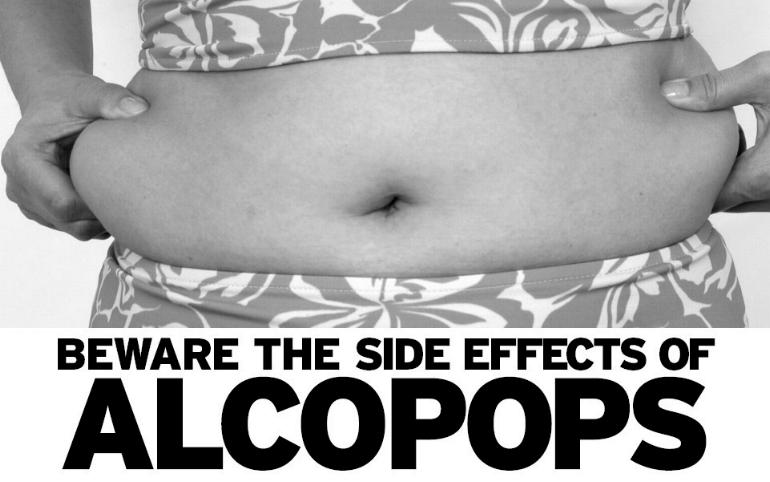
About Alcopops
What you should know about alcopops...
How to Outlaw Supersized Alcopops: A Model for
States
Alcoholic Popsicles for Sale in
Arizona
Utah Limits Alcopop Sales
Alcopop Tax Battle Continues
The Cost of Alcopops to Youth and
California
Youth Coalition Spurs Action on Alcopops
Tax
Calif. Hearing Targets 'Alcopop'
Marketing
Support the youth petition to re-classify
Alcopops as Distilled Spirits
How your state's politicians
make underage drinking legal
Utah Limits Alcopop Sales
California Will Tax and Regulate Alcopops as
Liquor
Anheuser-Busch Will Stop
Selling Alcoholic Energy Drinks
Miller Brewing Company to
Drop "Alcospeed" Drinks
Support the youth petition to
re-classify Alcopops as Distilled Spirits - www.marininstitute.org/alcopops/alcopops_youth.htm

From hard lemonade to alcoholic energy drinks that look just like their non-alcoholic counterparts, new alcopops enter the market with a disturbing frequency. The industry loves alcopops, or Flavored Malt Beverages (FMBs) as they call them, for several reasons:
Targeting Girls: Alcopops have roughly the same amount of alcohol as beer, but their high sugar and–in some cases--caffeine content does a great job of masking the flavor and the affect. And that’s where young women come in. In recent years, Teen girls report drinking more alcohol more often than their male peers and the American Medical Association (AMA) points to the popularity of Alcopops or ‘girlie drinks’ as a significant factor behind the shift.
Taxes: Alcopops – which the industry claims are “brewed” malt, are categorized as “beer” and that means that their producers avoid the significantly higher tax rates for spirits or “hard alcohol. Low taxes also help keep the price point low and the youth appeal high.
Availability: Their status as “beer” makes alcopops much easier to buy than hard alcohol. In California and a number of other states, that means they’re available wherever beer is available, such as convenience stores gas stations and mini-marts.
Read on to find out how you can get involved in our efforts to
raise awareness about these products.
Youth Petition Spurs Action by Board of Equalization
Organizations can support the reclassification of alcopops by
signing on to a Statement
of Support. Do it today!
How to Outlaw Supersized Alcopops: A Model
for States
However, sweetly-flavored malt beverages referred to as "alcopops" -- with up to four or five servings of alcohol in a "single-serving" can -- are still on the shelves, and Marin Institute wants states to take action, according to a Jan. 26 press release.
Marin Institute is distributing a model statute (PDF) that states can use to craft their own legislation to limit alcopops. Targeted beverages would include, the press release said, "Anheuser-Busch InBev's Tilt brand, Phusion Project's [sic] re-formulated Four Loko line, United Brands' reformulated Joose line and some of Mike's Hard Lemonade products."
Alcopops come in 23.5-oz cans and contain up to 12 percent alcohol, which Marin Institute estimated is about the same as 4.7 standard drinks, or four or five beers.
"They took the caffeine out of their drinks," said Bruce Lee Livingston, who directs Marin Institute, "but now they are fueling youth binge drinking with giant single-serving cans of alcopops."
Because alcopos are sweet and fruity in flavor, they're believed to be especially attractive to underage youth. And underage drinking isn't a small problem: 10.7 million underage Americans drink, according to Marin Institute, and about 70 percent of them binge drink. Why does that matter? For one thing, because alcohol-related problems connected to underage drinking cost the country about $60 billion every year.
Michele Simon, research and policy director at Marin Institute, said that a federal ban on caffeinated drinks was not enough. "As the primary regulators of alcoholic beverages, the states have full legal authority to ban dangerous alcoholic products like supersized alcopops."
The model statute contains language that would allow states to
outlaw caffeinated beverages and limit the size and alcohol content
of alcopops.
Source: www.jointogether.org/blog/posts/2011/marin-institute-releases.html
What you should know about alcopops...
|
|
|
|
Smirnoff Ice |
|
|
Smirnoff Ice Grape |
. |
|
Smirnoff Ice Lemon |
. |
|
Smirnoff Ice Rasberry |
. |
|
Smirnoff Ice Watermellon |
. |
|
Bacardi Silver |
|
|
Bacardi Silver Raz |
|
|
Bacardi Silver O3 |
|
|
Bacardi Silver Limón |
|
|
Skyy Blue |
|
|
Henry's Hard Lemonade |
|
|
Jack Daniel's Hard Cola |
|
|
Mike's Hard Lemonade |
|
|
Mike's Hard Cranberry Lemonade |
|
|
Mike's Hard Lime |
. |
|
Wet Willy's Edible Drink |
|
...More calories than you'd think
Alcopops contain more calories than many high-calorie foods and
drink.
|
Alcopop |
Calories |
Product |
Calories |
|
Smirnoff Ice |
|
12 oz Regular Beer |
|
|
Bacardi Silver |
|
12 oz can Cola |
|
|
Skyy Blue |
|
1 Hostess Twinkie |
|
|
. |
. |
1 Krispy Kreme glazed donut |
|
|
. |
. |
1 package chocolate-covered malt balls |
|
Two out of three Americans say they're surprised that an alcopop has more calories than a Krispy Kreme donut. Most Americans are also clueless about alcopop calorie content and think they have fewer calories than they really have. By wide margins, Americans think that alcopops like Smirnoff Ice, Bacardi Silver, and Skyy Blue are more like liquor than beer, even though they contain no vodka or rum.
College social norm campaigns across the country typically say that most students stop at three or four drinks or less when they party. However, downing five is not unusual in an evening, and if they're alcopops, that means 1150 to 1375 calories...more calories than a Big Mac and a large order of fries (1130) or two slices of Domino's Deep Dish Meatzza (910). Drinking like that won't help you look buff on the beach during Spring Break.
In case you haven't heard, fat is a big problem
In early March, researchers from the Centers for Disease Control
and Prevention (CDC) announced that obesity is fast becoming the
leading cause of death in the United States.
Getting the facts would help
Many Americans say they would modify their behavior and drink
fewer alcopops and less alcohol in total if they were aware of the
high calorie content of alcopops. Three in five say that people would
make better decisions if alcohol products provided calorie
information.
Nine in ten Americans support calorie labeling of alcoholic beverages because they believe that such information will help consumers make better choices about their drinking.
Find out how alcopops target underage drinkers.
In December 2003, the National Consumers League (NCL) and CSPI petitioned the Alcohol and Tobacco Tax and Trade Bureau (TTB) to require "Alcohol Facts" labels on every alcoholic-beverage container.
References:
1. Mokdad, A.H., Marks, J.S., Stroup, D.F. & Gerberding, J.L. (2004). Actual causes of death in the United States, 2000. JAMA. 291(10):1238-1246.
2. CDC
fact sheet
.
3. Finkelstein, E.A., Fiebelkorn, I.C. & Wang, G. (2004). State-Level Estimates of Annual Medical Expenditures Attributable to Obesity. Obesity Research. 12(1):18–24.
Source: www.cspinet.org/alcopops
"I know beyond a shadow of a doubt that these alcopops are directed to our kids. It is a gateway drug," said Rep. Mike Noel. The state's powerful Church of Jesus Christ of Latter-Day Saints also expressed support for restricting alcopop sales.
The bill also raises the amount of alcohol in standard mixed
drinks sold in the state from 1 ounce to 1.5 ounces but also banned
so-called "sidecars" -- extra shots of liquor that bar patrons could
pour into their mixed drink. Drinkers may order a shot and a drink,
but the shot can't be of the same liquor as contained in the
drink.
Source: www.jointogether.org/news/headlines/inthenews/2008/utah-limits.html

The Cost of Alcopops to Youth and
California
"Underage drinkers consume 47% of all the alcopops sold in California," said Michele Simon, JD, MPH, Research and Policy Director and co-author of the study with Simon Rosen, both from Marin Institute. "By correctly taxing alcopops as distilled spirits, we could see a 35% decrease in the number of youth drinking alcopops."
The report also finds that proper taxation of alcopops would save the State $437 million annually by reducing incidences of harm, such as traffic accidents, violent crime, high-risk sex, and fetal alcohol syndrome.
Alcopops are sweetened alcoholic beverages that are often bubbly and fruit-flavored, closely resembling soda or energy drinks. Called "cocktails on training wheels" they derive much of their alcohol from distilled spirits and are often branded with spirit names such as "Smirnoff Ice." Industry, however, calls them "flavored malt beverages" so that they can be taxed at the relatively low beer rate, making them less expensive to purchase and available wherever beer is sold.
Thanks to a government petition filed by two youth groups, California Friday Night Live Partnership and California Youth Council, three BOE board members (Betty Yee, Judy Chu and State Controller John Chiang) voted to consider reclassifying alcopops as distilled spirits. All five members of the BOE will make a decision on proper alcopops taxation on August 14. The results of such a change, as the Marin Institute report details, could save lives and money.
"By a simple majority vote, the BOE could save the lives of 21 youths each year in California," said Bruce Livingston, MPP, Executive Director of Marin Institute. "Big alcohol companies want to have alcopops taxed cheaply as beer for the youth market, but they don't want it to be called beer or taste like beer. It's time for BOE to close that tax loophole and save kid's lives."
Participants at the event included:
Also in attendance were SF Supervisor Ross Mirkarimi (Dist. 5), Public Law Group, EPIC (Environmental Prevention in Communities), the Adopt-An-Alleyway project (AAA) of the Chinatown Community Development Center, Youth Leadership Institute, BAYCAT (Bayview Hunters Point Center for Arts & Technology), CommPre (Community Prevention of Alcohol-Related Problems), and representatives from Santa Clara County.
"We're going to continue to be vigilant on this issue," said State
Senator Carole Migden (D–San Francisco), who spoke passionately
about the dangers of marketing alcopops to underage girls. "I hope
that we can move forward, hand in hand, to stop teen girls from being
targeted by alcohol companies."
Source: www.jointogether.org/news/yourturn/announcements/2007/the-cost-of-alcopops-to-youth.html
Calif. Hearing Targets 'Alcopop'
Marketing
The Alcopop Tax Battle Continues
Youth Coalition Spurs Action on Alcopops
Tax
In addition to increasing State tax revenue by approximately $40
million, the reclassification of alcopops as distilled spirits
“would raise the price, and reduce appeal to young
people.”
California Will Tax and Regulate Alcopops as
Liquor
"I believe that the ultimate effect of this regulatory change will be positive," said BOE chair Judy Chu, Ph.D. "It will send a signal to youth that alcopops are hard liquor -- because these drinks will now have costs that are similar to hard liquor. It will make it harder for young people to access alcopops, and that can only be helpful in reducing underage drinking."

|
|