Menstuff® has compiled information and books on the issue of Feminism.
 10:53
10:53 
The slut, the spinster and the perfect woman
3:58
Nadia Kamil Does Burlesque: Why can't burlesque express whatever you want it to express?
3:24
Itty Bitty Titty Committee Full Movie (Comedy, Drama, Romance)
24:01
Men's Rights vs Feminism: Is Toxic Masculinity Real?
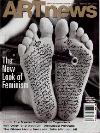
The New Look of Feminism
Feminist 'All About That Bass' Parody 'Bitch
In Business' Might Be Better Than The Original
(Includes 3:48 video)
A Directory of
Feminism
51 Pretty Shocking Facts That Make Things Harder
For Every Woman You Have Ever Met
What do men get that women don't? Here
are a few things
Defining
misogyny
Pain
and the misprescribed cure
Homosociality,
pro-feminism, and the support of other men
Andrea
Dworkin Dies
“The Feminine
Mistake”
'Women
Against Feminism' Parody Twitter Account Says 'LOL No Thanks' To
Gender Equality
Meninist
After 50 years, a controversial calendar
surprised the world in a wonderful way.
"Much of women's art worldwide is often interpreted as a criticism of patriarchal practices in "developing countries" - a term now considered politically incorrect - when, in fact, 'many of these countries experienced women's movements long before the United States, along with their independence movements.'
"For many women artists, it has been a struggle to find the right balance between the traditions and cultures of their birthplaces and the esthetics and politics of the mainstream contemporary art world. Many are addressing personal experiences or making work directly reflecting the conditions of women in their homelands. Yet, wary of falling into didactic categories, few want to be labeled "feminist," although they often show the influence of such wide-ranging feminist artists as Carolee Schneemann, Miriam Schapiro, Barbara Kruger and Cindy Sherman.
"I am working with these contradictions," says Egyptian-born artists Ghada Amer. She emerged in the mid-1990s with subtle and lyrical works portraying homemakers or porn stars (appropriated from popular magazines) stitched across the surfaces of raw canvases. Her Private Rooms (1998), displayed excerpts from the Qur'an, detailing prohibitions for women. In the canvas Red Diagonals (2000), images of women in various sexual positions are loosely embroidered across bright splashes of color. Despite the obvious parallels to works by other American women artists, such as Sue Williams and Elaine Reicheck, Amer distances herself from didactic examples of feminist art.
"I started with the proposition that feminism had failed, but it was a positive failure, meaning there were still things to work on," says Amer. She moved to New York in 1994. Ironically, she found the French theoretical approach to feminism to be as stifling as the growing Islamic fanaticism back home in Egypt, and she struggled for a way of expressing this contradiction in her art. She discovered the solution when in 1988 she stumbled upon a sewing magazine. "It was a special issue for Muslim women, sort of Vogue for the veiled woman," she recalls. "I didn't want to address the issue of the veil like, 'Oh, those poor women, they need help,' as if in the West, we had all this freedom. I had to find a way to address extremism - both feminism and religious fanaticism and their parallel problems with the body and its relationship with seduction."
Another artist who juxtaposes fabric and sewing with issues of the body is Kim Sooja, 44, now based in New York after living most of her life in Seoul. Her early work resembles 1970s feminist performance art. A Needle Woman consists of eight video monitors, each showing Kim standing on a street corner in a different locale - Cairo, Mexico City, Lagos, London, Bali, Shanghai, Tokyo and New York - her back to the camera, remaining absolutely still and unfazed as people variously shove, rob or simply ignore her. Her work, once regarded as explicitly feminist, now appears to bear on a broad range of issues, not least, the distinctions between foreign and familiar - how to retain a distinct ethnic identity in the midst of international travel and modernization.
"Feminism is part of my nature as a woman artist, but I never wanted this to be my only intention," says Kim. "My work is more about globalism, which is really all about locality, because keeping a specific identity, a local identity, is becoming a big issues as the world increasingly becomes bland, having no character at all, no mystery."
"There are some very important women artists addressing the issues of being female within their culture," observes Dana Friis-Hansen, chief curator at the Austin Museum of Art. "I challenge the idea of 'global feminism' and would say that there are 'feminisms' which artists are tapping into depending on personal and local situations." To underscore his point, he draws attention to the feminist art movements in Japan and to the artists who eventually became major international stars, such as Yoko Ono and Yayoi Kusama. More recently, Miwa Yanagi and Almine Rech, who has been making an impact with her digital "elevator girls" surrealistic views of the young, omnipresent hostesses in Tokyo's shopping malls. But, notes Friis-Hansen, the artists he met while working in Japan in the early 1990s would have been shocked to be called feminist - that is, except for Yoko Shimada, who, he says, "has made work addressing the role of women in Japan during World War II, akin to Rosie the Riveter in the U.S., and more recent work about the prostitutes who served U.S. servicemen after the war."
By contrast, Berni Searle from South Africa finds her identity as a black woman inescapable. "I see my own body, so it is inextricably tied to issues of gender, but it is also connected to race and class," says Searle, who acknowledges the influence of her work of American artists such as Lorna Simpson and Pat Ward Williams. For her "Colour Me" series, Searle created large-scale photographs and video installations of her body stained with spices and ink. In the video Snow White, the artist sits under a drizzle of flour until she is entirely covered, then scoops up the white powder and kneads it into a loaf of bread, a performance that can be read either as a meditation on the subjugation of women or as an ironic comment on the current politics of reconciliation in South Africa, which asks its citizens to blithely build a future out of the ashes of apartheid. Searle, who continues to live and work in Cape Town, is acutely aware that audiences in Europe and the United States may find her image exotic. "Using my body is a tricky thing to do because it can reinforce stereotypes," she says, explaining that to ward off simple voyeurism she intentionally inserts an element of confrontation into her self-portrait.
"Searle is dealing with issues relating to women, race, color, language, and specific questions about South Africa's recent history," says Oguibe, a Nigerian-born curator and artist living in New York. He points out that while Searle's work is esthetically beautiful, it is also an entry into the complex history of Africa and other regions. For example, he explains, being "whited-out," as enacted in Snow White, refers to the official policy of "erasing" indigenous populations in countries such as Australia and Tasmania. The use of nudity, which Western viewers tend to associate with pornography, actually goes back to the anti colonialist demonstrations in Eastern Nigeria in 1929, in which crowds of naked women took to the streets in protest, thereby bringing down the British poll tax.
Nudity is a formidable issue for Indonesian performance artist Arahmaiani, 40, whose works have generated hostility on the part of both Islamic community leaders and political authorities. Her performances and installations examine the violence against women in her own culture as well as in much of the rest of the world, but she has encountered the most resistance in her home country. In 1983, she was sent to jail for a month for drawing pictures of tanks on the street, a creative gesture not appreciated by the Suharto dictatorship. "After I had this trouble, I was kicked out of school and I went to live on the street," she recalls. "It gave me a really clear picture about the society in which I live, especially for women and the weak." But she never backed off from making controversial art projects. In her 1994 color exhibition, "Sex, Religion and Coca-Cola," Muslim viewers in Jakarta objected to her work Etalase, a vitrine in which the Qur'an was displayed beside other international icons ranging from a Coca-Cola bottle to a plastic Buddha. In her performance Dayang Sumbi Refuses Status Quo (1999), the artist slowly undressed and then asked the audience to write words and draw on her body. Instead, some viewers charged the stage and tried to get her to put her clothes back on.
Despite their diversity, these artists have all succeeded in overcoming some formidable obstacles - religious constraints, patriarchal educational systems, isolation from contemporary-art centers, and the disapproval of family members. Nevertheless, "the issues that feminism is concerned with - the representation of women and recognition of women's contribution to culture - are very important to keep on the agenda," says Oguibe, who is concerned that the sudden chicness of "globalism" will sweep other important issues from view. "It is the proverbial Sisyphean task," he says, "but you have to keep at it, because if you let go, it rolls back to the bottom of the hill."
Source: ARTnews, 9/01 www.artnewsonlinne.com
Feminist 'All About That Bass' Parody 'Bitch
In Business' Might Be Better Than The Original (Includes 3:48
video)
Created by three Columbia Business School students, "Bitch In Business" puts a feminist manifesto to the tune of Trainor's "All About That Bass." The students, who are part of a group called the CBS Follies, describe the video as "a love letter to all the badass bitches who aren’t afraid to be themselves in the business world."
The video itself is a bit sharper than Trainor's pastel-filled, hip-shaking video, and even includes a few slightly NSFW lines, such as: "You say 'Babies are for girls! Business is for boys!'/Try telling THAT to my stay-at-home fuck toy." Other amazing one-liners include, "Making these suits look good while I close the wage gap," and "Gettin’ called bitch means I'm doing something right." Preach.
It's no secret that sexism is alive and well in the business world (along with many, many other industries). If a woman is viewed as too "abrasive" or too "pushy" she runs the risk of being labelled a bitch, but those same qualities in a man might brand him as a strong leader. Everyday sexism at its finest
We still suggest you play this before any and every upcoming
interview.
Source: http://www.huffingtonpost.com/2014/12/11/bitch-in-business-all-about-that-bass-parody-columbia_n_6307910.html
Feminist is self-defined. You do not have to have been with a group or organization. Write as much as needed. Some informal, personal story of a feminist event important in your life is welcomed. If you can’t remember specific dates, don’t let that stop you from filling this out. The Most Important Section is Your Contributions - Questoin 19! Please respond promptly to ensure your inclusion. Just fill out this form and e-mail it to the address below. It's easy!
First Name
Middle Name
Last Name
Maiden Name (If pertinant)
Your name from 1963 - 1975:
Date of Birth: Month/Day/Year
Place of Birth City, State:
Spouse or Partner (optional): Name
Children’s Name(s):
Education:
Occupation:
Race (optional):
Religion (optional):
The following 5 information questions are for contact purposes only: not for publication in the directory.
Current address: (Street, City, State: ZIP) List all current
addresses
Home phone number: (1-XXX-) XXX-XXXX
Office phone number: (1-XXX-) XXX-XXXX
Fax number: (1-XXX-) XXX-XXXX
E-mail address:
What year did you enter the Women’s Movement? (Entry date must be 1975 or earlier to qualify for inclusion in this Directory. If you meet this requirement, please include your contributions up to the present.)
The primary geographical location(s) where most of your participation took place:
City, State:
Please check only the boxes below that reflect your primary contributions for which you are providing supporting details in question the next question
Please share your mosst significant contributions to the women's movement below. Type or print your summary in chronological order. Include feminist groups/organizations you founded or worked with, offices held, committees served on, key actions and other important events. Give locations, dates, purpose and results of specific actions whenever possible. State your role in these actions.
Please list your feminist writings, if any. Include book titles, anthologies, magazines, journals and newspapers with names, dates and your role in these publications (writer, editor, author, coauthor, contributor, publisher, production, etc.
If you were ever active in another political movement, which one(s)? (civil rights, peace, environmental, labor, etc.) Please share specifics.
If you have donated or are planning to donate your papers to an archive, please name the archive: (Archive: Street, City, Zip)
Please help us make this directory as complete as possible. List names, addresses and phone numbers of others who should be included in this Directory. (Name, Address, City, State, Telephone)
Please provide information on any dead feminist leaders who should be in the directory to ensure their place in history. Include dates of birth and death, major contributions and other information called for in this questionnaire that you can provide. I hereby give non-exclusive rights for use of the above information in the The Women’s Movement: Pioneers of the Second Wave 1963-1975 directory and other Veteran Feminists of America projects.
Signature: (If emailing, just key in your name):
We reserve the right to edit your submission. Please make copies
of this questionnaire and distribute it to others, or refer them to
VFA www.vfa.us
Mail to: Barbara Love, Editor, 82 Deer Hill Ave., Danbury, CT
06810 or 203.744.6662 or E-Mail
The Juggle: What prompted you to write this book?
Ms. Bennetts: The media was covering this [opt-out] phenomenon like it was a lifestyle choice. No one was talking about the economic consequences, how hard it was if they try to get back in. There’s gender bias, age bias, bias against mothers, bias against returning workers. I felt as if women were being sold a bill of goods.
The Juggle: In our prior posts, some readers said that financial planning and life insurance could protect wives in the case of a spouse’s death, illness or a divorce. Do you agree?
Ms. Bennetts: Women can plan for that, so why don’t they? Often, it will turn out that they have like four years of life insurance to live on. They are shocked when I say in my speeches that the average age of widowhood in the U.S. is 55. [With divorce], people say, oh just hire a good divorce lawyer . . . if you have been out of the workforce and your husband cuts off your credit cards and you can’t pay for groceries, you can’t hire a good divorce lawyer.
The Juggle: Do you think your book is actually reaching stay-at-home moms, or is the title a turn-off?
Ms. Bennetts: I have had people call me at home every day for the last five months, including stay-at-home moms, saying they’ve read the book . . . If people are not willing to look at information assembled to help them, that kind of denial, to me, indicates a high level of fear.
The Juggle: Why are people angry about this book?
Ms. Bennetts: There is a small, but highly vocal group of affluent stay-at-home moms who are very angry if you question their choice. I’m not criticizing or saying their choices are unworthy, I’m just saying it has worked out badly for many women who do this.
The Juggle: You just got back from a women’s conference in Malaysia. What are women concerned about there?
Ms. Bennetts: The thing that really struck me, contrary to my expectations, was that the parallels between women in Malaysia and women in America were overwhelming . . .Their stories were often almost in the same words I heard from women in Connecticut or Chicago or Indiana, because [that area] has become quite prosperous and the elites are affluent, a lot of women have the same options, so women who have promising careers are quitting to stay home with their kids. And they say, ‘I have four kids under age of 10, my husband left me, I have no way to support myself.’
The Juggle: Managing both kids and a career can be tough. Any advice for the long haul?
Ms. Bennetts: Working mothers, by the time they are in
their 40s or 50s, they are happy campers. They realize their kids are
growing up fine, their careers are thriving. They have economic
independence, whether or not they are married and whether or not
their husbands are employed or healthy.
Source: blogs.wsj.com/juggle/2007/08/17/leslie-bennetts-on-the-reaction-to-the-feminine-mistake/?mod=sphere_ts
What do men get that women don't? Here
are a few things
(Editor's note: What is not mentioned here is that all American men over he age of 17 are required by law to sign-up for the priviledge of being called into military to kill other men. Women are protected from having to do this and a some level, unlike in Israel, are not allowed to serve along side men in combat.)
The U.S. government once asked women what they wanted. It was 1977, and the eyes of the nation turned to Houston as an estimated 20,000 people — Gloria Steinem and Coretta Scott King, Democrats and Republicans, lesbians and straight women, those who were born in America and some who were not — gathered for the only federally-funded women’s rights conference of its kind in U.S. history.
"We promise to accept nothing less than justice for every woman," Maya Angelou told the exuberant attendees in a poem she composed for the occasion.
The National Women’s Conference called for ratification of the Equal Rights Amendment, which would explicitly ban discrimination based on sex. The women asked for affordable childcare, equal pay for equal work and that the federal government fund abortions for women who could not afford the procedure. They stressed the importance of national healthcare. They called for an end to discriminatory rape laws. They demanded the nation stop deporting immigrant mothers of American-born children.
In 2017, the government didn't ask women what they wanted, but hundreds of thousands of them spoke up anyway. They poured into the nation's capital for the Women's March on Washington, flooding the streets to articulate many of the same demands as those women in Houston 40 years ago — and to insist that what rights had been granted remain protected. They called again for the Equal Rights Amendment to be included in the Constitution. They emphasized again the need for "affordable childcare," "equal pay" and "access to safe, legal, affordable abortion and birth control." They said women have a right to live "free of all forms of violence against our bodies" and that "it is our moral duty to keep families together."
While the demands were echoes of 1977, the mood was different in 2017, tinged with trepidation over the election of President Trump, whose treatment of women raised eyebrows before and during the campaign, and led some Republicans to denounce him. Ultimately, enough voters decided they either did not believe the sexual assault accusations against Trump, or they did not care.
“The power of men to decide what the world is going to look like, what counts and what doesn't, hasn't really been terribly disrupted in a generation,” said feminist legal scholar Kimberlé Crenshaw.
Women have made undeniable advances — from American boardrooms and courts of law, to universities and sports arenas — but disparities remain, especially in poor or rural areas and in communities of color.
Though feminism seems pervasive — democratized by the Internet and popularized (and commodified) by high-profile women such as Beyoncé and Ivanka Trump — women’s rights remain in flux depending on who's in power. Women's rights are expanding in some states — New York in 2016 enacted 12-weeks of paid family leave — and rolling back in others — Ohio recently banned abortions at 20 weeks, which violates the viability threshold set by the Supreme Court in Roe v. Wade. Ohio's law does not include exceptions for rape or incest.
“There is a lot of work to be done before culture and policy can align toward progress,” said Vicki Shabo, vice president of the National Partnership for Women & Families, a non-partisan advocacy group.
Acknowledging women's roles as primary caregivers, the 1977 conference named national health care as one of its federal priorities. In 2010, President Obama signed the Affordable Care Act, expanding coverage to millions of women, forbidding the denial of coverage based on gender and guaranteeing access to birth control, maternity care and breastfeeding supplies. The National Partnership for Women & Families called the ACA "the greatest advance for women’s health in a generation." Trump and Republicans in Congress vow to repeal and replace it.
Sexual and domestic violence: Still too common
There is more awareness and condemnation of violence against women than ever before, yet statistics still paint a grim picture. One in 3 women have been a victim of some form of physical violence by an intimate partner, according to the National Coalition Against Domestic Violence, and one in six American women will be the victim of an attempted or completed rape, according to the Rape, Abuse & Incest National Network. The Department of Justice reports that rates are even higher for transgender and bisexual women.
It is unclear how the Trump administration will enforce existing federal legislation to protect survivors: During her confirmation hearing, Secretary of Education Betsy DeVos avoided directly answering whether she will uphold Title IX's federal guidance instructing colleges to combat campus sexual assault, and U.S. Attorney General Jeff Sessions did not support the most recent authorization of the Violence Against Women Act, which he is responsible for enforcing.
"The point of feminism is you shouldn't have to be a man to be treated with equal respect," Crenshaw said. "You shouldn't have to be a man to be able to walk down the street without worrying about being sexually abused."
Paid family leave and childcare: Behind other countries
The United States is an outlier among developed countries when it comes to paid family and medical leave, which allows people time off to care for a newborn, help a sick family member or recover from a serious illness. The Family Medical Leave Act (FMLA) provides up to 12 weeks of unpaid leave, but according to the National Partnership for Women & Families fewer than 40% of workers qualify for it. Some employers offer paid family leave, but the group says it covers only 14% workers. California, New Jersey and Rhode Island have implemented paid family leave laws and New York and the District of Columbia are in the process of enacting them.
In Trump's first address to a joint session of Congress Tuesday night, the president said: "My administration wants to work with members in both parties to make childcare accessible and affordable, to help ensure new parents have paid family leave, to invest in women's health."
During the presidential campaign, Trump introduced a plan for paid maternity leave, championed by his daughter Ivanka, which proposed the federal government guarantee six weeks of paid maternity to some birth mothers. Democrats said only offering leave for mothers, not fathers, stresses the notion that raising children is women's work. Republicans expressed concern about costs and the burden on businesses.
Some studies, however, suggest leave policies are good for business, because they lead to happier employees and less turnover. Family leave also has significant positive effects on young children's health, fathers' involvement and breastfeeding rates, studies show.
The U.S. also does not offer universal pre-K, though research shows paying for early childhood development leads to lower rates of high school dropouts, criminal activity, teen pregnancy, drug and alcohol abuse and other health problems, all of which create a burden on society — and taxpayers.
"When you raise a law-abiding studious child you are producing economic value," Ann Crittenden, author of The Price of Motherhood, said in urging taxpayers to look at the long game.
Facebook announced extended bereavement leave and paid family sick time as part of new benefits for employees. Sheryl Sandberg spoke about how her own experience losing her husband and how that makes this decision especially meaningful. USA TODAY NETWORK
Abortion was legal then and now. But ...
Following the 2010 elections, more anti-abortion politicians seized power in state legislatures, leading to a proliferation of abortion restrictions across the country. State laws like Arkansas' 48-hour waiting period create significant hurdles for rural and poor women, advocates say. There are only three licensed abortion providers in Arkansas, according to the state's department of health. A limited number of clinics means a woman may have to travel long distances to access the procedure, and a waiting period means she incurs two days of transportation and lodging costs compounded by two days of missed wages, as well as two days of possible childcare (according to the Guttmacher Institute, nearly 60% of women obtaining an abortion are already mothers). Planned Parenthood says an in-clinic abortion can cost up to $1,500 in the first trimester.
The president and vice president are against abortion, and advocates of abortion rights view Trump’s Supreme Court nominee, Neil Gorsuch, as a threat.
“It's not a settled issue in the U.S.," said Carol Sanger, author of the forthcoming, About Abortion: Terminating Pregnancy in the 21st Century. With a few more appointments, she said, it is possible Roe v. Wade could be overturned.
'Equal pay for equal work'
The wage gap is narrowing, but has barely budged in the last decade, according to the non-profit Institute for Women’s Policy Research (IWPR). Overall, women earn 80 cents for every dollar earned by men, according to the National Partnership for Women & Families, with black women earning 63 cents and Latinas earning 54 cents. Critics argue these figures do not reflect factors such as occupation or experience. One can't, they say, compare the salary of a female teacher to that of a male lawyer. But economists say even when those controls are present, a wage gap persists. Female doctors, for example, are paid about $20,000 less a year than male doctors.
"The majority of the current earnings gap comes from within occupation differences in earnings, rather than from between occupation differences," Claudia Goldin, a Harvard University labor economist, wrote in a 2014 paper.
The Equal Pay Act forbids sex-based wage discrimination, but women's rights advocates say it's poorly enforced.
The wage gap is worse for women with children, who face a steep "mommy tax." Motherhood is tied to a 4% decrease in earnings per child, while fatherhood is tied to a 6% increase, according to a 2014 study by UMass Amherst sociology professor Michelle Budig, and the penalty for mothers is worse for low-income women who can least afford to pay it.
Women are also less likely to ask for high compensation and studies show they are penalized more than men for trying to negotiate.
At the Conservative Political Action Conference last week, White House adviser Kellyanne Conway noted a time she struggled to define her worth during her career. Years ago, she said was asked her speaking fee for an event that would feature herself and a male speaker. "I froze because I knew no matter what I said in return to the question of 'what is your speaking fee, what are you worth, what is your value to do this,' no matter what I said I was going to undercut myself. I was going to be that self-denying girl who grew up in that house of all women, a giver not a taker ... It's not his fault if I undercut my value," Conway said. What she decided to do was to say: "I'll have what he's having," requesting the same rate as the male speaker.
Critics of equal pay interventions often frame the debate around women's personal choices, while equal pay advocates say it should focus on how the structure of American work does not align with the realities of American life. According to the Pew Research Center, women make up nearly half the workforce, and are breadwinners in 40% of households with children, yet they are more likely than men to make compromises when the needs of children and family members collide with work, which they say negatively impacts their careers.
"There are long-standing beliefs that there are separate worlds and responsibilities for women. Women are different and so they make these choices and some part of this inequality is simply the product of choices women make," Crenshaw said. "You can't blame all of the inequality women face on difference. It's not difference, it's a matter of power — who gets to decide what a worker is, who gets to decide what the implications of reproduction are, in whose vision is a worker basically somebody who has no childcare responsibilities?"
Political representation: At this rate, women will reach parity in 100 years
The number of women in politics is increasing — sluggishly. Women are 51% of the population, but make up 19% of Congress and only a quarter of state legislatures. Women are on course to reach parity with men by 2117, according to IWPR. Research shows women have different legislative priorities than men, and are more likely to introduce bills addressing the needs of women and children. Jennifer Lawless, author of Women on the Run: Gender, Media, and Political Campaigns in a Polarized Era, said the chief reason for unequal political participation is that women, perceiving bias, are less likely to run than men. When they do, she said, they are elected at the same rates.
From a voter perspective, the IWPR said more women are turning out to the polls, but many states are passing measures that make it harder to vote, including reducing polling sites and enacting strict voter ID laws, which disproportionately affect vulnerable communities. Fewer polling places mean longer lines, a burden on less advantaged voters who tend to have less flexibility with work and childcare arrangements.
“My right to vote as an upper-class white woman with multiple college degrees is not in jeopardy," said Nancy Young, a political historian at the University of Houston, "but what about a working class African American woman or Hispanic woman?”
Women are not a monolith
The 1977 women’s conference formed with bipartisan support, but in the decades since, women's issues have grown increasingly politicized. Marjorie Spruill, author of Divided We Stand: The Battle Over Women’s Rights and Family Values That Polarized American Politics, said a major factor was the rise of a potent conservative women’s movement, led by activist Phyllis Schlafly, which denounced the feminist agenda and successfully mobilized to defeat the Equal Rights Amendment. The conference “made people really line up on extreme sides,” Spruill said. While feminists debated at the Houston Civic Center, conservatives held a dueling Pro-Life, Pro-Family Rally at the city's Astro Arena.
In 2017, a conservative view of feminism acknowledges gender inequality, to varying degrees, but does not share progressives' ideas to combat it. Sabrina Schaeffer, executive director of the conservative Independent Women's Forum (Kellyanne Conway has a seat on the board), said addressing inequity is important, but top-down mandates may not be necessary or economical. She said the Republican party must rethink its approach to women's issues to attract new voters, but she rejects the Democratic narrative that she argues turn women into victims and ignores that some disparities are caused by the choices individual men and women make.
"Gender is not the whole story," Schaeffer said.
American women share common struggles, but differ greatly in their
experiences, which is why "women's rights" remain so divisive and why
its tent is so broad. Karla Holloway, a professor of English and Law
at Duke University who focuses on African American cultural studies,
said conversations that fixate on the achievements of Hillary Clinton
come at the expense of mothers working minimum wage jobs to keep
their families above the federal poverty line. As some women become
more visible, others disappear.
Source: www.usatoday.com/story/news/2017/03/01/2017-womens-history-month/98247518/
51 Pretty Shocking Facts That Make Things Harder
For Every Woman You Have Ever Met
We had our fact-checkers fact check the hell out of this, and yes, the math at 2:20 is real. And horrifying. If you can watch this and disagree with more than 10% of it, I'll be shocked.
If you are now a feminist after watching this, or just want to see more from Laci, you could Like her Facebook page. And if you'd like to help people understand that feminism isn't coming to kill you but is actually kind of helpful, you could share this. Totally your call.
Apparently, I'm a dude feminist now, so I'm gonna go ahead and do it. But I'm biased what with having a wife of 13 years, a mom, and a very rude but empowered 2-year-old daughter.
Transcript:
Laci Green: The rumors are true. What they've been saying about me. I have to come clean. I, Lacey Green, am a feminist. What? You're a lesbian now? Man hater! Hairy armpits. Say it ain't so. Shhh! It's gonna be okay, those are just stereotypes. I think feminism is both kick ass and super important, and here are a few of my reasons why. I'm a feminist because girls are taught in public school that once she has sex, she'll "loose" a part of herself. Because women who have a lot of sex are sluts while guys are studs. Amanda Todd, Felicia Garcia, Sherice Morales because of the sexism it drove them to end their lives.
I'm a feminist because I was told the first time I had sex it would be painful and bloody. I was terrified! Because one in four young women is assaulted, and society still asks, "what was she wearing?" Because male victims of rape are believed, since guys want sex all the time anyway, right? Cause of cat-calling and street harassment. Because, no, it is not a compliment. I'm feminist, because my first boyfriend sexually assaulted me, and when I went to my friends for help, they called me a slut. Because when I speak at universities about the absolute necessity of consent, there are people in the audience who laugh. Cause boobs are used to sell everything from burgers to soap, but don't you dare breastfeed out in the open. Because this, shocks and terrifies people. I'm not even kidding, you should see some of the looks I get. I'm a feminist because of how much pressure we put on girls to value their appearance above everything else. Because of labiaplasties, boob jobs, hymenaplasties. Because our culture considers it normal to cut off part of an infants' penis.
I'm a feminist because male orgasm in the movies is rated PG-13, while female orgasm is rated R. I'm a feminist because in 2013, there were over 700 bills to regulate a woman's body, and for men, the rightful number, zero. I'm a feminist because the political body making the decisions about my body is over eighty percent male. Wow. Because men occupy the top ranks of not just politics, but every industry in the world. I'm a feminist because jobs. Jobs. Women only hold one in four stem jobs, we hold six percent of t.v. stations, five percent of executive positions in the media. Because when I was younger and I took on a leadership role, all the adults in my life said, 'you're being bossy.' And let's not forget, that sneaky little pay gap.
By the time the average woman reaches sixty years old, she will have made four hundred and fifty thousand dollars less than a man in the same exact position. That's like a fancy ass house. Truck load of chocolate bars, or ten. And hell, I'm not even surprised by it. At my first job, I learned that my less qualified male co-worker was making almost twice as much as me. I'm a feminist because the media told me that women are my competition, destroying my friendships with them for almost twenty years. Because of gender roles. Because that one size fits all binary that shoves us into boxes and erases who we are. I'm a feminist because in tenth grade someone called my best friend a pussy and it tore him up for weeks, and I realized the worst insult was to be compared to a woman. Because boys are shamed for being emotionally open, because that's a "girl thing" and womanhood is weak. Weak! [Laughter]
Nevermind the fact that it was most likely a woman who pushed your body out of her vagina. I'm a feminist because my father never once did the laundry, made dinner or cleaned the house. When I suggested he help, my grandpa told me I was "out of my damn mind." Wow! Out of my mind. Am I taking crazy pills? I'm a feminist because people still say the asexual, bisexual and trans folk don't exist. I'm a feminist because same sex marriage is a no-brainer. Because in thirty-four states it's legal to discriminate against someone who's transgender. Really? Really?
I'm a feminist because representation, it matters! In LGBT folks, women, and particularly women of color, hardly ever have their stories told on screen. I'm a feminist because I believe that the world should be safe for girls, everywhere. Because half the girls in Yemen will become child brides. Because 65% of Brazilians believe that a woman who dresses in revealing clothes deserves to be raped. Because in Saudi Arabia women still can't vote or drive.
I'm a feminist because in every corner of the world, every day, women's bodies are used as a battleground in wars started by men. Raped, beaten, sold into slavery, mutilated, burned with acid. I'm a feminist because when I dare to get pissed off at a justice, I'm just another angry feminist who's on her period. I'm a feminist because there are people who would take these words more seriously...
Male Voice: ...if they were coming out of my mouth.
Laci Green: Most of all, I'm a feminist because I believe in gender equality. My eyes are open. My mind is active. I know we're not there yet. Thanks for supporting me here on Sex plus Babes
After 50 years, a controversial calendar
surprised the world in a wonderful way.
3:03For more than 50 years, Italian tire manufacturer Pirelli has released an annual calendar. Typically filled with pictures of models posing provocatively in various states of undress, the almost always NSFW calendar was the very epitome of the adage "sex sells."
This year, they decided to try something a little different.
The 2016 Pirelli calendar features women ranging in age from 19 to 82, and only one of them is a professional model.
This is a marked difference from calendars in past years that featured the likes of Adriana Lima, Kate Moss, Karlie Kloss, Miranda Kerr, and Rosie Huntington-Whiteley.
But the 2016 calendar lineup — shot by Annie Leibovitz — features writer and editor Tavi Gevinson, tennis champion Serena Williams, artist Yoko Ono, author Fran Lebowitz, rock legend Patti Smith, famed producer Kathleen Kennedy, businesswoman Mellody Hobson, director Ava DuVernay, philanthropist Agnes Gund, visual artist Shirin Neshat, model (and Pirelli calendar alum) Natalia Vodianova, and comedian Amy Schumer.
The calendar embraces the fact that women come in all shapes, sizes, and colors. It's a feminist statement.
And that seems to be a sentiment shared by many of the calendar's stars. For example, here's DuVernay, the history-making director of "Selma," on what the calendar's shift means to her.
Neshat echoes those feelings with her own statement. What's interesting, however — and what might actually be the biggest sign that yes, this is a step in the right direction despite there being so much more progress to be made — is how simple these goals seem.
Honoring women based on accomplishment and not solely on youth or appearance shouldn't have to be a statement in and of itself — but it is.
There's no real "shock value" in overt, hyper-sexualized pictorials anymore.
"A white, able-bodied cisgendered woman being naked is just not revolutionary anymore," Rookie Magazine founder and editor-in-chief Tavi Gevinson tells the New York Times. "I don't think anyone is going to be like, 'Damn, I wanted those naked chicks.'"
There is no shortage of "naked chicks" in magazines or online. But places that used to use sexualized nudity to draw attention — such as Playboy, which has announced a sunset of the magazine's famous nude photo spreads, and the rebranding efforts of magazines like Maxim — are finding there can be more success in simply taking things from a more real (and less airbrushed) angle.
The 2016 Pirelli calendar promotes self-love and finding your own definition of beauty.
No, it's not "Real women have curves" or Meghan Trainor lyrics about how awful "skinny bitches" are. Those cases simply trade in one pain point for another. We can do better.
Amy Schumer tweeted her picture from the calendar — in which she's wearing nearly nothing — along with a perfect rundown of the contradictions women (and all people, really) are forced to navigate on a daily basis.
But during a behind-the-scenes interview, she really summed up what makes Pirelli's 2016 calendar so great: She can see herself in it. Literally.
And while unlike Schumer, you and I may not actually see ourselves in the pages, maybe we can catch glimpses of ourselves a little bit here or a little bit there in the calendar's pages — the good, the bad, the beautiful, and the ugly — more so than ever before.
2015 saw some great progress for women around the world, and this
is a great way to keep up that momentum in the new year. What better
way to start 2016 than with some love and acceptance?
Source: www.upworthy.com/after-50-years-a-controversial-calendar-surprised-the-world-in-a-wonderful-way?c=upw1&u=07fa0e7f2d23f338b4a3b29d16b2a71a4c4e496b
One of the things about equality is not just that you be treated equally to a man, but that you treat yourself equally to the way you treat a man. - Marlo Thomas

|
|