Menstuff® has compiled the following information on Birth
Control.
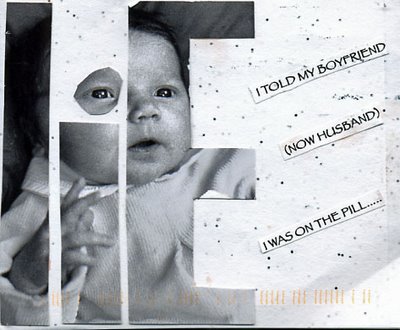
Source: postsecret.com

Male birth control is a racist, sexist
mess
Myths About Birth Control
Birth
Control Methods
Not awkward: 5 tips for talking to anyone
about sex and birth control
FDA Approves New Birth-Control
Pill
A Couple’s Guide to What’s New In Birth
Control
What's New in Birth Control: An Easy-to-Follow
Guide About New Choices
Birth control you don't have to
think about
Birth control pills for
guys could be reality soon
10 years of European
experience
Different
kinds of birth control
Related Issues: Condoms,
Reproductive Health,
STDs, Birth
Defects, Teen
Pregnancy, Facts of
Life Line
Newsbytes

Male birth control is a racist, sexist
mess.
There once was a study about male birth control that made
everyone freak out.
You know the study I'm talking about, right? The one where a handful of dudes took male birth control, and they got all sad and bloaty, and then most of them quit the whole thing altogether. The one that recently spawned dozens of articles making fun of those dudes' fragile masculinity.
In the study, which ran from 2008 to 2011, 266 monogamously committed guys in 10 different countries tried out a sperm-suppressing injection that looked to be 98% effective. In the end, 7.5% of the guys who took the male birth control dropped out for maybe experiencing side effects similar to women who take birth control. The study was also really tragic because it might have permanently sterilized a guy, and some of the subjects attempted or died from self-harm.
As a dude who would happily take birth control, I have some thoughts about this study and our response to it. Because there's a lot more going on here than it sounds like, and we need to talk about, well, all of it.
First, just to get this out of the way, this study was total crap.
Dr. Jen Gunter, an OB-GYN and, yes, a woman, runs through the study in detail on her blog, and suffice to say: The parameters behind it were a bust. It just wasn’t worth continuing.
The sample size was a mess: There were 320 guys at the start of the study, but that number dropped to 266 before the depression-bloaty-acne issues (plus 1,500 other side effects) came up. By the time it ended in 2011, the study was down to 111 subjects.
They also didn't control for consistency across the different testing locations. They hadn't screened participants for mental health or in any way that would allow them to measure their emotionality. So when they realized, for example, that most of the adverse side effects were coming out of Indonesia, they had no idea if that was cultural, dietary, or tied to the meds.
On top of that, the Food and Drug Administration requires 20,000 menstrual cycles' worth of safety data for women. But since men don't cycle, no one has determined how long men's birth control would need to be tested to be deemed safe.
Coupled with the difficulty of establishing placebo controls for contraceptives (giving someone a sugar pill and telling them it's fine to have unprotected sex is generally frowned upon), the potential rewards of this particular study were really, really unreliable.
The anger behind the findings of this study is totally valid, though, because of the shoddy history behind women’s birth control.
It turns out, birth control studies have almost always been deplorable and rooted in a very deep history of gendered medicine and racist abuse.
The short version of the story: Puerto Rican women and asylum inmates were forced to participate in early trials for female birth control pills in 1955. In fact, in Puerto Rico, where contraception and abortion were legal and available but forced sterilization was also occurring, the researchers specifically sought out the "ovulating intelligent" in medical school, where the trials became a required part of their curriculum. If they dropped out or refused to participate, they'd be expelled from school.
Later, when the drug was tested under slightly more humane circumstances, there were still some big problems: The researchers enticed women with the "no pregnancy" part while conveniently leaving out the details about the potential side effects of the pills. If the recent male trial that got everyone up in arms was bad by modern standards (which it was), then these adverse effects were monstrous: 17% of participants had serious complaints, three people may or may not have died as a result, and one of the researchers even straight up admitted that there were "too many side reactions to be generally acceptable."
But they stuck with it anyway, using a dosage that was 10 times higher than necessary for contraception, and got the thing approved.
The progress and development of the pill over the last 50 years was only possible because women fought to make it better once it was out in the world, despite its nightmarish origin story.
So yes, you are absolutely right to be outraged when it comes to this study: Women have carried the brunt of birth control side effects for way too long. While this one recent male study was crap, so were many that came before it that were much worse for women.
Apparently scientists did briefly consider making a birth control pill for men just before the Puerto Rican trials, by the way, but they figured dudes couldn't handle the mild shrinkage and that women were better suited to silently suffer through the side effects because of their higher pain tolerance.
That's just further proof that women have been putting up with this kind of shit for long enough, and we shouldn't have waited so long to start developing a male birth control pill. (Of course, if we had started earlier, who knows how many more blatant human rights violations would have occurred? Grr.)
The good news is that a majority of men are totally on board with using a pill to keep our swimmers on the sidelines.
We don't even mind the side effects! Really! In fact, 75% of the participants in this particular study and their respective partners said they were down to keep doing it.
In another study of 9,000 men in nine different countries, 57% were open to popping a (theoretical) pill. For comparison, about 17.5% of women ages 15-44 in the U.S. use oral contraceptives. So the odds there aren't bad. Lots of us guys are down with this — I promise.
There are lots of other people working on alternative forms of male birth control, too.
Gandarusa is an Indonesian herb that produces an enzyme that basically prevents individual sperm from making it all the way to egg. It apparently originated as a stress reliever with temporary infertility as a possible side effect.
The "clean sheets pill" does exactly what it sounds like: It stops you from actually spillin' yer stuff but still keeps the sensation of an orgasm otherwise intact.
There's also Vasalgel, which is not a pill, per se, but a gel injection into the vas deferens to keep the sperm out of your semen. A similar process involves injecting gold nanorods into your testicles, which, um, probably makes for an interesting pickup line, at the very least. Ahem.
Sex, contraception, and pregnancy are all shared responsibilities. They are consensual.
So, dudes, let’s get moving. You want to help push an actual male birth control pill through? Talk to your doctor. Sign up for a study. Talk about it, yell it from the rooftops, maybe try screaming it in bed if that's your thing. (Hey, you never know until you try.)
A lot of guys already know this, but if you don't, here it is: We
all need to do a better job for working toward more equitable
solutions, and not just for birth control. So let's make that clear
to the women in our lives, and let’s move along from this crap
study and design some better ones. It’s time to get shit
done.
Source: www.upworthy.com/i-looked-into-the-backstory-of-male-birth-control-turns-out-its-a-racist-sexist-mess?c=reccon3
-------------------------------------------------
It's Dangerous to Argue that Religion Is Responsible
These arguments seem to have sharpened and become more mainstream with the 24-hour cable news cycle that exploits terrorist attacks committed by people hiding behind religion and the fear-based politics of the Republican primary election gang. Talk radio and religious bigotry have also found renewed energy.
Trying to insert rationality into this argument can be an exercise in futility for either side. There’s something deeper being defended within the arguers that’s psychologically crucial to them, not just the need to win an argument.
The historical reality is that religion or any of the isms never do anything. But if we were to admit that that’s true, then we’d have to conclude that most religious arguments we’re in can only produce heat, not light.
People as individuals and in groups and institutions do things, but not religion or religions. People and institutions use religious ideas, symbols, scriptures, and traditions in ways that sanctify their goals, actions, and psychological conditions.
The abstract reification we call religion isn’t responsible for either the good or the bad for which “it” is given credit. The same scriptures, traditions, and dogmas can be used by a Martin Luther King or a Pat Robertson, a Mahatma Gandhi or a Nathuram Godse, the “Hindu” who assassinated him.
How they’re used and what they’re used for is the responsibility of the user or group of users. And “religion” must not be allowed to let them off the hook.
Take the Bible or the Quran. People will argue futilely about what these collections of writings “teach.”
Since no one, I repeat no one, takes everything in either book completely literally, no matter what they claim to do, what believers choose to use is their responsibility. And their interpretive schemes to get their scriptures to agree with their views are many.
Arguing that their sacred scriptures say this or that gets nowhere. Calling someone a literalist about their scriptures ignores their interpretive tactics and enforces their belief that they’re literally correct. Both activities actually encourage religious fervor.
Of course, each believer will claim that their interpretation, their selections from the smorgasbords that are scriptures, traditions, and respected religious thinkers are the true versions of their faith. Those claims are what believers fight over among themselves.
Their internal fights are so heated and brutal, and often over what looks to outsiders as so trivial, because a true believer doesn’t want to admit that there might be any other way to understand their scriptures or their religion than the version on which they’ve based their soul. Believers cannot admit alternatives because doing so would undermine the comfort of their hope of settled faith with doubts that their beliefs are possibly not true.
We never know with certainty what personal psychological issues, positive or negative, cause people to use religions the way they do. But we do know that there are a variety of emotional problems, family of origin hurts, prejudices, abusive upbringings, societal dynamics, and other factors that impel belief and explain why someone identifies with some beliefs and institutions but not others.
That’s why the most common predictor of ones own faith or the faith one is more likely to spend the most time fighting against, is the religion of one’s family. And since the vast majority of people in the world have never dealt with issues of their upbringing, those issues still propel both belief and unbelief.
Religion, then, can become the cover for these unhealed issues. Or still others can use religion to uncover them and promote emotional healing.
But think of the emotional high that religion can provide when it’s used as the basis for the actions one takes. One is no longer just acting out of personal sickness, anger, problems, insecurities, and fears when one attacks a women’s clinic or massacres colleagues in a workplace.
Using religious beliefs, one can feel instead that they’re doing God’s work, that theirs are actions sanctified by the divine. In that name many horrors can take place as if they aren’t just the very sick murders and brutalities they are.
And the victims of such atrocities can now be defined not as fellow human beings who disagree but as evil, demonic, and satanic. How much better for believers is that?
There is, thereby, no need to confront their own issues, seek therapy, or face their doubts, depressions, inadequacies, and failures. The feeling of righteousness has taken over.
So, for the believer, blaming religion enables them not to have to face themselves and their own emotional lack. God is responsible for all that happens, not them.
And when others blame religion, it plays into that same trap. When we claim that it’s religion’s fault, we let the individuals, groups, and institutions go free. We become their enablers.
We enable whatever happens because we too argue with the believer that it wasn’t actually a believer’s fault; it was their religion that’s responsible. And we thereby encourage others to continue their heinous acts in the name of religion without them feeling that their own problems are responsible.
The better solution is holding people, groups, and institutions responsible for how they use religion. It’s to stop colluding with them in blaming anything other than themselves.
This means refusing to argue about religion and instead calling believers, religious leaders, and institutions to account. And it means facing our own issues about why we want to argue religion in the first place.
So, what are we ourselves getting by continuing such arguments? If
we answer that we’re just trying to reveal or defend the truth,
then we’re arguing exactly what religious people are. Remember,
they believe they’re defending the truth, too.
Source: bobofkansascity.newsvine.com/_news/2015/12/14/34816082-its-dangerous-to-argue-that-religion-is-responsible
Surprising Birth Control Pill Facts
and a registered nurse in maternal health. Here are 10 surprising
tidbits about the pill you may not know, including the effects of
your weight and pill type.Not awkward: 5 tips for talking to anyone
about sex and birth control
I recently hit the streets of New York with a big sign that said “Let’s Talk About Sex.” As the granddaughter of a southern woman who avoided even saying the word—she would say ‘seg’ if she absolutely had to reference the act—I had come a long way in finding my sexual voice as I waved women over to be interviewed for a web series. So I’m excited to share a few secrets I’ve learned for discussing sex or birth control with anyone—including your mother and your boo.
Because, seriously, it doesn't have to be this awkward:
1. Embrace your sexual self.
If you were born and raised on a desert island, you wouldn’t miss your iPhone or know that the Internet exists. But you would still have four natural desires every human is born with: for food, water, sleep, and sex. Part of the reason talking birth control can be awkward is it forces us to acknowledge our own sex drives.
Get comfortable embracing the fact you were born a sexual being—even if that means setting a monthly date on your Google calendar to explore your sensuality. The more you engage with your own sexual identity, the more empowered you’ll be to take charge in and outside the bedroom. There’s nothing sexier than being responsible for your own destiny.
2. Remember, everyone else is sexual too.
Finding out your grandma was called “buttered biscuit” may be a bit much to take in, but the truth is all of our grandmothers had sex! While embracing your own sexuality, remember that everyone else is sexual too. So if your aunt or older sister bring up getting it on or getting on birth control, take it as an opportunity to ask about their experiences. Or feel free to bring it up yourself—they probably have great insight to share.
Now that I’m well into my twenties, my mother and I have more woman-to-woman chats. In one of our conversations a few years ago, we started to talk about birth control. She let me know she got pregnant with me as soon as she took out her IUD. It was an eye-opener that more than 20 years ago she had used a birth control method I had looked into trying myself and I hadn’t even thought to ask to her about it.
3. Use birth control to bond with your partner.
My boyfriend and I have shared many laughs over our adventures in condom buying. There was the time a sales associate announced over the mic that he needed access to the locked condom shelf and the embarrassing moment when I was visiting family down south and stocking up at Walmart, only to have my aunt come over as the sales associate rang up four boxes.
Discussing your body and future is way more revealing than taking off your clothes, so talking with my boyfriend about protecting ourselves from unplanned pregnancy has only increased our intimacy. It also forces both of us to actively contribute to our birth control plan since we know we’d both be responsible for a baby.
4. Break the ice on your birth control convos.
All that said, bringing up sex and birth control isn’t always easy at first. So it’s totally fine to talk about hookup scenes on True Blood or the latest celebrity baby as an icebreaker to transition to your own sex life and questions.
Technology can also be used to your advantage to email or text quick questions. “Got condoms?” is worth the ask before accepting your winter mister’s invite. And remember, if you are comfortable enough with someone to get sexually intimate, it should be okay to ask if they’ve been tested and insist that a condom is used. For more serious talks, you might want to give a heads up beforehand that you want to have a private discussion soon.
5. Find your birth control council.
For many of us, the most important birth control conversation to have is with our health care provider. Make the most of your time together by already having questions in mind and not being afraid to speak up. With my gynecologist, I always bring up things I’ve heard from friends and family to get her perspective, since someone else’s perfect method might not be a fit for me—and their problems may not apply to my individual situation.
And speaking of friends and family, they can be your own focus group on birth control. The next time you’re at brunch or girls night, bring it up. You may be surprised what information you discover and the variety of birth control methods and myths you’ve collectively had experiences with. (Say no Saran wrap!) Why not kick off the conversation by seeing how many different types of birth control each of you can name?
There is no shame in taking charge of your future. And let’s
be honest: sex is more enjoyable when you aren’t stressed about
a surprise pregnancy or sexually transmitted infection. If the
thought of talking about birth control still makes you uncomfortable,
click around Bedsider for answers to your biggest birth control and
sex questions. One of my favorite features is real women and men
sharing their experiences—because we all have a birth control
story to tell.
Source: bedsider.org/features/311
FDA Approves New Birth-Control Pill
A Couple’s Guide to
What’s New In Birth Control
In addition, virtually all contraceptives can benefit from a “mutual use” policy, in which both of you understand what’s being used and how to make it work best. How common a problem is unintended pregnancy? Year after year, three million pregnancies fall into this category in the U.S. alone. Up to half of these are due to failures in the use of a birth control method- missed pills, broken condoms, and the like. Note that a single episode of unprotected sex at mid-cycle leads to an 8 percent likelihood of pregnancy. If you value the chance to plan pregnancy, instead of it planning you, read on- together.
Anatomy and Physiology 101: in order to understand contraception, it helps to know how the various male and female parts function to achieve pregnancy. Aside from the obvious male apparatus that dispenses sperm, which is an exposed and therefore relatively familiar organ, we’ve found that many guys- and some women- don’t know much about the corresponding female apparatus. While we don’t wish to make medical researchers out of you, it’s useful to know the following:
At the top of the vagina is the cervix, the lower opening of the uterus, or womb. The uterus, a pear-shaped muscular organ, is linked to the ovaries on each side by the fallopian tubes. That’s pretty much it as far as structures are concerned, for a brief overview. How does conception occur? That’s also fairly simple, although making it happen can be quite complex. Here’s how it works, under normal circumstances:
Sperm swim up through the cervix after being deposited in the vagina during sex. Searching for an egg, they travel through the uterus and then down each fallopian tube. If they find an egg, they will attempt to penetrate it; only one has to be successful (out of millions) for pregnancy to occur. However, an egg is not always available: just once a month, an egg is released from one of the ovaries and picked up by a fallopian tube. “Ovulation” happens two weeks before the next menstrual flow, and the egg only survives for about 36 hours. A woman can get pregnant during the period only when an egg and sperm can meet.
If conception occurs, the developing embryo migrates down the fallopian tube and implants in the uterus. From there, it will develop into a tiny human that, once delivered, will completely consume the lives of two much larger humans for a long time- but that’s another story altogether.
Traditional birth control methods primarily fall into two categories: barrier and hormonal types. The first- the barrier methods- work by simply blocking sperm from entering the cervix. The oldest barrier method is the condom, which aside from some bumps and bright colors, hasn’t changed much for a long time. One recent improvement is the advent of polyurethane condoms, which provide greater sensitivity (i.e. they feel more natural) than typical latex varieties. Other examples of barrier methods include the diaphragm, the cervical cap, and the female condom. Hormonal contraceptives include “the pill,” Depo-Provera injections, emergency contraceptive pills, and hormonal implants like Norplant. These methods all work in a similar fashion, by suppressing the release of an egg from the ovaries, altering the lining of the uterus (thus preventing implantation), or thickening the mucus in the cervix, which blocks sperm.
A third contraceptive category, cleverly referred to as “other,” includes methods like the IUD, the Rhythm Method (no relation to Janet Jackson), abstinence, and permanent sterilization- vasectomy and tubal ligation. IUDs, or intra-uterine devices, are t-shaped plastic devices placed in the uterus that work by blocking sperm transport through the uterus and/or preventing ovulation.
So, what’s new in birth control? There are some advances in traditional contraceptives, and some new technologies as well. Here’s a rundown on what’s available right now and presented her for mutual discussion with the couple and their health care provider.
Intrauterine System: The Mirena IUD: releases synthetic progesterone (female hormone) that decreases menstrual bleeding and cramps- even in women with endometriosis and adenomyosis (inflammatory conditions of the female pelvis). They are extremely effective, preventing pregnancy as well as permanent sterilization. The Mirena lasts for five years, requiring only a brief monthly check by a woman to make sure the device is still in place.
Mirena is an intrauterine system (IUD) that European women have been using for more than a decade. A health care practitioner inserts the IUD in a position very close to the uterine lining. This is a very easy in-office procedure that takes only a few minutes. The Mirena lasts five years and is more effective than the copper containing IUD.
Mirena’s advantages over the copper IUD (the Paragard IUD) go beyond efficacy. The copper IUD can cause heavier, more painful periods. In contrast, the Mirena causes lighter (or absent) periods that are not painful. This is because the Mirena only contains a low dose of the hormone levonorgesterol – a progesterone, therefore it can be used by women who have problems with estrogen. This very dose of progestin acts locally to thin the lining of the uterus, and this accounts for its very positive effects on the users’ menses. Some studies show that anemia and pelvic infection is less common with Mirena than with copper-containing IUDs.
Mirena can cause irregular bleeding or spotting in the first six
months of use. The Mirena costs slightly more than the copper IUD.
Women who are at risk for sexually transmitted disease or ectopic
pregnancy should not use the Mirena. Women who have never had a child
are able to use the Mirena. 
Ortho Evra a skin patch that works like a birth control pill. The patches contain synthetic estrogen and progesterone, and may be used by almost all women who can take oral contraceptives. Ortho-Evra requires a woman to change patches once a week for three weeks, with one week off after to allow for a period- perhaps easier than remembering to take a pill each day. The 1 3/4-inch-wide square skin patch is placed on the skin weekly for 3 weeks, followed by a week of not wearing a patch. You will get a period the week you don’t wear a patch. Because you use it weekly rather than daily, this method may lead to fewer mistakes and better results than with the Pill. Problems with skin irritation and detaching patches appear to occur rarely. (Those who do lose a patch should replace it with a new one rather than tape over it.) Ortho Evra contains less estrogen than some other contraceptives and it doesn’t have to go through the digestive tract–so it causes less nausea (and fewer headaches). It also offers users a rapid return to fertility—women are able to become pregnant soon after they stop using the patch.
Breast discomfort and irregular bleeding may occur in the first two cycles of use. The patch may be less effective for women who weigh more than 200 pounds.
Post-Coital or "Emergency" Contraception (Preven and Plan B) the names of new emergency contraceptive (EC) pills that not only works better, but causes less nausea and vomiting (traditional EC’s are somewhat tough on the stomach). Although it’s only meant to be used as a backup (for instance, after a condom breaks), EC’s will prevent pregnancy up to 89 percent of the time. They should be in the medicine cabinet of all sexually active couples, just in case.
Two specific products give women the option to use birth control after sexual intercourse-the oral contraceptives Plan B and Preven. Plan B has a better rate of success and a lower rate of side effects than Preven, and costs about the same. Women who have an established pregnancy should not use either. (Note: On December 16, 2003, an advisory panel recommended to the Food and Drug Administration (FDA) that "Plan B" should be available to women as an "over-the-counter" product available in such places as pharmacies, supermarkets and other similar locations. The FDA now needs to act on the recommendation. Plan B has been on the market since 1999 and has been used by more than 2.4 million women, the manufacturer of Plan B was quoted in newspapers. (Ourgyn will post a more comprehensive story when and if the FDA acts on the drug.)
Vaginal Ring (NUVARING) is a plastic ring placed in the vagina that works by releasing hormones similar to a birth control pill. Each ring lasts for three weeks, and a new one is placed a week later, after a period. An interesting choice for those who don’t want to take a pill each day, but not for those women with vaginal abnormalities or irritation.
The monthly contraceptive NuvaRing is a flexible plastic ring
about 2 inches in diameter and 1/8-inch thick. It is inserted in the
vagina for 3 weeks out of the month, then replaced with a new ring
every month. Like the Pill and Ortho Evra patch, the Nuvaring
contains both an estrogen and a progestin. Like Ortho-Evra the
hormones diffuse through the skin – in this case the mucosa of
the vagina. Because no hormones go through the gastrointestinal
tract, users may have less nausea. But if you do experience nausea,
soaking the ring in water overnight before using it can help prevent
nausea. You do not have to place it in an exact position for it to
work. You and your sexual partner are not likely to feel it during
sexual intercourse, though you can remove it for up to 3 hours.
Possible side effects may include increased vaginal discharge and
headaches. Like the patch, the NuvaRing uses less estrogen than OCs
but is not recommended for women who shouldn’t take estrogen.
Monthly Injection: Lunelle: a contraceptive given as a once-a-month injection that works like a birth control pill. Unlike Depo-Provera (the other injectable contraceptive), fertility returns quickly once it’s no longer in use. Some women will also learn to do their own injections, making it even more convenient. Discuss with a health care provider it’s availability. Women can now get a monthly injection of Lunelle, which has been on the market in Europe and other countries for years and is basically similar to a combination of oral contraceptives (OCs). You must go to a medical office for this procedure, although you may be able to give yourself this injection in the future. Lunelle should be taken every 28 days, with a five-day grace period, which means that it can be taken any time between days 23 and 33 of the menstrual cycle. Pregnancy is possible for women two to three months after they stop using Lunelle (a shorter time than with Depo-Provera, the other injectable contraceptive).
The disadvantages of Lunelle are: It is not an option for women who cannot take OCs because they contain estrogen. It can cause more spotting and irregular bleeding than OCs do (which users can reduce by taking doses every 28 days). Lunelle may cause some women to gain weight.
Filshie clip: This clever 1/2”
device obstructs fallopian tubes, blocking the passage of sperm and
thus preventing fertilization. Made from titanium and silastic
rubber, the Filshie can be easily applied during “open”
surgery (such as a C-section), or via laparoscopy, as a quick
outpatient procedure. Failure rates are extremely low- as good or
better than other sterilization methods- although long-term data
aren’t in yet. Finally, for the rare couple that changes their
mind after surgery, re-opening the tubes once they’ve been
Filshie-clipped may be easier than with other methods.
including a video.
Ok, couples, you want to know what’s on the horizon? We may soon see replacements for Norplant, the once-popular implantable contraceptive. The new implants, Implanon and Jadelle, have only one and two hormone-containing rods, respectively, instead of six like their predecessor. Although they won’t last as long, they will be much easier to insert and remove.
Want more information? Ask your health care professional.
Remember, contraceptives work best when both of you understand them,
and share responsibility for their consistent and correct use.
Source: Bruce Bekkar, MD, www.ourgyn.com/article_retrieve.php?articleid=35
What's New in Birth
Control: Here is an Easy-to-Follow Guide About New Choices
These new contraceptives require less frequent doses and put less responsibility on the user. The result should be less improper use and fewer unintended pregnancies- and as a bonus fewer side effects. This overview presents basic information about these new contraceptives and highlights advantages and disadvantages.
Non-Surgical Tubal Sterilization (Essure Permanent Birth Control) - Women who desire a permanent form of birth control now have an alternative to “having their tubes tied,” or tubal ligation. The Essure PBC is a small metallic implant placed into the fallopian tubes in a quick medical procedure that does not involve an incision or general anesthesia. The result is a blockage that causes irreversible sterility. Women must use an additional contraceptive for a 3-month waiting period after insertion and must undergo a simple second procedure to confirm blockage of both tubes.
Some positive aspects of this method are its low cost, the avoidance of surgery and anesthesia, and its purported 100% effectiveness. The most common side effect is cramping. Possible problems include expulsion, in which the device moves out of place, and perforation of the uterus- this is very rare. It is important to remember that long-term studies of the Essure PBC have not been done yet. Therefore, a few physicians have some concerns about its long-term safety and effectiveness.
Contraceptives of the Future Learn about birth control methods that may or will be available in the future:
Continuous oral contraceptives require women to skip or change the week they take placebos, which are normally prescribed and taken in rotation with the Pill. Seasonale is a continuous OC that should be on the market in late 2003 or early 2004. Future studies may show that it is safe to use some regular oral contraceptive or the Ortho-Evra patch so that your periods come only every 3 months.
Contraceptive rods that are implanted in the skin may soon be available in the U.S. once again. Earlier versions were Norplant, which caused some difficulties with removal, and Norplant 2, which is not widely available in this country due to manufacturing difficulties. A new two-rod system lasts for 3 to 5 years and can be removed more quickly and easily than the standard Norplant.
The so-called abortion pill, RU-486, can also work as a contraceptive after intercourse for women who are not pregnant.
Male hormonal contraception is still in the very early stages of development. This method uses hormones to suppress sperm production and has only worked irregularly and required frequent injections.
Researchers are also working on an anti-sperm contraceptive
vaccine, smaller IUDs that are “frameless,” longer-term and
progestin-only vaginal rings, and other non-surgical sterility
procedures.
Source: Andrew Goldstein, MD, www.ourgyn.com/article_retrieve.php?articleid=36
Birth Control Methods
Contraceptive Guide www.mjbovo.com/Contracept/
Website created and maintained by a physician on all currently available birth control options for both men and women, includes a "What's the right birth control for me" questionnaire
www.plannedparenthood.org/pp2/portal/medicalinfo/birthcontrol/
Info fact sheets on all methods of birth control, very thorough, well organized and up to date, partly available in Spanish.
It's your (sex) life - Your Guide to Safe and responsible Sex
Source: www.mtv.com/thinkmtv/sexual_health/
Website by the Henry J Kaiser Family Foundation, offers general info on Birth Control, STDs and Communicating about Safer Sex for Teens
Contraceptive Choices
Website maintained by a professor at Emory University on many
contraception methods.
Source: www.google.com/u/emoryuniversity?q=contraceptives&domains=emory.edu&sitesearch=emory.edu
Not 2 late - The Emergency Contraception Website
Information on EC by the Office of Population Research at
Princeton University, lists EC providers, has a Q & A, News,
References. Partly available in Spanish Source:
ec.princeton.edu
;
The feminist women's health center www.fwhc.org
Newsbytes
US OKs wider access for Barr "morning-after"
pill
Younger girls still need a prescription for Plan B, Barr said in a statement. The Plan B pills may prevent pregnancy when taken within 72 hours of sexual intercourse.
The Food and Drug Administration approval follows more than three years of controversy. Backers and opponents of wider access had fiercely lobbied the agency, and the feud stalled the nominations of two FDA commissioners.
Plan B will be kept behind pharmacy counters, Barr said. The pills should be available in a dual nonprescription and prescription package by the end of the year.
"While we still feel that Plan B should be available to a broader
age group without a prescription, we are pleased that the agency has
determined that Plan B is safe and effective for use by those 18
years of age and older as an over-the-counter product," Barr Chief
Executive Bruce Downey said in a statement.
Source: tinyurl.com/zojfv
Wal-Mart Must Stock Contraception in
Mass.
The unanimous decision by the Massachusetts Board of Pharmacy comes two weeks after three women sued Wal-Mart in state court for failing to carry the so called ``morning after'' pill in its Wal-Mart and Sam's Club stores in the state.
The women argue state policy requires pharmacies to provide all ``commonly prescribed medicines.''
The board has sent a letter to Wal-Mart lawyers informing them of the decision, said health department spokeswoman Donna Rheaume. Wal-Mart has until Thursday to provide written compliance.
Dan Fogleman, a spokesman for Bentonville, Ark.-based Wal-Mart, said the company hadn't heard about the decision, but would comply with any order.
Wal-Mart carries the pill in Illinois only, where it is required
under state law. The company has said it ``chooses not to carry many
products for business reasons,'' but declined to elaborate.
Source: www.guardian.co.uk/worldlatest/story/0,,-5618503,00.html
Birth control only works if you use it. Same is true for abstinence.

 |