 Circumcision Newsbytes
  Circumcision Newsbytes
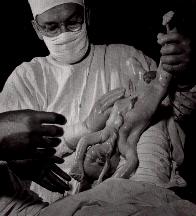
Menstuff® has compiled articles from newspapers and magazines below. Photo upper left is by Jean-Claude Bouvier, on the right "How Could You" to such a beautiful expression of God's love? by Wayne Miller.
|
|
|||||
|
|
 |
 |
 |
 |
 |

Related Issue: Circumcision
Request for Help
International
Symposium
Resources
Books
Tapes - Audio
and Video
Journals
- on Child, Emotional, Religious, and Sexual Abuse and Trauma
Neonatal Circumcision Violates Children's
Rights, Needlessly Amputating Functional Tissue
The AAP’s Task Force on Circumcision ignores a child’s well-established human and legal rights to decide for himself at an age of understanding whether he wants to part with his foreskin. Instead, the Committee says—with more honesty than ethics--that the common reluctance of an older child or adult to be circumcised justifies parents forcing a partial penile amputation upon him at an age when he is too small to effectively resist.
Male circumcision violates a child’s right to bodily integrity, not to mention numerous civil and criminal laws. Malpractice awards are mounting up, including a recent $700,000 settlement reported in the Massachusetts Lawyers Weekly. The AAP’s repeated suggestion that, “In most situations, parents are granted wide latitude in terms of the decisions they make on behalf of their children" badly misstates the law. In fact, starting in 1944 with Prince v. Massachusetts, courts have repeatedly affirmed that: “Parents may be free to become martyrs themselves. But it does not follow they are free, in identical circumstances, to make martyrs of their children before they have reached the age of full and legal discretion when they can make that choice for themselves.”[1]
Additionally, and perhaps even more egregiously, the AAP’s policy statement contradicts its own bioethics policy statement, which affirms that parental wishes cannot justify unnecessary surgery and that “providers have legal and ethical duties to their child patients to render competent medical care based on what the patient needs, not what someone else expresses.” Moreover, according to this same bioethics policy statement, a “pediatrician’s responsibilities to his or her patient exist independent of parental desires or proxy consent.” [2]
One puzzling aspect of the AAP policy statement is a contradictory dance performed on the question of how strong the alleged benefits of the procedure are. On the one hand, there is no recommendation for universal neonatal circumcision, and it is admitted—as it previously stated in its 1999 policy statement--that the “health benefits are not great enough to recommend routine circumcision of all male newborns.” Moreover, nowhere are the benefits and risks numerically compared, and the AAP repeatedly states that complication data is unknown. How then can it rationally conclude that, "Evaluation of current evidence indicates that the health benefits of newborn male circumcision outweigh the risks…?” And how can pediatricians be tasked by the AAP to “assist parents by explaining in a nonbiased manner, the potential benefits and risks…” despite the fact that the AAP says the risks are unknown?
The US has both the highest rate of circumcision and the highest rates of HIV and AIDS in the industrialized world, so a claim that the first can prevent the other two doesn’t pass the smell test. The AAP admits as much by saying that “key studies to date have been performed in African populations with HIV burdens that are epidemiologically different from HIV in the United States.” Moreover, the African studies were closer to a lowest common denominator than a “gold standard,” suffering from numerous critical flaws including selection bias, randomization bias, experimenter bias, inadequate blinding, supportive bias, participant expectation bias, lack of placebo control, inadequate equipoise, attrition of subjects, failure to investigate non-sexual HIV transmission, lead time bias, and time-out discrepancy. Additionally, the “60%” figure refers to the relative risk and seems calculated to deliberately mislead; the absolute risk reduction is only a measly 1.3%. As the AAP itself concedes, given vast differences in health conditions and modes of transmission between the US and Africa, the results can hardly justify infant male circumcision in the United States. Babies don’t get HIV and AIDS from sexual contact.
In fact, not a single study has ever proven that circumcision has actually decreased any disease in the United States. Over a hundred boys die each year from this needless procedure, yet the AAP fails to attach much significance to the deaths stemming from the practice.[3] Rather than objectively evaluating all available evidence, the AAP selectively quotes and references highly contested and controversial studies to attempt to justify an entrenched yet outmoded cultural—not medical—practice.
We were surprised to witness the reappearance of disproven justifications for circumcision such as urinary tract infections (UTIs), penile cancer, and even syphilis. The AAP also ignores the showing by Chessare that even if claims about UTIs are valid, the complications from the procedure exceed the benefits in preventing UTIs.[4]
From there, matters become even more interesting and even less defensible. The AAP fancifully claims at several points, using slightly different language, “It is reasonable to take these non medical benefits and harms for an individual into consideration when making a decision about circumcision." In fact, few things are less reasonable and more unprecedented than physicians making medical decisions based on non-medical factors and vagaries of their infant patients’ parents’ culture and religion as central to whether to do a procedure. It is ironic that harms are improperly mentioned here but not properly discussed elsewhere. The other procedures that get cultural validation when medical basis is lacking can be counted on the fingers of zero hands.
Moreover, a huge logical hole appears when the policy statement suggests that, “Parents should weigh the health benefits and risks in light of their own religious, cultural, and personal preferences, as the medical benefits alone may not outweigh these other considerations for individual families." One cannot coherently argue that circumcision is elective and of variable value at the individual level yet terribly important in a larger public health context.
The AAP selects, sometimes out of context, bits of language that seems to lend its position support, and completely ignores contradictory data. Thus the policy statement cites a study that proves that male circumcision removes the most sensitive part of the penis, then proceeds to ignore that inconvenient truth.[5] The policy statement cites a study suggesting that circumcising men actually increases the HIV risk to heterosexual women and similarly ignores that uncongenial finding.[6] Another study is introduced as evidence for circumcision helping prevent HIV, yet the AAP omits to mention that it also demonstrates that intact males who wait at least ten minutes after intercourse before wiping have a much lower rate of contracting HIV than do circumcised men.[7] The policy statement cites a study showing that smoking and a narrow foreskin, not a normal one, contribute to penile cancer, yet the AAP ignores those findings as not supporting the circumcision juggernaut.[8]
We question why the AAP is effectively recommending an unnecessary surgery at a time when the US faces a crisis in not being able to provide even necessary care for all our children. As was just demonstrated in a report by the Institute for Medicine, an astonishing $750 billion is wasted on health care each year in this country.[9] Recently it was estimated that close to $2 billion of that amount may arise from this unnecessary and harmful procedure.[10] In these days of rising medical costs and scarce resources, we simply cannot afford to continue to carry out such a harmful and outmoded practice.
Given the many virtues claimed for male circumcision by the AAP, one may be forgiven for wondering why European men are not falling down dead in the street and are even enjoying better health indicators than American men including in the areas the statement cites as improved after circumcision? Neonatal circumcision is a gross violation of children’s rights. It inevitably causes pain when performed on infants, amputating tissue having erogenous, protective, and immunological functions. The AAP should immediately retract its policy statement and replace it with a document reflecting such critical concerns as the functions of the lost tissue and the importance of respecting non-consenting children’s rights.
[2] American Academy of Pediatrics Committee on Bioethics, “Policy Statement: Informed Consent, Parental Permission, and Assent in Pediatric Practice,” Pediatrics. 1995;95(2):314–317, 315. Reaffirmed May 2011.
[3] Bollinger D. “Lost boys: An estimate of U.S. circumcision-related infant deaths,” THYMOS: Journal of Boyhood Studies. 2010;4(1):78-90.
[4] Chessare JB. “Circumcision: Is the risk of urinary tract infection really the pivotal issue?,” Clinical Pediatrics. 1992;31(2):100-104
[5] Sorrells ML, Snyder JL, Reiss MD, et al. Fine-touch pressure thresholds in the adult penis. BJU Int. 2007;99(4):864–869.
[6] Wawer MJ, Makumbi F, Kigozi G, et al. Circumcision in HIV-infected men and its effect on HIV transmission to female partners in Rakai, Uganda: a randomised controlled trial. Lancet. 2009;374(9685):229–237.
[7] Gray RH, Kigozi G, Serwadda D, et al. The effects of circumcision on female partners' genital tract symptoms and vaginal infections in a randomized trial in Rakai, Uganda. Am J Obstet Gynecol. 2009;200(1):42.e1–e7.
[8] Daling JR, Madeleine MM, Johnson LG, et al. Penile cancer: importance of circumcision, human papillomavirus and smoking in in situ and invasive disease. Int J Cancer. 2005;116(4):606–616.
[9] Smith M, Saunders R, Stuckhardt L. Best Care at Lower Cost: The Path to Continuously Learning Health Care in America. Washington, DC: National Academy of Sciences; 2012.
[10] Bollinger D.
“Cost of Circumcisions.” 2012. Available at:
www.icgi.org/information/cost-of-circumcisions/
Swedish docs in circumcision
protest
In a statement submitted to the National Board of Health and Welfare (Socialstyrelsen), the society called the procedure an assault.
"We consider it to be an assault on these boys," Staffan Janson, chairman of BLF's committee for ethical issues and childrens' rights, said to newspaper Göteborgs-Posten (GP).
Removing small boys' foreskin for reasons other than medical is controversial in Sweden.
After discussing the matter for several years, BLF has now concluded that the procedure ought to be banned on the grounds that the children are unable to form a decision in the matter.
According to BLF and Staffan Janson, circumcision is an attack on boys' integrity.
"It's such a complicated and difficult question, but even so, we've decided that this is a procedure to be done away with," Janson said.
"It's a mutilation of a child unable to decide for himself."
Not everyone agrees that circumcision is an assault, however.
"Parents decide things for their children all the time," Omar Mustafa, head of the Islamic Association in Sweden, said to GP. (Editor's note: Is Mustafa suggesting that giving a girl a religious Clitoridectomy should also be legal?)
"Allowing parents to decide over this matter isn't stranger than
allowing them to decide whether their child is to be vaccinated or
not," he continued.
Source: Article by Clara Guibourg (news@thelocal.se)
Federal Law Guarantees Right to Genitally
Mutilate Boys
---------------------------
Dear Representative X:
H.R. Bill 2400 will come your way soon for consideration and a vote. The bill, which is misleadingly labeled as the "Religious and Parental Rights Act of 2011," must be opposed because it will endorse and could help bring about violations of the constitutional guarantees under the Fifth and Fourteenth Amendments of equal protection of boys and girls from genital cutting. Just because a person is a boy child does not give any parent or government the right to endorse child abuse or sexual battery against that person. HR 2400, if allowed to pass, would set this country on a dangerous path by allowing parents to invoke religion to justify abuse of children, particularly the boy child and later, potentially, the girl child.
Sincerely,
(Your name and voting district)
(Editor's note: The Clitoridectomy has been outlawed. HR2400 would legally endorse male circumcision. This is clearly untenable given equal protection. The legal precedent for endorsing medically unnecessary genital cutting for religious reasons could potentially have unintended legal consequences including possibly paving the way for the federal law against FGM to be rolled back.)
Here's where you can find the text of the bill and its 10 partisan
co-sponsors, all Democrats: thomas.loc.gov/cgi-bin/query/z?c112:h2400
Direct short-cut to the above article:
http://bit.ly/nnX8kB
Campaign against Circumcision Launched by Dutch Doctors' Association
eMail - Please note the Royal Dutch Medical Association, the
professional organisation for physicians in the Netherlands, has
today started a campaign against circumcision of boys. by Gert van
Dijk, KNMG
Source: www.dutchnews.nl/news/archives/2011/09/doctors_campaign_against_risky.php
Keele Conference Report--Memorable
Event
I participated in a conference organized by the UK-based Genital Autonomy organization and by the University of Keele. The conference, entitled "Law, Human Rights, and Non-Therapeutic Interventions on Children," was held on August 31-September 1 at the University of Keele in Keele, UK.
Genital autonomy refers to the principle that all minors--male, female, and intersex alike--should be protected from genital cutting that is not medically necessary. The conference organizers, including David Smith of Genital Autonomy and Michael Thomson of the University of Keele, used a very creative approach to the conference, bringing together a mix of, on the one hand, intactivists, and on the other hand, academics and officials whose interests and inclinations align somewhat with ours but who are mostly not associated with intactivism.
The conference was devoted to considering all aspects of genital autonomy, though it concentrated primarily on intactivism and secondarily on female genital cutting (FGC). Some famous, long-standing activists against FGC spoke, including Efua Dorkenoo of Equality Now on "FGM and Human Rights" and Comfort Momoh of the University of London and FORWARD on "FGM--An Overview."
Two authors of recent influential papers on intactivist-related issues participated, and both their papers and the opportunity to interact with them were highlights of the conference. Drake University Politics Professor Debra DeLaet addressed "Genital Autonomy and Children's Rights in International Law" while Matthew Johnson discussed "Dealing with Invasive Religious Rights: Should the NHS Offer Circumcision to Diminish Harm?" Former Tasmanian Chidlren's Commissioner Paul Mason traveled all the way from his homeland to deliver a talk entitled, "'So You Think Medically Unnecessary Circumcision Breaches Human Rights Law': The Other Side of the Coin."
Several presenters appeared for the first time at an intactivism-related conference, offering fresh perspectives. Youthful Travis Wisdom fought off illness to brilliantly analyze intactivism using a feminist analytical framework. Gert Van Dijk, one of the main movers behind the Royal Dutch Medical Association's recent forceful anti-circumcision position statement and ensuing anti-circumcision programme, examined the relationship of the right to bodily integrity and religious freedom. Anthony Lempert of the Secular Medical Forum, who was recently interviewed to stunning effect in a video available online, discussed "Conscience and Foreskins: A Medical Paradox." UK Professors Michael Thomson and Marie Fox delivered well-prepared and thoroughly researched meditations on health law and genital integrity.
The organizers even managed to get the Metropolitan Police to attend the entire conference and to present a film they prepared on the FGC topic. Sarah Graham discussed her experiences with intersex activism, and John Geisheker of Doctors Opposing Circumcision did double duty, discussing last year's flip flip by the American Academy of Pediatrics on the acceptability of less severe forms of FGC, and also examining recent events regarding the San Francisco ballot initiative and the ensuing court case.
I presented a well-received paper that examined common concerns of the three branches of genital autonomy, entitled, "Proecting All from Genital Cutting--Law, Human Rights, and Demedicalization." The process of preparing this paper was itself very valuable and I found fascinating and instructive the opportunity to present a paper for the first time on the interrelationship between intactivism and activism against other forms of genital cutting.
The cross-fertilization was extremely beneficial and enlightening.
Also the high quality of the presentations and the intimate, relaxed
setting of the conference allowed us all to connect, share ideas, and
get to know each other over the two days. To use a British word, the
conference was no less than a smashing success.
San Francisco circumcision ban headed for
November ballot
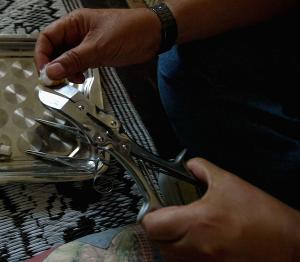
Most bans in San Francisco are enacted by the Board of Supervisors, but come November, it sounds like voters will have the opportunity to jump on the ban wagon by deciding whether to ban male circumcision.
San Francisco resident Lloyd Schofield said Thursday he is “on track” to have enough signatures to place his proposed measure on the November ballot that would make it illegal to “circumcise, excise, cut or mutilate the foreskin, testicle or penis of another person who has not attained the age of 18.”
Schofield has until April 26 to submit 7,168 valid signatures to make it onto the ballot. He would not disclose how many signatures were collected at this point.
Schofield said he became the proponent of the local ballot measure
after being asked to champion a local bill during a July symposium on
circumcision held at the UC Berkeley. Schofield said he was
approached by those affiliated with a group pushing for a federal
bill to “end male genital mutilation in the U.S.,”
according to its website, mgmbill.org
.
He said he thought about it for two weeks and then decided to do it. “I always knew this was something wrong to do to a child,” he said.
The signature-gathering is being run by a committee of about 10, he said. Schofield would not divulge the identities of the committee members, but said several are spending their own money to pay for signature-gatherers to help out. Schofield said he is out there himself — not being paid — collecting the signatures outside grocery stores and in neighborhoods like SoMa, the Castro, the Haight and Noe Valley.
“We say: ‘Would you like to help protect the children from forced circumcision? This is a human-rights issue,’” Schofield said.
The proposed measure would assess of up to $1,000 and up to one
year in jail for someone who performs a circumcision.
(Editor: Ask the female judge who is
blocking this if she clocks the circumcision of girls, which is also
religion based.)
Source: www.sfexaminer.com/local/2011/02/san-francisco-circumcision-ban-headed-november-ballot
U.N. Sees Progress in Ending Female
Genital Mutilation
Foreskins, Cervix Cancer Linked
Women whose sex partners are circumcised may be less likely to
get cervical cancer, a study suggests.
Source: www.intelihealth.com/IH/ihtIH/WSIHW000/23414/22002/348499.html
Doctor's Mistakes Causing Penis
Problems
Dr. George Denniston, director of Doctors Opposing Circumcision said, "Circumcision is not risk free. It is too risky for elective surgery. If parents knew how many times surgeons botched this operation, they would keep their baby boys far, far away from the circumciser's knives. Medical students often perform circumcision unsupervised. Sometimes a circumcised boy is sent home without the parents ever being informed of problems that occurred during or as a result of the circumcision until penile dysfunction becomes obvious years later. At other times, additional surgery is immediately required and, in some cases, the boy is sexually re-assigned as a girl."
"I will go to my grave hearing the screams of a tormented baby in my ears," says Marilyn Milos, Director of the National Organizations of Circumcision Information Resource Centers (NOCIRC) about the first circumcision she witnessed in nursing school. "As I watched in disbelief, I began to cry. The doctor looked up at me and said, 'There is no medical reason for doing this. ' Surely, this pain and suffering is an unacknowledged complication, too. More and more studies are showing that a host of complications arise from circumcision-not only physical trauma as illustrated in this study, but emotional trauma and sexual dysfunction, too. All circumcised men exhibit one or more complications. Many of these men are suffering from post-traumatic stress disorder because of circumcision, while we wonder why they aren't emotionally available to loved ones."
Liability for this surgery is increasing as more malpractice lawsuits are being filed to compensate for complications.
William Stowell, 20, is in the midst of the lawsuit he filed against his cirumciser, who allegedly failed to inform his mother of the complications prior to signing the consent form. "I was deprived of my birthright, the pleasure of natural, normal sexual intercourse, because of an excruciating 10-minute procedure conducted moments after my birth."
David Llewellyn, Stowell's attorney, adds, "We know the physical damage being done by circumcision, and that it is not medically recommended. Doctors who still circumcise are already investing in a lot of trouble, and this study makes their trouble worse. I believe we will see the number of circumcision-related malpractice lawsuits skyrocket in the near future."
J. Steven Svoboda, Executive Director of Attorneys for the Rights of the Child, an organization that has brought lawsuits against doctors who have circumcised babies, has a warning for doctors who continue to circumcise babies against the recommendations of medical bodies, "Doctors ignore a lot of medical literature and they ignore the screams of the babies, but they listen when they hear the word 'malpractice.' As a lawyer willing to sue, I' ve never had a doctor not listen to me."
More than 1.2 million male infants per year are circumcised in the U.S., the only country in the developed world that circumcises the majority of its male infants for non-religious reasons. The rate has remained around 60% in recent years. Circumcision is generally considered an American cultural practice, but the pertinent legal questions have not been decided and are only recently being asked. The debate about circumcision has been more vocal lately due to increased awareness and questions about harm and lack of proven benefits. Proponents continue to claim potential decreased risk of certain diseases and that the surgery is painless, safe and has few complications. Research shows otherwise, and no national medical association in the world recommends circumcision. Opponents say that every circumcision has complications; including the loss of the protective foreskin, increased infection rates, and less sexual enjoyment for the man and his partner.
For More Information Contact: Dr. George Denniston Executive
Director, Doctors Opposing Circumcision, see address above, www.doctorsopposingcircumcision.org
;
Marilyn Milos, RN Director, NOCIRC, San Anselmo, CA. 415.488.988 Fax:
415.488.9660 nocirc@cris.com
www.nocirc.org; William Stowell Plaintiff, BagelPimp@aol.com;
David Lewellyn Attorney for William Stowell, ARC board member,
770-918-1911 or llew.law@mindspring.com;
J. Steven Svoboda, J.D. Executive Director, Attorneys for the Rights
of the Child, 510.595.5550 or arc@post.harvard.edu
www.arclaw.org
The article: Paediatric penile trauma, M.S. El-Bahnasawy and M.T.
El-Sherbiny, BJU International, Volume 90 Issue 1 Page 92 - July
2002
Circumcision Causes Lifelong Harm,
Concludes New Research
A new study on circumcision in the latest edition of Journal of Health Psychology concludes that the surgery may cause a host of psychological problems—including post traumatic stress disorder (PTSD)—in adults who have suffered the surgery as babies. The study is due on doctor’s desks this week.
“Half of all men who were circumcised may have some degree of PTSD. This is what happened to adults who were sexually abused as children, and parents are doing it to their babies,” said Steven Svoboda, Executive Director of Attorneys for the Rights of the Child, a lawyer and co-author of the study.
The study, which cites hundreds of studies to support its conclusion, finds that the trauma of circumcision may affect the developing brains of babies, and may later be associated with adult psychological problems such as “emotional suffering, grief, anxiety, and depression, and a sense of personal vulnerability.”
“We’re hearing from more and more men about emotional difficulties, sexual difficulties, and psychological problems that they believe was caused by their circumcision,” said Ronald Goldman, Ph.D., Executive Director of the Circumcision Resource Center in Boston and a co-author of the study.
Up to now, most mental health professionals have been unaware of the psychological harms of circumcision. “This study alerts mental health professionals that circumcision may likely be the cause of some of the problems they are diagnosing in men,” adds Goldman.
The study’s authors write, “PTSD may result from childhood circumcision, just as it does from childhood sexual abuse and rape,” and that “some men circumcised in infancy or childhood without their consent have described their present feelings in the language of violation, torture, mutilation, and sexual assault.”
The study found that “compared with genitally intact men, circumcised men were often unhappy about being circumcised, and experienced significant anger, sadness, feeling incomplete, cheated, hurt, concerned, frustrated, abnormal, and violated.” The authors also found that circumcised men reported lower self-esteem than did genitally intact respondents. Reported sexual effects include significantly less penile sensation, less satisfaction reported by female partners of circumcised men, erectile dysfunction, and changes in sexual behavior such as more masturbation and less use of condoms. These behavior changes are seen as attempts to compensate for the decreased sensitivity associated with circumcision.
Adds Svoboda of Attorneys for the Rights of the Child, an organization that has brought lawsuits against doctors who have circumcised babies, “This data is going to affect the kind of damages that adult men get for being circumcised against their will as babies. Lawyers are going to be in court holding up this article and judges are going to have to pay attention. To win a legal case you have to show harm, and what the harm cost you, and this article does that.”
Svoboda has a warning for doctors who continue to circumcise babies against the recommendations of medical bodies: “We know the physical damage being done by circumcision, and that it is not medically recommended at all. The foundation is well laid for lawsuits. Doctors who are still doing circumcisions are already investing in a lot of trouble, and this study makes their trouble worse. They just have to wait 18 years until that baby grows up, and they’re in for a lawsuit. And an army of lawyers will be there with this study and many more in their arsenal.”
Marilyn Milos, Director of NOCIRC, an organization which seeks to end the practice in North America, says “this is the first time that an article addresses the psychological trauma to babies—it’s significant, long-term harm, like post traumatic stress disorder. Any time that we can determine that there is such severe harm resulting from an unnecessary procedure it should be outlawed. Female genital mutilation has been outlawed, and we need the law to set the standard, here, too, followed by aggressive educational programs. Parents and doctors need to know that this is a harm that lasts a lifetime.”
Svoboda is convinced that this study will have a major impact on circumcision in the U.S. “Doctors ignore a lot of medical literature,” he said, “and they ignore the screams of the babies, but they listen when they hear the word ‘malpractice.’ As a lawyer willing to sue, I’ve never had a doctor not listen to me.”
The Journal of Health Psychology is an interdisciplinary, international journal that acknowledges the social context of health, illness, health policy, and publishes theoretical, methodological, and empirical studies. The circulation of the Journal is worldwide and papers are invited from authors throughout the world.
The U.S. circumcises over 1.2 million male infants per year and is
the only country in the world that circumcises most of its male
infants for nonreligious reasons. The rate has remained around 60% in
recent years. Circumcision is generally considered an American
cultural practice, but the pertinent legal questions have not been
decided and are only recently being asked. The debate about
circumcision has been more vocal lately due to increased awareness
and questions about harm and lack of proven benefits. Proponents
continue to claim potential decreased risk of certain diseases, but
these claims are not accepted by any national medical organizations.
No medical association in the world recommends circumcision.
Source: Amber Craig, 919.960.9276 or amberc@attglobal.net,
Marilyn Milos 415.488.9883 or nocirc@cris.com
United Nations Officially Publishes
NOCIRC/ARC Written Intervention in Geneva
.
Due to the bureaucratic snafus it was not entered into the UN's
official records and given a document number until the past few
days.
They are also editing the proceedings of the Georgetown University
symposium for their next book.Circumcision Results in Sexual
Losses
Half reported no benefits from the procedure and two out of five reported harm, according to a study by Dr. Kenneth Fink and other researchers in the Journal of Urology (May 2002).
The men in this study were experiencing sexual dissatisfaction prior to the circumcision, and all thought it would improve their sex lives. The men, between the ages of 20 and 60, consented to the surgery. Each completed a questionnaire before and after the surgery.
"I'm not surprised that so many of the men in this study reported a loss of sensitivity," said skin sensitivity researcher Dr. Morris Sorrells, M.D. "I've found the same reduction in my preliminary study on penile touch sensitivity, comparing circumcised and normal men. Circumcision removesapproximately 80% of the fine-touch nerve receptors in the penis. Circumcision changes the penis from one of the most sensitive parts of the male body into one of the least sensitive. The fact that so many men are dissatisfied with having been circumcised is very telling. Why are doctors participating in an ineffective treatment?"
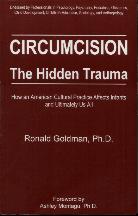
Ronald Goldman, executive director of the Circumcision Resource Center in Boston, and author of "Circumcision: The Hidden Trauma" says, "Though the study finds significant dissatisfaction with circumcision, the rate of dissatisfaction is probably higher than reported because people tend to avoid actions that stimulate emotional discomfort. The low rate of response (44%) to the mailed survey form suggests that non-responders may not have wanted to stir uncomfortable feelings about their dissatisfaction with their circumcision."
Despite the fact that most of the medical conditions treated by circumcision in this survey could have been treated conservatively, the study did not compare the sexual outcomes of circumcised patients with patients given conservative treatment.
Men who chose to have a circumcision for purely cosmetic reasons weren't all pleased with the result either.
On average, the men waited seven months before having intercourse for the first time. Full recovery is usually in three to four weeks. No reason was given for the delay.
Source: Dan Bollinger, danbollinger@insightbb.com
765.497.0150 Complete article at: www.icgi.org/loss.htm
Also, Dr. Ronald Goldman, crc@circumcision.org;
and Dr. Morris Sorrells, morrie@sorrells.com
Circumcision not a factor in spread of HIV
"Higher viral load and genital ulceration are the main determinants of HIV transmission per coital act in this Ugandan population," says Dr. R.H. Gray of Johns Hopkins University in an April, 14, 2001 Lancet article. "The risk of transmission was not significantly affected by the circumcision status of . male partners in discordant couples." A discordant couple is where either the husband or wife had tested HIV-1-postitive.
"The United States has the highest AIDS rate and circumcision rate in developed countries. Clearly circumcision does nothing to stop the AIDS epidemic, " says Dr. Denniston, Director of Doctors Opposing Circumcision (DOC). "Circumcision doesn't protect against HIV - adopting behaviors inconsistent with transmission protects against HIV. Using condoms, for example, has been shown to be over 98% effective in curbing the spread of HIV. It is commendable that these scientists continue to study HIV transmission and were willing to come to a new conclusion; and the larger issue is the damage done by the earlier, flawed findings. This damage must be undone. Parents are continuing to perform a hazardous operation with the mistaken belief that it benefits their baby boy's health when the opposite is true. Circumcision has no prophylactic health benefits, but it does put the child at risk for infection and even death."
"Attempts to control HIV by imposing mass circumcision on populations will be unsuccessful," says Denniston. "Circumcision can change sexual behavior in a way that promotes the spread of HIV. Circumcised men have a greater tendency to engage in riskier, 'more highly elaborated' sexual practices. Such behavior often includes unsafe sexual practices - less frequent use of condoms, which deaden sensation even more for circumcised men, unprotected anal sex, or sex with multiple partners. This may contribute to the high rate of HIV infection in the United States, where circumcision rates are still of epidemic proportions."
Source: Dr. R. H. Gray: rgray@jhsph.edu.
The article at: www.cirp.org/library/disease/HIV/gray2/
Circumcision: The root of misogyny
(Excerpt)
"...It wasn't until I became the mother of a son that I thought of
circumcision as the root of all evil—or at least the root of
misogyny. How could they not grow up and stomp us under their boots
after we allow such a hideous, agonizing torture to be inflicted on
their freshly born little bodies?...How could a betrayal so huge, so
profound, NOT take root in the tons and tons of societal garbage
heaped upon the heads of little boys and produce such misogynous crap
as wife-beating, witch-hunting, prostitution, pornography,
mother-blaming, rape, sexism, endless perversions of every kind, and
just general cold, unemotional, not-able-to-talk-about-his-feelings
kind of guys? It couldn't....But one, whole, feeling little boy
raised with integrity will grow up to be one whole, feeling man with
integrity. He will be horrified when he learns of the atrocity
committed by his fellows. He will speak against it. He will have a
whole, different outlook on life—one not based on pain, fear of
pain, suppression of pain, or administering of pain—and
therefore a life that touches others in a whole, different way. This
boy will make a difference. (We are grateful to Jody McLaughlin and
The Complete Mother for sharing this personal essay with us.)"
www.birthpsychology.com/birthscene/circ.html#two
Using the Semmes-Weinstein Sensory Evaluator, Kimmel also discovered that "the foreskin is far more responsive to sensation than previously thought."
Kimmel and fellow researcher Morris Sorrells found that the foreskin matches the lips and possibly exceeds the eyelids in sensitivity. "Circumcision represents a true loss of sensation, it is not a diminutive harm," Kimmel said. The foreskin measurements went 'off the scale' in the standard 0-20 testing scale. A more sensitive, automated device that would measure even greater amounts of sensitivity was not available to the researchers. Sorrels plans to obtain the device and perform over 48 penile sensitivitytests on 500 volunteers.
Kimmel used a sample group of circumcised, intact, and foreskin-restoring men. Initial findings indicate that restoring men gain back sensitivity, but never attain the sensitivity of men who were never circumcised. Non-surgical restoration techniques use stretching the skin to cover and protect the glans.
Confirming Kimmel's conclusions, presenters Dr. Gregory Boyle and G. Bensley reported that their findings revealed circumcised males are physically and psychologically harmed by the practice. Boyle said, "The majority of circumcised men could be reliably classified as having penile scarring, being reluctance to use condoms, and experiencing a progressive decline in sexual sensitivity. Many express regret and are hesitant to think about their circumcision status. There are many adverse physical, sexual and psychological effects from infant circumcision, which need to be acknowledged in any discussion pertaining to informed consent in relation to circumcision surgery."
Boyle reported, "A circumcised male has been deprived of a highly specialized, sensitive and erogenous part of his penis that would haveserved important sensory, sexual and protective functions had it been left in place." A large number of nerve bundles are removed during circumcision. "The foreskin is the primary sensory platform of the penis," said Boyle. "The glans of the penis has very few nerve bundles, about the same sensitivity as the back of the heal."
Experts from around the world addressed the physical, psychological, religious, moral and ethical issues confronting Female and Male Genital Mutilation. Previous Symposia have been held at Anaheim, California (1989), San Francisco (1991), University of Maryland (1994), University of Lausanne, Switzerland (1996) and Oxford University (1998). National Organization of Circumcision Information Resource Centers P.O. Box 2512, San Anselmo, California 94979 www.nocirc.org 415.488.9883 Fax: 415.488.9660
CONTACT: Morris Sorrells MD, Tel 650.322.1298, g.danes@nanospace.com
Gregory Boyle, PhD. Bond University, Australia gregb@minerva.its.bond.edu.au
George Denniston MD, Tel 813.657.9904, gcd@u.washington.edu
Conference Hears Calls for Banning of
Circumcision
A Queensland psychology professor told the Sixth International Symposium on Genital Integrity that the surgical removal of the foreskin, performed on 12 per cent of Australian infant boys today, could result in a range of psychological and sexual problems in adulthood, including post-traumatic stress disorder.
"Studies now demonstrate quite clearly that circumcision has long-term adverse consequences, not only physically but also sexually and psychologically," Professor Greg Boyle, of Bond University, saidafter addressing the conference.
"Post-traumatic stress disorder does occur in a certain percentage of adult men who come to the realisation that they have suffered irreparable damage sexually as a result of circumcision during infancy.
"To amputate a highly erogenous sexual tissue such as the foreskin is quite clearly a criminal sexual assault."
Prof Boyle said circumcision was a violation of a child's human rights and should be considered an offence to be prosecuted through the courts.
He said a precedent had been set by a 1992 High Court ruling that parents could not provide legal consent for an irreversible, non-therapeutic medical procedure performed on an unconsenting minor.
Prof Boyle said he believed Australia was moving down the path of criminalising circumcision, with an increasing tide of litigation against doctors.
In an out-of-court settlement in Perth last December, a 24-year-old man received $360,000 from a doctor who circumcised him as an infant, he said.
Prof Boyle said it was a violation of Australia's anti-discrimination laws to ban female genital mutilation while failing to give boys the same protection.
Australian historian Robert Darby said circumcision began in Australia during the 1890s, when it was seen as a cure for a number of ills, including masturbation, convulsions and diarrhoea. It became almost universal during the 1920s.
However the popularity of the procedure appears to be on the wane,
according to Medicare figures, Prof Boyle said. He said the figures
showed almost 95 per cent of Australian baby boys were circumcised
during the 1950s and '60s, compared with 12 per cent today.
Pain Of Circumcision Creates
Controversy
A woman who wrote to us was distressed about her nephew crying during his circumcision ceremony: "The baby screamed and howled, and I know it hurt him. Nobody else seemed upset, but it really bothered me. Isn't there a way to anesthetize the baby?"
We responded that researchers have confirmed that babies experience pain during circumcision and that this seems to affect their pain response to vaccination later on. Use of local anesthesia reduces these pain reactions.
We were unprepared for the outrage that followed. One physician wrote that nobody can tell if infants really feel the pain or if they just cry because they are being restrained or surrounded by strangers. He went on to say that administering local anesthetic would hurt more than the actual surgery which takes only seconds.
Someone else wrote that we had made too much of the issue of pain: "I once heard a mohel talk about the subject. A 'mohel' is a specialist in the Jewish rite of circumcision. He defended the practice by saying he has had infants literally SLEEP through the procedure. Now, how painful can it really be?"
Others expressed astonishment that anyone would claim circumcision is not painful or that babies can't feel it. Many agreed with the reader who stated: "Circumcision is institutionalized sexual mutilation. It presumes all American-born baby boys have defective penises. The end of the penis we call the foreskin is not a birth defect."
People continue to argue about the medical benefits and risks of circumcision. Many of our readers overlooked the ceremonial context of the question we had been asked. No medical authorities have seriously suggested asking people to change religious behavior.
The real issue, however, is the undertreatment of pain in American medicine. Whether the patient is a baby boy or a grandfather with terminal cancer, pain has negative consequences on a person's quality of life. Far too often it is brushed aside or ignored by the medical profession.
The researchers who have studied this issue in a scientific manner have concluded: "Without exception, newborns in this study who did not receive an anesthetic suffered great distress during and following the circumcision, and they were exposed to unnecessary risk (from choking or apnea)."
They found that circumcision without anesthesia caused greater distress than the pain of administering the local anesthetic, and that the excellent technique of the surgeons did not forestall the babies' reactions (increased heart rate, crying and grimaces). According to this research, ring block is superior to other methods of anesthesia for preventing circumcision pain and postsurgical complications possible with EMLA cream.
Interested parents and physicians can consult the article by J. Lander and colleagues in the December 24/31, 1997 issue of the Journal of the American Medical Association (vol. 278, no. 24, p. 2157-2162).
Pain should be prevented whenever possible and treated
appropriately when it occurs, whether it is caused by illness or by a
surgical procedure. Babies can't speak for themselves, and the
terminally ill may also be incapable of demanding adequate pain
relief. Instead, medical institutions should be protecting these
weakest and most vulnerable patients.
Source: www.healthcentral.com/peoplespharmacy/PharmFullText.cfm?id=17824
"I believe no man would allow his beloved son to be circumcised if he were in touch with the terror he experienced during his own." John Breeding
* * *

 |