
Men’s health is significantly neglected compared to women’s health. In the 1920s men died one year younger than women (the rate women died in childbirth was almost equal to the rate men died in war). Today, men die 5 years younger than women and have higher death rates for all 10 leading causes of death.
Men also account for about 85% of homeless adults, 90% of prisoners, 65% of dropouts, 80% of suicide deaths, and 92% of occupational deaths. (Warren Farrell, Ph.D., “The Myth of Male Power: Why Men Are the Disposable Sex.")
Male suicide has skyrocketed in the last 30 years, especially among young men and divorced men. Men are also more likely than women to have mental disabilities but less likely than women to receive treatment, especially in prisons.
Despite these figures, there is still no federal office of men’s health even though there are about 7 federal offices of women’s health. Most states and local governments have offices of women’s health but not men’s health (only Georgia has an office of men’s health). The government has long spent multiple times more on breast cancer than prostate cancer research, despite nearly equal mortality rates.
The reason women statistically outlive men may have something to do with the idea of survival of the fittest. Despite the stereotype that men enjoy "getting physical" more than women, a poll of nearly 15,000 Americans conducted by Hartsdale, NY-based American Sports Data Inc. found that women engage in more physical fitness activities than men by a 3 to 3 ratio.
Menstuff® has compiled general health information. See our
complete listing of Health
Issues (emotional, physical, psychological, sexual and
additions). Here is an easy to understand glossary
 of medical terms.
Important Men's Health Dates

|
Search for a physician, dentist, hospital or health plan anywhere in the United States. Choose a doctor by specialty and location. |
IMPORTANT BOOKS
   |
   |
   |
   |
   |
   |
 5:20
5:20
The Science of Men
Medical Concerns for Men
Routine Maintenance for Men to
Keep the Warranty Current
Get a Check Up
What Does "Premature Death" Mean?
Health
Care Issues
Top 10 Health Risks
10 Men's Health Symptoms
Your Guy Shouldn't Ignore
Health Experts Issue a Wake-up Call
on Men's Health
Sexual Health For Men and Women: A
New Concept in Telemedicine and Gender-Specific Health
Care
Dietary Fat No Longer a Health Concern,
Says US Government
Dietary Fats and the Heart
Lowering The Temperature At Night Could Mean A
Better Night’s Sleep
2015 Dietary Guidelines Sneak
Peak: Cholesterol in Diet OK
8 Myths About Hygiene That Are Totally
Bogus
Spicy Food Is Affecting Your
Lifespan
Fitness for men: The busy man’s guide
to getting in shape
It’s Teen Health Week (April 1). Seem
like there's not a lot to celebrate? Think
again.
Gay
Health
Men: That Time of the
Month
8 Self-Exams for Optimal Men's Health
Watch Out for These Warning Signs
Sceenings
for Men
Healthy Choices
America’s First School District to Serve 100% Organic Meals
Are You Making Heart Healthy Choices?
5 Things Your Feet Are Telling You About Your
Health
Drink Water
Benefits of Drinking Water Oversold?
No, You Do Not Have to Drink 8 Glasses of Water a Day
Checklist Predicts if You'll Be Alive in 10
Years
Health A-Z
Being a Healthy Man
The Myth Busting Health Quiz
Men's Most Embarrassing Health
Problems
Is your cell phone causing your
spirm count to drop?
13 Healthy Habits to
Improve Your Life
Boys' Health Lags Behind
Girls
Tests And Procedures: Answers For
You
Screenings for Men
Alternative
Medicine
Current Health Hoaxes
Endangered Species -
Men
American Academy of Orthopaedic Surgeons
Ignore Men - 1
The AAOS (above) Confirms Our
Suspicion - 2
15 Major Causes of
Death
Get a Check Up
Men: Stay Fit As You
Age
10 Manly Tips For An
Aging Workout
Age-Appropriate
Exercises For Men
Waved Status for Medical
Testing
Men's Health Office
Men's Health Act
Office of Men's Health
What is the WHO Doing for Men's
Health?
Refuting the Myth of Biological
Advantage
Free
Reminder E-mails for Your Health
International Journal
of Men's Health to be Launched
How to Survive a Heart Attack When
Alone
Body Mass Index Calculator
How Long Will
You Live Into The New Millenium?
Hard-working women may be bad for
your health
Most Smokers Can't Collect Social
Security
Breast Cancer Kills Men
Too
Poisons - Don't Forget about
Inhalants
The Myth: Medical Research is
Biased Against Women
HMO Legislation Excludes Men
The Latest on
Ritalin: Scientists last week said it works. But how do
you know if it's right for your kids?
Ritalin - It's Ridiculous
Testicular
Cancer - Attention All Men 15 to 40
Parkinson's Disease
Suicide
Happy
Holidaze?
Stop Drugging People
Let's Hear it for
Testosterone
Health Care Bias
Men Revolt
That's Not a Stretch
Pot Scrubbers
& Triclosan
Work-Related Aviation
Fatalities
Prevalence of Aspirin Use to Prevent Heart
Disease
Second-Hand
Smoke
Gay Health Issues
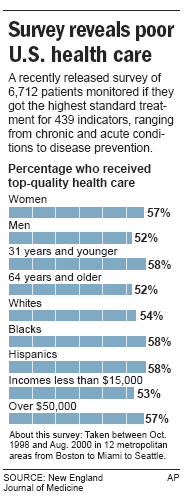
Survey Reveals Poor US Health
Care
Top 10 Articles of 2013
Two Crazy Questions to Reboot your
Progress
A Love Story
What
Happens When You Don't Bathe?
Stronger Legs = Stronger
Mind
5 Reasons You Should Eat Oatmeal Every
Day
What to Eat for Stronger
Bones
Unhealthy Habits: 8 Vices To Extinguish
Now
Healthful Foods You Should Never, Ever
Eat
Ask
an Expert
Read More in the Men's
Health Center
Ask
an Expert Archive
Mom Wasn't Always Right
Fart Facts
How States Rank on Health
Care
Mid-Life/transition
Menstuff.org Visits Health
& Wellness Fairs
Urine and Your Health
Blood Disorders
Snippets for Men
Snippets for Black Men
Snippets for Latinos
Snippets for Men vs.
Women
Related Issues: Healthy
Man, Health
Care, Concerns,
Healthier Husband,
Risks, Screenings,
Tips, Healthy
Heart Exercise, Healthy
Prostate, Healthy
Porn
Books on ADD,
AIDS, Blindness,
Deafness,
General,
Impotence, Prostate,
Stress, and Testicular
Health
Journals
- on Child, Elder, Emotional, Religious, and Sexual Abuse and
Trauma
Periodicals
Resources on Blindness,
Deafness,
Disabilities,
General
Health, Impotence,
Parkinson's,
Prostate,
Rural
Health, & Testicular
Slide Guides for AIDS,
STDS, General
Health, Prostate
and Testicular
Self Exam
Pamphlets on General
Health and Prostate
First Aid Shortcuts
Allergic Reactions
Asthma Bites and Stings
Bleeding Breathing Problems
Broken Bones
Bruises
Burns
Chest Pain
Choking
CPR
Diarrhea
Dizziness
Drug Overdose
Eye Injury
Fainting
Fever
Food Poisoning
Foreign Objects
Head Injuries
Heart Attack
Low Blood Sugar
Neck & Back Injuries
Poisoning
Seizures
Shock
Skin Rash in Kids
Sprains & Strains
Sunburn
Vomiting
Source: firstaid.webmd.com/script/main/hp.asp
Other First Aid A-Z
Source: firstaid.webmd.com/script/main/hp.asp
What Does "Premature Death" Mean?
For example, the US Centers for Disease Control and Prevention (CDC) describe a death before the age of 80 as premature in documents such as the Morbidity and Mortality Weekly Report.
In high income nations, death rates for middle-aged adults have declined dramatically since the 1970s, thanks to more people quitting smoking and better survival rates after heart attack and stroke.
Even better for those living in industrialized countries, notes epidemiologist and international public health researcher Prabhat Jha, health promotion strategies including better secondary treatment after a cardiovascular event, more effective diabetes control and anti-smoking campaigns have helped compress morbidity - meaning the onset of many age-related diseases is delayed until a person is older, and they stay healthier, longer.
What about poorer nations? "Global life expectancy is today 70 years," says Jha, "so an appropriate mark for premature deaths in low and middle income countries should be deaths before age 70."
Jha was one of an international team proposing in The Lancet in 2014 a 40% reduction in global premature deaths by the year 2030 could be achieved through measures such as reducing infant mortality, deaths from communicable diseases such as tuberculosis, HIV/AIDS and malaria, and by battling malnutrition and injuries.
Sources:
Prabhat, Jha. Professor of Epidemiology, University of Toronto Dalla Lana School of Public Health. Correspondence September 29, 2014.
Prabhat Jha, and Richard Peto. "Global Effects of Smoking, of
Quitting, and of Taxing Tobacco" N Engl J Med 2014; 370:60-68 January
2, 2014. www.nejm.org/doi/full/10.1056/NEJMra1308383
Ole F Norheim, Prabhat Jha, Kesetebirhan Admasu, Tore Godal, Ryan
J Hum, Margaret E Kruk, Octavio Go´mez-Dante´s, Colin D
Mathers, Hongchao Pan, Jaime Sepu´lveda, Wilson Suraweera,
Ste´phane Verguet, Addis T Woldemariam, Gavin Yamey, Dean T
Jamison, Richard Peto. "Avoiding 40% of the Premature Deaths in Each
Country 2010–30: Review of National Mortality Trends to Help
Quantify the UN Sustainable Development Goal for Health." The Lancet
19 September 2014. www.cghr.org/wordpress/wp-content/uploads/SDG-40-perc-Reduction-in-deaths-2030-Lancet-2023.pdf
Paula W. Yoon, Brigham Bastian, Robert N. Anderson, Janet L.
Collins, Harold W. Jaffe. "Potentially Preventable Deaths from the
Five Leading Causes of Death — United States, 2008–2010."
Morbidity and Mortality Weekly Report May 2, 2014 / 63(17);369-374.
www.cdc.gov/mmwr/pdf/wk/mm6317.pdf
Those with intelligent personality types are rational and logical which is, generally speaking, the opposite of emotional types. Intelligent individuals think foremost with their heads, emotional people go with what their hearts tell them.
While you likely have an idea about which personality type you
identify the strongest with, there may actually be a closer match! To
gain a better understanding of how your brain is wired simply work
through the following nine questions. This quiz comprehensively
covers your thoughts, views, and responses to a range of situations
and a variety of topics. The answers you provide will tell you
whether or not you are the type of person you think you are, so click
the “Let’s Play” button to begin and figure out
exactly which personality type fits you best!
Source: www.sun-gazing.com/quiz-personality-type-fit/
Lowering The Temperature At Night Could Mean A
Better Night’s Sleep
However, just because you like to burrow under layers of blankets doesn’t mean you’re doing the best thing for your body. In fact, there are proven health benefits to sleeping in cooler temperatures! Just take a look at some of the advantages of sleeping in a cold room, and then stick around for some ways to reduce the temperature while you snooze.
1. It can help you manage your weight. Who doesn’t want to lose weight without going to the gym? Studies have shown that sleeping in cool temperatures can help raise your metabolism. Despite not moving much, your body does burn calories while you sleep, so why not sleep with the A/C on and let your body do the work?
2. You’ll look your best. Sleep is your body’s best medicine, because the better you sleep, the more melatonin (the body’s natural anti-aging cream) you produce. When it’s cold, you sleep better — period. So, try to lower that temperature before you catch some z’s and reap the benefits of your beauty rest in the morning.
3. It regulates body temperature. Staying under the covers with your head exposed is the healthiest way to sleep. While the length of your body stays warm, your head will remain cool, ensuring that you remain at an overall consistent temperature. That means no hiding your head under the blankets!
4. It can lead to better physical and mental health. Sleep studies have shown that symptoms of diseases such as sleep apnea and fibromyalgia have decreased when sleeping in cooler temperatures.
5. You’ll just flat-out sleep better. Your body’s temperature naturally decreases after you fall asleep. This is why it’s common to wake up in the middle of the night and feel cold, even in the summertime. If you’re sleeping in a cooler room, your temperature will drop quicker, leading you to la-la land much faster. Just try it and see!
If you’re not sure how to lower the temperature while you sleep, try one of these helpful tips!
1. Sleep with fewer clothes on. This one’s kind of a no-brainer, but don’t think that you have to sleep completely sans clothes. If you sleep in full PJs, try not wearing pants. If you wear a sweater, wear a shirt instead. It’s all about removing layers and finding what works best for you.
2. Stick your feet out of the blankets. Sure, you’ll have to untuck your blanket, but that may be the easiest fix ever!
3. Turn a fan on! Even those without access to air conditioning probably have a fan lying around. Haul it into the bedroom and enjoy the cool breeze!
4. Get the temperature just right. Studies have shown that
there is actually a near-perfect temperature to sleep in that will
prevent you from becoming too blazing hot or freezing cold. The ideal
temperature falls between 60-67 degrees celsius.
Source: boredomtherapy.com/out-cold/?pas=1&as=701aol
Current Health Related Hoaxes and Rumors
Tests And Procedures: Answers For You
Checklist Predicts if You'll Be Alive in 10 Years
Researchers hope the findings, reported in the March 6 Journal of the American Medical Association, will help older adults and their doctors come to better decisions on health care.
There currently are national guidelines on medical procedures like colon cancer screening and mammography screening for breast cancer -- but they give general guidance, not individual.
The checklist could help better tailor advice to older patients, said lead researcher Dr. Marisa Cruz.
"It's meant to be used in a clinical context, to help doctors and older patients discuss screening and other interventions," said Cruz, a clinical fellow at the School of Medicine at the University of California, San Francisco.
Guidelines on cancer screening tests and other interventions vary, but they are based on averages. And some guidelines suggest age cutoffs for screening, because there's a lack of evidence that the tests benefit the average person past a certain age.
Colon cancer screening is one example. The U.S. Preventive Services Task Force, an independent panel that advises the federal government, says that for most people, colon cancer screening should begin at age 50 and continue only until age 75. Other groups, including the American Cancer Society, do not give an upper age limit, but say doctors should consider an older patient's overall health and life expectancy. For an elderly person in poor health, an aggressive treatment or even a screening test could do more harm than good.
On the other hand, a 75-year-old in good health could live many more years, and may benefit from cancer screenings or aggressive treatments, such as tight blood sugar control in people with diabetes.
Cruz said the checklist used in the new study aims to help older adults get the tests or treatments that might benefit them, and avoid potentially harmful ones.
What it does not do, Cruz said, is give any one person a "cut-and-dried prediction" of what will happen in the next 10 years.
The researchers created the checklist based on data from a national study of nearly 20,000 U.S. adults older than 50. They found that 12 factors, considered together, can give an idea of an older adult's risk of dying within 10 years.
Those include age, sex, weight, smoking and whether a person has diabetes, lung disease, heart disease or physical limitations such as difficulty walking a few blocks or moving large objects.
Doctors can get that information using yes-or-no questions, and then assign points for each answer, Cruz said. If you're between 60 and 64 years old, for example, you get one point; if you're 65 to 69 years old, you get two points.
People with a total score of one have, on average, a 5 percent chance of dying in the next 10 years. A score of five translates to a 23 percent chance of dying within a decade, while a score of 10 corresponds to a 70 percent risk.
None of that is set in stone, Cruz said, but the scoring system breaks people into "rough categories" of risk.
Having an idea of an older patient's life expectancy is important because some medical interventions "take a long time to pay off," said Dr. James Pacala, president of the American Geriatrics Society.
"Most cancer screenings, for example, take five to 10 years to pay off," Pacala said. For an older person unlikely to live that long, the risks of screening -- such as false-positive results, needless invasive tests and anxiety -- are likely to outweigh any benefit.
"If you care for older patients, this is something you always have running in the back of your mind," Pacala said. "What is the rest of this patient's life likely to look like?"
Right now, he said, doctors can get an idea by looking up average life expectancy for a patient based on age and sex, and then considering that person's overall health. The checklist in this study, Pacala said, offers a more "formal" way to do that.
"This provides us with evidence-based numbers," he said.
Pacala stressed, however, that decisions on whether to screen for or treat a disease should not be based solely on a number. He said longevity estimates should be used to facilitate discussions between doctors and patients.
A doctor not involved in the study agreed.
"There is absolutely a need for better tools for understanding life expectancy," said Dr. Ethan Basch, an oncologist and director of the cancer outcomes research program at the University of North Carolina School of Medicine, in Chapel Hill.
But no life-expectancy calculator -- or any single guideline -- is enough, Basch said. "This is one piece of information to help an older patient make an informed, rational decision," he said.
Basch chaired the American Society of Clinical Oncology committee that recently developed the group's guideline on PSA screening for prostate cancer. The society suggests that doctors discuss PSA screening with men who are expected to live for more than 10 years.
PSA screening is controversial because prostate cancer is often slow-growing and will never threaten a man's life. Even if screening catches a prostate tumor, many men may be treated unnecessarily. (Editor's note: This in confusing, especially the word "never" since over 30,000 men die because of prostate cancer EVERY year.)
For a man expected to live fewer than 10 years, the ASCO says the potential harms of PSA screening seem to outweigh the benefits. For men with a longer life expectancy, the group says things are not so clear-cut, and having a conversation with your doctor might be worthwhile.
|
|
|
|
You're female |
|
|
You're under age 85 |
|
|
You're a non-smoker |
|
|
You're a healthy weight for your height |
|
|
You don't have diabetes |
|
|
You don't have heart failure |
|
|
You don't have cancer |
|
|
You don't have lung disease |
|
|
You can manage your finances |
|
|
You can bathe yourself |
|
|
You can walk long distances |
|
|
You canpush or pull heavy objects |
|
|
Source: www.everydayhealth.com/healthy-living/your-longevity-checklist-infogram-7140.aspx |
|
Learn more about screening tests from the U.S.
Preventive Services Task Force.
Source: www.webmd.com/healthy-aging/news/20130305/over-50-checklist-may-predict-if-youll-be-alive-in-10-years

Fitness for men: The busy man’s
guide to getting in shape
All you need is a simplified exercise plan, a progressive set of nutrition habits, and a knowledgable coach to help guide the process.
“Man, I wish I could train like we used to.”
That’s what a high school buddy told me the last time we caught up.
“With the kids, my business growing, and all the other stuff I’ve got going on … I don’t know … there’s just no time to get in shape.”
My buddy had gained about 30 pounds since high school, and it definitely wasn’t the good kind. All fat and not an ounce of muscle.
His cholesterol and blood pressure, he told me, had sky rocketed. And he complained of feeling lethargic and sometimes even a little depressed.
“I really want to do something about this,” he said grabbing his stomach, “and I want to feel good again. But where am I gonna find time to work out like we did back in the day?”
As I sat there, I couldn’t help but feel for the guy.
He’s a great person with a fantastic wife, two young children, a growing consulting business, and two aging parents he helps care for. So it sucked to see him feeling trapped and struggling.
But here’s the thing: he needn’t feel that way.
Busy guys everywhere are still able to manage hectic lives while also managing their health and fitness.
I know because I’m one of them.
I’m married, have two young children, manage a growing company, and have a host of other things competing for my attention on a daily basis. Yet I still manage to make health and fitness a priority.
Here’s more: our team helps thousands of other busy, high-stress guys get in shape and manage their health every single day.
And, if you’re interested in looking and feeling good again, we can help you too.
Dude, you’re thinking about this all wrong
Getting back to my buddy for a minute, here’s the first piece of advice I gave him — and it’s a piece of advice I give to guys everywhere: Get rid of the idea that what we did in high school is the best way to get in shape.
Truth be told, what we did back then was pretty stupid. Weight training for an hour or two? Every day except Sundays? What a waste of time and energy.
But I guess we had plenty of time and energy to waste back then. Oh how times have changed!
Of course, if we’d have known better, or had some proper coaching, we might have gotten our shit together. But we didn’t. So we spent too much time in the gym, doing the wrong stuff, in a way that wasn’t sustainable.
Yes, we were in shape. But we were young, had great metabolisms, and succeeded in spite of our program. Not because of it.
In fact, those nagging aches and pains we complain about today — the sore knees, trick shoulders, bum elbows — are probably related to our dumb high school training.
(And speaking of injuries, if you’ve got one and that’s what’s stopping you from getting back in shape, read this: How to get in great shape, even after an injury.)
As I told my friend:
“Here’s the good news: you don’t have to train like we did in high school to get back in shape. In fact, you don’t even want to. I’ve got something else in mind that’ll work way better, take far less time, and fit into your life, as it is now.”
First: Choose a simpler, less time-consuming workout plan
Instead of 6 weight-training workouts a week, each taken right out of the pages of Men’s Health magazine, we started with a completely different approach.
Each week he did the following:
So, instead of 9 hours of exercise a week — plus travel time to and from the gym — he would be doing less than 3 hours a week. And most of it could be done right at home, if he wanted.
He also got to do it all on his own schedule, adjusting the workout days and times so that they would fit into his demanding and ever-changing planner.
Sound too good to be true? It’s not. (After all, it’s trusted advice that I gave to a good friend of 20+ years).
This type of “exercise minimalism” works extremely well when it’s designed by a knowledgable coach. In fact, Precision Nutrition Coaching is based on this approach. That’s why even the busiest guys can get fantastic results in the program.
Next: Get some better nutrition advice
Yes, exercise is important. But, for busy, high-stress guys wanting to drop weight or get back in shape, nutrition is where it’s at. That’s why I also recommended a few nutrition tips.
Again, I told him to forget what we did “back in the day.” Loading up on whole milk, protein shakes, chicken breasts, and steamed broccoli was fine when we were younger. But nowadays his goals are different.
Plus, he’s got a family to consider. Forcing his wife and children to choke down “bodybuilding food” — or to make special meals just for him — will do more harm than good.
So we started with a few nutrition habits, just like we do in PN Coaching.
To keep things simple, for the first two weeks of his new exercise program, he added 1g of fish oil per percent body fat (he took 25g a day) and a multivitamin. Yes, that was it. For the first two weeks.
After that, we introduced a new nutrition habit every two weeks. Some habits had to do with how he was eating, some with what he was eating, some with how much he was eating, and some with when he was eating.
But they were all designed progressively — each habit building on the last.
The key: we didn’t change too much at once.
By changing just a little at a time, the changes felt small. Almost too small. But, at the end of the year, his eating was completely different.
Finally: Think less, do more
For guys with a lot of responsibilities — and stress — this is exactly how it ought to be.
When you’re 19 years old, you may have the time to read, research, and come up with all sorts of crazy exercise and nutrition plans. (Although a good coach would still do better).
But at 40, focusing on being a good partner, doing your best as a parent, giving your all at work, keeping up your home, and making sure your bills are paid … well, there goes your time and mental energy.
Do you really need more shit to figure out? Probably not.
That’s why it’s best, when it comes to fitness, to find someone who can do the thinking and planning for you. Who can make it easy and allow you to focus on one thing: doing.
According to our most successful PN clients, it’s this very thing that made all the difference.
By trusting our coaching process, and simply doing as we said, they were able to get into the best shape of their lives without stressing and agonizing over every step.
Buddy, there’s still hope for you
In the end, here’s the message I wanted to communicate to my friend:
“Even if you’re a busy guy, you can drop fat, get healthy, and get into the best shape of your life. All you need is a simplified exercise plan, a progressive set of nutrition habits, and a knowledgable coach to help guide the process.”
If you’re like my friend, and have let your busy life stand in the way of your health and fitness, we’re here for you.
Every day, through our coaching program, we help guys prioritize their own health and fitness.
But whether you choose PN Coaching or not, I do encourage you to do something — anything — as soon as possible.
Before you know it, 30 extra pounds can easily become 50 extra pounds. High blood sugar can easily become type 2 diabetes. And high cholesterol can easily become cardiovascular disease.
So the question isn’t “do I have time to get in shape?” It’s “do I have time not to?”
Next step: Get started
If you’d like some direction and guidance in getting started, we’d be happy to help.
In fact, we’ll soon be taking a group of new clients looking for the same thing, all as part of Precision Nutrition Coaching.
We accept a very small number of new clients every 6 months, and the spots in the program typically sell out in hours. However, those motivated enough to put themselves on the presale list get to register 24 hours before everyone else. Plus, you’ll receive a big discount at registration.
So put your name on the list below — because, as always,
spots are first come, first served, and when they’re gone,
they’re gone.
Source: John Berardi, Ph.D., www.precisionnutrition.com/busy-mans-guide
Spicy Food Is Affecting Your Lifespan
Some like it hot, and those people have a lower risk of premature
death
as well. That’s according to a new study out of Harvard Medical
School that’s making waves in the scientific community.
The four-year study analyzed the habits of almost half a million
men and women from China and found that those who ate spicy
foods
as little as three days per week were less likely to die during the
study period than those who avoided the hot stuff. What’s the
link between heat and health?
There is a common misconception that eating spicy foods is unhealthy. Those of us that like a quick in our food will surely have heard all or any of the following statements: Spicy food is bad for your stomach and esophagus lining, spicy food will ruin your teeth and tastebuds, spicy food will always cause gastrointestinal problems. And perhaps the silliest of statements, “eating spicy food will give you cancer.” If this last statement was true then well, the population on Earth would be much, much, smaller.
Sure, when our bodies aren’t used to the heat or perhaps we added a bit too much piquant to the dish, some of us might experience unpleasant side-effects. But they are temporary and often times we can both prevent or tone down their severity. Of course when it comes to eating spicy food the most important thing is knowing our heat limits. I’d now like to share some facts about the health benefits of adding piquant flavours to our meals.
(Please notice that the following does not apply to eating large amounts of the world’s spiciest peppers.)
8 Myths About Hygiene That Are Totally
Bogus
MYTH #1: YOU NEED TO SHOWER EVERY DAY.
Both experts agree showering every day isn’t necessary. That is, of course, unless you have a job or hobby that has you sweating profusely or getting really dirty every day. Our bodies are covered in microbes, and they grow over time, says microbiologist Jason Tetro. “If their concentration gets too high, we stink and run a risk of skin irritations, acne and dandruff.” He adds that showering at least once every few days should keep bacterial levels low enough to prevent unpleasant aromas. If you have dry skin but still need a shower, Dr. Mike Swann says bathing with synthetic soaps, such as Cetaphil, Dove or CeraVe, can minimize the amount of residual cleanser on your skin and avoid stripping it.
MYTH #2: PUBLIC TOILET SEATS ARE HAZARDOUS TO YOUR HEALTH.
If you’re a woman, you’ve likely perfected the fine art of making a toilet paper ring on the toilet seat or squatting without touching the seat. However, though microbiologist Jason Tetro says toilet seats are often coated with germs, the same holds true of your toilet seats at home, and they pose no threat to the skin. So sitting on a public toilet seat will likely cause you no harm. As long as you don’t have any open cuts or sores where your skin touches the seat, you’ll be fine. “Just don’t lick them, as many of the bacteria present could cause gastrointestinal troubles,” he jokes.
MYTH #3: HOT TUBS ARE FULL OF HARMFUL BACTERIA.
Hot tubs have a horrible rep. They were even once memorably referred to on “Seinfeld” as a “bacteria frappe.” Jacuzzis, like all recreational water areas, are contaminated with bacteria -- but mostly of the harmless, environmental variety, says microbiologist Jason Tetro. However, some can be troublesome, such as MRSA, E. coli and Legionella pneumophila, the cause of Legionnaires’ disease. As long as the hot tub is cleaned regularly, you should be good to take a soak.
MYTH #4: ANTIBACTERIAL PRODUCTS ARE BEST FOR HOUSEHOLD CLEANING.
It’s common knowledge that kitchens and bathrooms are hotbeds of germy activity. So you’d think using antibacterial products would be the best way to clean them. But microbiologist Jason Tetro says antibacterial products often contain triclosan, a chemical that isn’t particularly effective at killing bacteria and may be an environmental toxin. Disinfectants like bleach work better, but more eco-friendly solutions containing hydrogen peroxide work just as well.
MYTH #5: HAND SANITIZER REMOVES ALL BACTERIA.
Time to change the way you think about hand sanitizer. Dr. Mike Swann says that while sanitizers do reduce bacterial loads on our hands, the thought that your hands will suddenly be bacteria-free is just a myth. “The truth is that bacteria are all over your skin all the time,” he says, adding that this is completely normal. Though the sanitizers made of more than 60-percent alcohol actually work pretty well, the Centers for Disease Control says the other kind likely contains triclosan, which was recently banned from over-the-counter antibacterial soaps and bodywashes by the FDA. Soap and water is the best way to wash your hands -- especially if your hands are visibly dirty or if you’ve handled chemicals like pesticides.
MYTH #6: WASHING CUTS IN OCEAN WATER WILL HELP THEM HEAL.
The old myth about how seawater cleans out cuts and scrapes is just that -- a myth. It may be founded in truth (saline solution does help cuts heal), but in practice, it doesn't translate. Microbiologist Jason Tetro says an ocean rinse may work fine when it comes to cleaning off your hands, but it’s not such a great choice for wounds because it contains microbes that can actually interfere with the healing process, sometimes making things worse. Sterile saline is a much better way to go, says Tetro.
MYTH #7: DEODORANT IS HEALTHIER FOR YOU THAN ANTIPERSPIRANT.
In the early 2000s, a few studies investigated whether the ingredients in antiperspirant would cause cancer. The theory was that aluminum-based compounds and parabens (both found in some deodorants and antiperspirants) mimicked estrogen and promoted the growth of cancer cells. But the National Cancer Institute maintains those links aren’t substantiated conclusively. “Deodorants control microbial populations with antimicrobials, while antiperspirants control water production from the skin,” says microbiologist Jason Tetro, adding that both can be effective in the short term. However, deodorant may contain other chemicals considered nutrients for bacteria that can up your stink quotient, while antiperspirants keep bacterial numbers low because they need water to survive.
MYTH #8: YOU SHOULD CHANGE YOUR BEDSHEETS EVERY MONTH OR SO.
According to a 2013 survey by the U.K. mattress company Ergoflex,
men between the ages of 18 and 55 only change their bed sheets four
times a year -- and single guys only own a single set of sheets.
Women usually own three sets and change their linens every two to
three weeks. According to science, this is kind of gross.
Microbiologist Jason Tetro says, “Each and every hour you are
shedding millions of germs (while you sleep) that grow with sweat,
oil, dirt and other organic chemicals. The majority are harmless, but
some can cause rashes, irritations and acne.” Aside from that
unpleasantness, dust mites feed off of the bacteria we shed in bed.
To help keep those critters at bay, change your sheets weekly and use
hot water to kill off the bacteria, says Tetro. If you shower before
bed, you might be able to go a little longer before stink sets in,
says Dr. Mike Swann.
Source: www.livestrong.com/slideshow/1012327-8-myths-hygiene-totally-bogus/?utm_source=aol.com&utm_medium=referral&utm_content=8-myths-hygiene-totally-bogus&utm_campaign=AOL-Wellness
Two Crazy Questions to Reboot your
Progress
Have you ever failed to meet one of your fitness goals? You’re not alone. Change is tough, even for the toughest of us. But here’s a surprising trick: next time you’re stuck, why not ask yourself these two crazy questions.
You’ve decided to make some changes to your health or fitness routines. You’re sick of the status quo and want to make some improvements.
If you’re like most of us, you probably try to motivate yourself by imagining all the things you stand to gain from making this change.
You visualize yourself completing that marathon, tossing out those medications, feeling more self-confident, lifting that heavy weight.
This kind of positive motivation is a great tool.
But sometimes, even with these images of our successful selves in our heads, we find ourselves stuck. And that can be confusing, discouraging, and frustrating.
It’s also totally normal.
Over the years, I've seen coaching clients run into this problem again and again.
So I developed a little trick that makes it easier to get over the hump.
I call it “Two Crazy Questions.”
Here’s what to do. Next time you’re stuck, try asking yourself:
What is GOOD about NOT changing?
(In other words, what are the benefits of staying exactly as you are?)
What would be BAD about changing?
(In other words, what do you stand to lose by changing now?)
Why do these work?
When you become aware of what’s holding you back, it’s much easier to move forward.
Here’s a non-fitness related example.
Let’s say your garage is messy. It’s annoying to fight your way through old sports equipment, stacks of National Geographic, and holiday ornaments just to get to your car.
But somehow you can never motivate yourself to clean it.
Meanwhile, you’re feeling worse and worse about yourself whenever you think about your “failure.”
Time to ask two crazy questions.
Question 1. What is GOOD about NOT changing?
Not cleaning the garage lets you avoid the work of digging through all that junk. Also, with all that time, you can do other (probably fun) stuff. So it’s easy to justify not changing.
Question 2. What would be BAD about changing?
The task itself sucks. It’s boring and time consuming. Plus, you’re allergic to dust.
Worse, when you really think about it, something else is at stake. Maybe, for instance, you think it’s important to be thrifty and careful, just like your parents taught you. Throwing things out feels wasteful… even disloyal.
Or maybe you’d have to get rid of some things that remind you of the past. When you were younger. When your kids were younger.
In essence, you’d have to decide which memories are worth keeping and which aren’t. And that’s hard work you’d rather put off until another day.
See what just happened there? Maybe your messy garage has nothing to do with the mess at all. Maybe you don’t want to make difficult decisions and part with memories.
Hopefully, you get the idea. Because it’s the same with our fitness goals.
The strangest things can keep us from making change—even a change that we genuinely want.
But once you understand your major stumbling block, you can find a way to make one small shift. And that small change will in turn lead to much bigger changes down the line.
For example:
So often when we contemplate change, we think we have to do it all at once.
But often, it’s better to take it slow. To commit to less than we think we can do.
(For more on making commitment work for you rather than against you, check out this article.)
Remember, to make genuine and lasting change, you don’t have to revamp your life. All you have to do is move one step in the right direction, because one step leads to another.
And nothing succeeds like success.
Crazy, maybe. But crazy like a fox.
A British study looked at 324 twins over a ten year period and found that twins with strong legs had healthier brains with fewer age-related brain changes when compared to their sibling with weaker legs.
Strength training, of course, is the best way to get stronger
legs, but speed walking can do a surprisingly good job of improving
leg force and power.
Source: mail.aol.com/webmail-std/en-us/suite
How to Survive a Heart Attack When
Alone
What can you do? You've been trained in CPR but the guy that taught the course neglected to tell you how to perform it on yourself.
Without help, the person whose heart stops beating properly and who begins to feel faint, has only about 10 seconds left before losing consciousness.
We're told that you can help yourself by coughing repeatedly and very vigorously. A deep breath should be taken before each cough, and the cough must be deep and prolonged, as when producing sputum from deep inside the chest. A breath and a cough must be repeated about every two seconds without let up until help arrives, or until the heart is felt to be beating normally again.
Deep breaths get oxygen into the lungs and coughing movements squeeze the heart and keep the blood circulating. The squeezing pressure on the heart also helps it regain normal rhythm. In this way, heart attack victims can get to a hospital.
Rreprinted from The Mended Hearts, Inc. publication, Heart
Response
Unhealthy Habits: 8 Vices To Extinguish
Now
Habit: Chewing On Ice
Why It Matters: "Pica" is a condition that causes people to crave and chew non-foods, like paper and ice. It's sometimes triggered by nutritional issues, such as iron-deficiency anemia, according to the National Institutes of Health. Chewing ice could also signal emotional troubles like stress or even obsessive-compulsive disorder. Not to mention: That crunching is likely annoying your nearby co-workers.
How To Stop: Make and order your beverages ice-free to avoid temptation. Bring it up with your doctor, too. She can determine if you have a nutritional deficiency, and if so, help you overcome it. If she suspects it's an anxiety issue, she may recommend cognitive behavioral therapy.
Habit: Slouching
Why It Matters: When you're stooped over as you stand, or slouched so far down in your seat that you're nearly falling off, your back muscles and ligaments have to work harder to keep you balanced. This struggle in your muscles can lead to back pain, fatigue, and headaches, among other issues.
How To Stop: Practice makes perfect, and posture is no exception. When standing, check that your shoulders are back and relaxed, your chest is high, and your knees are relaxed - not locked. As you sit, aim for both feet to be on the floor, with your hips level with your knees. Make sure your back presses firmly against the chair, and keep your upper back and neck "comfortably straight," the Mayo Clinic recommends. While sitting and standing straight may seem unnatural and stiff at first, keep at it. It may help to stretch throughout the day or even try core strengthening classes.
Habit: Nail Biting
Why It Matters: Well, it's not the most sanitary habit. Unless you compulsively wash your hands, the germs that sneak onto your nails every time you type on a keyboard, open a door, or pet a dog will likely land in your mouth. If you tend to gnaw at your cuticles, too, you may develop a nail infection, according to the National Institutes of Health. And as is the case with many habits, nail biting could be a sign of emotional problems like stress or anxiety.
How To Stop: You've got a couple options. Most drug stores sell products that look and work like clear nail polishes, except they have lasting, distinctly bitter tastes to discourage folks from biting. The Mayo Clinic suggests you identify what triggers your nail biting, like boredom, and, well, stop being bored. Chewing on some gum to keep your mouth preoccupied could also help. If you realize you bite your nails whenever you're anxious, stressed, or sad -- and you bite your nails often -- that might be a cue to see a psychiatrist.
Habit: Sleeping In Your Contacts
Why It Matters: Your risk of an eye infection spikes significantly when you sleep in contact lenses. Continually sleeping overnight in your lenses could also deprive your eye tissue of the oxygen it needs, and in some cases, the eye could compensate by creating small blood vessels. Left unchecked, these vessels could cause permanent damage. Even if your eyes don't develop an infection or form blood vessels, chances are, they'll be red and irritated the next day.
How To Stop: Make taking out your lenses part of your daily schedule. Each day, switch into glasses when, for example, you change out of your work clothes, or during a nightly news commercial break. You could also try extended-wear contacts, which are relatively new to the market and safe to sleep in. Ask your optometrist if these are a good fit for you.
Habit: Knuckle Cracking
Why It Matters: Actually, this habit may not be so bad. While your mother may have insisted that knuckle cracking will lead to arthritis, research largely disproves that myth. Still, as Peter Bonafede, medical director of the Providence Arthritis Center in Oregon, wrote in a 2004 Q&A: "Nature did not intend for us to repeatedly stretch the ligaments of the finger joints." He points to two cases in which patients injured their hands by knuckle cracking -- one dislocated his fingers, and the other partially tore the ligament in her thumb. Plus, the popping sound of gases escaping your joints may be satisfying to you, but it's likely driving others crazy. "While cracking knuckles may not get you arthritis faster, it won't win you many fans and might injure those fingers in other ways," Bonafede wrote. "It's best not done."
How To Stop: Like someone who's trying to quit smoking might do, tell your friends and family that you're trying to stop cracking your knuckles, which will make you feel more accountable for changing your ways. And just as some dieters record what they eat each day, it may be helpful to keep a tally of how many times you crack your knuckles. Then try to slowly cut back.
Habit: Late-Night Snacking
Why It Matters: Research suggests that it can lower your metabolism. And if you plow through a bag of popcorn during a 10 p.m. movie, your body will need to digest it while you sleep, rather than burning fat. Plus, late-night snacking can wake you up with heartburn -- an unpleasant way to throw off your sleep cycle.
How To Stop: Think about why you're eating so late. Are you consuming enough during the day? How filling are your meals, and what's your breakfast look like? It may take some shifting in your daytime eating habits to curb those midnight fridge raids. If you're trying to slim down, make a point to not eat after dinner -- an easier task to accomplish if the day has left you full and satisfied.
Habit: Sleeping Through Alarms
Why It Matters: If you tend to hit snooze one or two or ten times each morning, you likely end up running late and frazzled before your day has even begun. Plus, trouble waking up is often a sign that you're not getting enough quality sleep, which can lead to a slew of health problems, from weight gain to high blood pressure.
How To Stop: It's all about getting seven to eight hours of uninterrupted sleep. Pick the time you'd like to actually wake up (not the time you'd like to first hit the snooze button), and count back eight hours. That's your bedtime. If falling asleep at, say, 10 p.m. seems ridiculous, try going to bed just 15 minutes earlier each night until you reach it. Also, avoid toying with electronics and consuming caffeine before bed.
Habit: Guzzling Energy Drinks
Why It Matters: These shorter, colder days may leave you itching for a sugary caffeine fix. But in a report last year, the U.S. Food and Drug Administration warned consumers about drinks like 5-Hour Energy, Monster, and Rockstar. In just an eight-year timespan, about 20 deaths were linked to these products, in addition to many more hospitalizations. Is it worth the risk?
How To Stop: If your energy wanes, try a snack packed with
energy-yielding carbs, like half a tuna sandwich on whole-wheat
bread. That way, your blood sugar is less likely to spike, and you
won't crash later. Other ways to boost your energy include a B
vitamin supplement, a cold shower, or a walk outside.
Source: www.huffingtonpost.com/2013/01/21/unhealthy-habits-vices_n_2481890.html?utm_hp_ref=healthy-living
What to Eat for
Stronger Bones
Bones may look hard and unchangeable, but like any part of our bodies, they’re constantly breaking down and remodeling themselves. That’s good news for us. Because by eating and exercising the right way we can strengthen our bones and keep them healthy a whole lot longer. Find out how.
First, the bad news.
Did you know that by the time you hit the big 3-0, your bones have stopped growing? And after the age of forty, most people in the U.S. lose about 0.5% of bone mass each year.
Chronic bone loss leads to low bone mineral density and osteoporosis.
Fractures from osteoporosis are more common than heart attack, stroke, and some forms of cancer combined. At least one in five men will fracture a bone during his lifetime.
In fact, while osteoporosis is often considered a disease of elderly women, 30% of hip fractures occur in men, and men are much more likely to die after a fracture than women.
It’s that serious.
Now, the good news.
You can help arrest this process.
Bones may look hard and unchangeable, but like any part of our bodies, they’re constantly breaking down and remodeling themselves.
And by eating and exercising well, you can help prevent osteoporosis and depend on your bones for a lifetime.
Building better bones
You’ve probably guessed that vitamins and minerals are crucial to bone health. In particular, calcium, vitamin D, and protein are big players, but other vitamins and minerals also play an important role.
So, what should you eat—and what should you avoid—for better bones? Here’s the lowdown. (And if you’d like to know the “whys,” check out this in-depth article).
Dairy
Adult men need about 1,000 to 1,200 mg of calcium per day. And dairy foods like milk, yoghurt, and cheese are rich in calcium. Including some in your diet can help ensure you meet your calcium needs.
Vegetables, fruits, beans, whole grains, nuts/seeds
Vegetables in the cabbage family are especially high in easy-to-absorb calcium. This group includes:
But calcium isn’t the only benefit of a diet high in veggies.
Fruits, vegetables, beans, whole grains, nuts, and seeds are also rich in vitamins and flavonoids. And getting these nutrients from whole foods is much better for us than trying to supplement. So be sure to eat some every day.
Lean protein
Protein makes up 20-30% of bone mass. That’s why it’s important to eat enough meat or non-meat sources of lean protein, like chicken, eggs, fish, and beans. Heck, why not throw in a smoothie now and again, too!
Caffeine
Too much caffeine can hurt our bones. But up to two cups of coffee a day shouldn’t pose risks to someone eating a well-balanced diet.
Mineral waters
Mineral water might be good for bone health, especially if the type you like to drink includes calcium or magnesium. Check out the percentages on the label.
Alcohol
Believe it or not, beer contains ingredients that might protect bones! Alcohol also has a slight estrogenic effect, which could be bone protective.
But before you order another round, drinking more than one or two alcoholic drinks per day appears to be a problem for bone health.
(And you can pretty much imagine what’ll happen if you try to claim Bud Light as a “bone-building medication” on your health insurance. Good luck with that.)
Best bets for bones
Bones are complicated. But ultimately, it’s not hard to take care of them. All you need to do is:
Lift weights. Jump. Run. Walk. Carry things. And do it often.
Because when you feed your bones well and test them regularly,
they “understand” that you need them. And they’ll
reward you by keeping you upright a whole lot longer.
Source: menshealth.about.com/od/Nutrition-for-mens-health/fl/What-to-Eat-for-Stronger-Bones.htm?utm_campaign=list_menshealth&utm_content=20150217&utm_medium=email&utm_source=exp_nl
It’s Teen Health Week (April 1). Seem
like there's not a lot to celebrate? Think again.
Sure, suicide
rates are soaring, the opioid
epidemic is spreading from rural to suburban and urban areas and
school shootings occurred at a rate of about one a week before the
Parkland, Fla. shooting last month.
Teens' stress levels are sky high. I have a 17 year old daughter who is awaiting word from all of the seemingly countless colleges she applied to. We live in Fairfax County, Va., one of the most affluent in the country and where pressure to excel has been met with several teen suicides in the past few years.
I co-founded the Urban Health Media Project last year and help train high school students in Washington and Baltimore to report in their communities on health and social issues, which are far worse than i ever knew. And I'm no naive suburbanite. I grew up just minutes from downtown New Haven and have lived in or right outside Washington since I got out of college.
What the ETF?
The good news: Teens are speaking up, speaking out and making a difference. That's obvious from the Parkland students' successful state house lobbying and last week's national school walk out.
Like most parents, some of the students' mothers and fathers cringe - or worse - at how much their teens want to share about what's going on in their lives. That's especially true about mental health challenges, which remain stigmatized across racial, ethnic and socioeconomic lines.
But there's great promise in their willingness to be open about their challenges. It's when we know we aren't alone that we make it possible to get help - and to, in turn, help others.
So speak out about how to improve the mental and physical health
of our teens, even if you're not a teen and don't have one at home.
Suggest an activity for your school or your child's.
Source: www.usatoday.com/story/news/politics/2018/03/19/its-teen-health-week-why-care-and-why-you-should-too/438889002/
Sticky Situatoin
If you think it takes seven years to digest swallowed gum, think again. According to experts, after gum is ingested into your body, it will process the same way as other swallowed particles -- simply passing through your system within 24 hours. While the body has a challenging time breaking down the rubbery substance, it will exit your body the same way it entered, as an intact piece of gum.
Feed a Cold
Your mother may have given you advice to "feed a cold and starve a fever," but this is one of the few instances where she was actually wrong. While this myth does take into account that your body needs energy to fight a cold, you also need fuel in order to combat a fever. As for the doctor's orders? Stay at home, eat healthy food and take a lot of fluids.
Apple-iscious
According to Holly Phillips, M.D., affiliated with Lenox Hospital in New York City and medical correspondent for WCBS-TV, the mantra "an apple a day keeps the doctor away" is true ... sort of. "Apples are very healthful and contain antioxidants that help fight cancer, stroke and heart disease."
Dr. Phillips is an advocate of apples since they are packed with pectin, a soluble fiber which helps the body eliminate cholesterol and fends off environmental toxins. Though it's not guaranteed they'll keep the doctor away, they certainly can help.
Swimming Delay
Whether you've eaten a light snack or big meal, it matters not. Your mother's health advice of waiting an hour after eating before going swimming is, well, all washed up. "While it's healthy to wait a little while before swimming to avoid cramps, you don't necessarily need to wait an entire hour," advises Dr. Phillips. She points out that professional athletes often eat prior to training or competing and don't necessarily wait an entire hour before plunging in.
Acne Attack
Chocolate lovers will breathe a collective sigh of relief to know that unlike your mother's mantra, chocolate consumption will not cause acne. Quite the contrary, chocolate contains anti-oxidants which aid better skin complexion. The real cause of acne, experts say, encompasses a variety of factors such as bacteria in pores, stress levels, the accumulation of dead skin cells and hormonal activity. The next time you want to reach for a candy bar, go ahead; it won't have adverse effects on your skin.
TV Blindness
Sitting too close to the television will not cause blindness, although your mother may beg to differ. Rather, the underlying causes of blindness and visual impairment are linked to disease and malnutrition. For instance, cataracts and glaucoma are the most common ailments associated with blindness. However, if you sit closer than two feet away from the television, you may need to visit the eye doctor to test your eyes for nearsightedness.
Chicken's Soup
"Eating chicken soup can indirectly help fight a cold," confirms John Corso, M.D., a board-certified internist for 20 years. While it's not necessarily a direct cure to the common cold, it indirectly helps fight the ailment. He notes that when we are sick, we become dehydrated. Hot soup restores two vital ingredients in our bodies: water and salt, which are needed to hydrate your body.
Knuckle Cracking
Contrary to popular belief, cracking your knuckles does not cause arthritis. Rather, arthritis is caused by a variety of factors such as genetics, age, weight, previous injury, high-level sports and joint infections. Experts say that cracking your knuckles by bending or pulling your fingers will stretch out the lubricant between joints, known as synovial fluid. Bubbles then form in the fluid and they burst, hence the pop sound. Essentially, knuckle cracking addicts may overextend their ligaments and lose some grip strength.
Editor's choice: Masturbating Will Turn You to
Stone. For many men, this becomes less and less true as we age.
You may go blind, however.
Source: body.aol.com/healthy-living/health-myths
See if you can distinguish the truth from the myths:
1. Health is well summed up by the old saying, The best of men cannot suspend their fate, The good die early and the bad die late. True or false?
2. To raise the chances of a long life, women should get married. True or false?
3. To raise the chances of a long life, men should get married. True or false?
4. Worrying is very bad for your health. True or false?
5. Work is stressful, so relax, don't work so hard, and instead play more golf to stay healthy and live longer. True or false.
6. Cheery, no-worry kids grow up healthier and live longer than their more sober and dependable classmates. True or false?
7. Being active and involved in sports during childhood and the teenage years is the most important time period for long-term health and longevity. True or false?
8. If you believe that you are loved and cared for by your friends, then you are on the road to good health. True or false?
9. To help stay healthy all year, put these goals on your list of New Year's resolutions: Go to the gym three times a week; cut down on eating desserts; don't worry, take life one day at a time. True or false?
10. Try to watch some funny TV shows every day, because happiness keeps you healthy. True or false?
Now, here are the answers, as discovered from years of research in The Longevity Project.
Question 1: False. In every way we looked at this question, the honest, hard-working, persevering, socially-involved individuals long out-lived the selfish and lackadaisical slackers.
Question 2: False. The Longevity Project clearly revealed that single women and divorced women often stayed healthy without a husband.
Question 3: Maybe. Men who were suited to marriage, and who got and stayed married, lived longest. But men who got divorced, especially if they then remained unmarried, were at very high risk of dying. Remember, 100% of divorces begin with marriage.
Question 4: False. Worrying helped protect health, especially for men, and especially when they faced a loss such as the death of their wives.
Question 5: False. The people who worked the hardest lived the longest. Being involved in, committed to, and successful at work is an excellent predictor of health and longevity.
Question 6: False. Being serious, dependable, and conscientious was the best childhood personality predictor of a long life.
Question 7: False. Staying active in middle age was more important than being active or being an athlete in youth. In fact, if you gradually became more physically active as you aged, that was a very good sign.
Question 8: False. Social relations are important to good health, but it didn't much matter if you felt appreciated; much more important was how much social involvement you had with other people each day.
Question 9. False. As you probably already know from your own experiences, New Year's resolutions don't work so well. The healthiest and longest-living people in The Longevity Project didn't make endless resolutions; instead, they moved themselves into long-term healthy patterns that we call "healthy pathways."
Question 10. False. Happiness is related to health but not because laughter clears clogged arteries. Rather, we found that same kinds of meaningful and consequential lives that promoted health also promoted happiness.
Yes, all these common assumptions are false. This is, after all,
"The Myth Busting Health Quiz!"
Source: www.aolhealth.com/2011/03/16/the-myth-busting-health-quiz/?icid=main%7Chtmlws-main-n%7Cdl5%7Csec1_lnk3%7C206260
Latest NIH Report a Setback for Men's
Health
In Fiscal Year 1994, men represented 44.9% of participants in extramural research, women 51.8%, and the sex of the remaining 3.3% was unknown. By 1997, male participation fell to 37.1%.
Table 2 in the most recent report presents disturbing news: In 1998, male participation dropped to 32.2%.
Since 6 million individuals participate in NIH research each year, this means that only 1.9 million of these persons are male.
But the NIH Revitalization Act of 1993 (PL 103-43) requires equal gender participation in NIH research. Thus, according to federal law, 3.0 million men should be participating in NIH studies. Therefore, NIH is excluding 1.1 million males from research studies that should be looking at ways to prevent and cure the diseases that are killing men.
If you wish to see the report for yourself, call or write: NIH
Office of Research on Women's Health Building 1, Room 201 Bethesda,
MD 20892 301.402.1770. Full citation: Roth C, Pinn VW, Hartmuller V
et al: "Monitoring Adherence to the NIH Policy on the Inclusion of
Women and Minorities as Subjects in Clinical Research." Bethesda, MD:
NIH Office of Research on Women's Health, September 1, 2000.
The Myth: Medical Research is
Biased Against Women
In 1920, the life span gender gap was only 1.0 year. By 1990, men were dying seven years earlier than women. So what has medical research by the National Institutes of Health (NIH) done to reduce this disparity?
NIH Gender-Specific Research: As early as 1988, women's health was allocated 9.7% of the NIH research budget, compared to only 4.4% for men's health, with the remaining 85.9% going to research that benefited both sexes (1). By 1996, women's health funding had soared to 16.0%, with men's health only 5.7% of the total (2). Even more troubling is the declining male participation in NIH research. By Fiscal Year 1996, only 36.3% of NIH study participants were men (3).
The Heart Disease Controversy: Men's risk of dying of heart disease has long been almost twice that of women (4). True, women did not represent 50% of enrollees in the early heart disease studies. But after the 1961 thalidomide tragedy that maimed 12,000 infants, women were of no mind to volunteer for risky drug trials. So is it fair to say that females were "excluded" from clinical research? As the Institute of Medicine explained, "The literature is inconclusive about whether women have been excluded or importantly underrepresented in clinical trials" (5). Nonetheless, more than half of all participants in the Framingham Heart Study, which started in the early 1950s, were female. And beginning in 1970, women were equally represented in high blood pressure trials (6). By 1996, women's heart and lung disease research was funded to the tune of $220 million, compared to only $199 million for men (7). And men still face twice the risk of death.
Slighted by Cancer Research: In the earliest analysis of enrollment by gender, men composed only 40% of adults recruited into cancer trials (8), despite the fact that men's cancer death rates were almost 50% higher than women (4). This disparity has worsened over time, as revealed by a comparison of funding for breast and prostate cancer research. Each year, more people are diagnosed with prostate cancer than breast cancer. In 1991, the National Institutes of Health spent $92.7 million on breast cancer research, compared to $13.8 million on prostate cancer (9). Despite all the efforts to increase prostate cancer funding, the gap only widened during the following years: By 1998, $348.6 million went to breast cancer, while prostate cancer garnered only $89.5 million.
A Troubling Disparity, Any Way You Count It: In cancer research, prostate cancer has always been dramatically underfunded, and men have long been underrepresented in clinical trials. Any way you look at it—--sex-specific budget allocations, declining male participation in NIH studies, or comparative risk of death—--over the past decade, men's health has been shortchanged by medical research.
References:
1. NIH Advisory Committee on Women's Health Issues: NIH Support for
Research on Women's and Men's Health Issues, Fiscal Years 1988, 1989,
and 1990. NIH Publication No. 92-3456.
2. Office of Research on Women's Health: NIH Support for Research on
Women's Health Issues, FY 1995-96, Table 11.
3. Office of Research on Women's Health: Implementation of the NIH
Guidelines on the Inclusion of Women and Minorities as Subjects in
Clinical Research, December 1998.
4. Department of Health and Human Services: Health, United States,
1998, Table 31.
5. Bennett JC: Inclusion of women in clinical trials. N Engl J Med
1993; 329: 288-291.
6. Young K, Satel S: The myth of gender bias in medicine. Washington,
DC: Women's Freedom Network, 1997, p. 6.
7. Office of Research on Women's Health: NIH Support for Research on
Women's Health Issues, Fiscal Years 1995 and 1996. Table 10. 8.
Ungerleider RS, Friedman MA: Sex, trials, and datatapes. J National
Cancer Institute 1991; 83: 16-17.
9. National Cancer Institute: Research Dollars by Various Cancers.
www.nci.nih.gov/public/factbk97/varican.htm
then look at their HEDIS 2000 page.
These are the standards for women’s health:
1. Breast cancer screening
2. Cervical cancer screening
3. Chlamydia screening in women
4. Prenatal care in the first trimester
5. Checkups after delivery
6. Initiation of prenatal care
7. Frequency of ongoing prenatal care
8. Discharge and average length of stay - maternity care
9. Cesarean section
10. Vaginal birth after delivery
11. Management of menopause
12. Weeks of pregnancy at time of enrollment
These are the standards for men’s health:
0. No, that’s not a typographic error, as we understand it. There are 12 standards for women’s health, and none for men’s health.
Act now. Complain to your local HMO, elected representative,
whomever. Because people care about your life. Interested in doing
something? Contact www.egroups.com/group/menshealth/
and
get involved in the Men's Health Action Alert.
Is There a Place for Men's Health? Edward E. Bartlett,
PhD
Reason #1: Women as the higher-risk population. Some have argued that women are the at-risk population, and therefore in greater need of healthcare attention (1). Key vital statistics paint a different picture.
In 1920, American women lived one year longer than men. Over the succeeding decades, the gap progressively widened. By 1990, the life span gender gap reached 7.0 years (2). For every one of the top 10 leading causes of death, men have a higher age-adjusted death rate than women (3). Compared to women, men are twice as likely to die of heart disease or injuries, and are at four times greater risk of dying of HIV infection, suicide, or homicide.
True, women experience higher rates of osteoporosis, rheumatoid arthritis, eating disorders, and depression, but the vital statistics overwhelmingly point to men as the high-risk population.
Reason #2: Neglect of women's health by medical researchers. Responding to concerns that women's health research was being neglected, the National Institutes of Health began in Fiscal Year 1988 to analyze sex-specific research funding. In 1988, women's health was allocated 9.7%, men's health 4.4%, with the remainder going to research benefiting both sexes (4). By 1996, women's health research was receiving almost three times the amount as men's health (5-7).
Cancer research has always garnered the lion's share of the research dollar, and women have always been fully represented in cancer trials, representing 57% of all study entrants in 1989 (8). In the area of heart disease research, women have also been well-represented. One of the most ambitious NIH-funded studies was conducted in Framingham, Massachusetts, beginning in 1948. Participants in this study included 2,336 men and 2,873 women.
Women have been extensively recruited into hypertension control studies (9). And the first artificial heart surgery was performed in 1966 on a 37-year-old woman (10). And although no women participated in some of the early drug trials, the thalidomide and DES tragedies were fresh in persons' minds. The American public was not willing to risk deformed infants or needless cancer risk among children of women who had taken unsafe drugs while they were pregnant.
Reason #3: Inadequate research devoted to men's health issues
The National Committee for Quality Assurance explained its omission of men's health because of the "the lack of scientific evidence available for conditions that solely affect men" (11). This statement is ironic because it contradicts Reason #2.
True, funding for prostate cancer research has paled in comparison to breast cancer. In 1998, prostate cancer was budgeted $89.5 million, compared to $348.6 million for breast cancer (12). But the fact remains, over the past 50 years, billions of dollars have been spent researching heart disease, cancer, stroke, injuries, AIDS, and other conditions that affect men. It seems hard to believe that we still have nothing to show in the way of specific guidelines or standards.
Reason #4: Sex-bias by medical practitioners
Women's health advocates have often made the allegation that the medical care system has favored the provision of services to men.
In terms of overall medical visits, statistics show the opposite is t rue. In 1995, men had an average of 4.9 physician contacts per year, while women had 6.5 contacts (13). Men make fewer medical visits than women, even when health status and socio-economic level are held constant (14).
Feminists have also complained that referral rates to specialists are lower for women. To the contrary, most studies have found that women have referral rates as equal to or higher than men, especially after the greater severity of men's disease is taken into account (15-21).
Recently the New England Journal of Medicine published a study that purported to show that women were 40% less likely to be referred for cardiac catheterization than men (22). Unfortunately, the authors did not account for the well-known fact that women are far more likely to experience complications or death from catheterization, which could be expected to reduce primary care physicians' proclivity to make referrals. Furthermore, the authors used inappropriate analytical and statistical methods, which drew this rebuke: "The exaggeration of the data does nothing to advance the fight against discrimination on the basis of race or sex; it arguably aggravates the problem" (23).
What Might Standards for Men's Health Look Like?
There is no problem with the validity of the 12 women's health criteria. The problem is the absence of corresponding standards unique to men's health. What kind of standards might be appropriate for men?
Men are less likely to use medical services, even when they get sick, so a useful first step would be an assessment of male utilization of ambulatory services. In the workplace, men still suffer 92% of all fatalities (24), so improved safety measures and educational programs are called for there.
As far as disease-specific criteria, heart disease, the number one cause of death among men, merits special attention. We might start with high blood pressure control, which is more of a problem among men than women, especially Black men (25). Also, men are more likely to smoke than women, so a standard on smoking cessation counseling would be valuable.
Prostate disease is important to men's health. Although the PSA (prostate-specific antigen) test is still controversial for screening healthy men, the American Cancer Society recommends some form of prostate screening for men over 50.
Men 15-24 years of age are almost three times more likely to die than their female counterparts, mostly due to motor vehicle accidents, homicide, and suicide, so a risk reduction standard is necessary here. Suicide is a problem for men of all ages, especially elderly men who live alone, so suicide prevention measures would be called for. Despite rising numbers of women with HIV infection, AIDS is still a predominantly male problem, and deserves special attention.
Eight of the women's health standards relate to obstetrical/ maternal issues. Here again, corresponding criteria for men are indicated, especially since father absence has been linked to a broad range of child behavioral, academic, and emotional problems (26). The NCQA might well include standards for paternal involvement in prenatal classes and/or delivery of the infant.
Operational Considerations
In the past, men tended to evince less interest in their own health than women, and avoided medical contacts unless encouraged by their wives or girlfriends. Many men viewed their higher risk of early mortality as an inevitable consequence of their occupational duties, recreational pursuits, or other social roles. And many men neglected their health, believing the needs of their families come first.
But the flip side of this fact is that men respond positively to appeals to their responsibilities as fathers and husbands. And the burgeoning readership of magazines such as Men's Health proves that many men wish to obtain more information about this important topic.
These are some of the activities that managed care executives can implement to achieve excellence in men's health:
• Include articles on men's health in member newsletters—and remember that men's health is much more than baldness and prostate health.
• Participate in Men's Health Week, preceding Father's Day in June
• Place posters in the clinical areas that feature men's health themes
• Develop male-specific wellness classes
• Many MCOs send out mammography reminders to their female members; the same should be done for high blood pressure checks for men (and women, too)
• Men have a higher workforce participation than women, and often work longer hours, so make medical services easily accessible to full-time workers
• Train healthcare providers in communication skills that address the fact that male patients are less open about the emotional aspects of their disease
• Develop mental health services that are more focused on men's needs, especially risk of suicide
Conclusion
Women's health is important and deserves special attention. Our review finds no basis, however, for promulgating sex-specific standards that exclude men. Mortality trends, medical research funding patterns, and health care utilization all suggest that men deserve at least equal attention by managed care organizations and the National Committee for Quality Assurance.
References
1. Department of Health and Human Services: Healthy People 2010 Objectives: Draft for Public Comment. September 15, 1998. Goal #2: Eliminate Health Disparities.
2. Anderson RN, Kochanek KD, Murphy SL. Advance report of final mortality statistics, 1995. Monthly Vital Statiscs Report. National Center for Health Statistics 1997; 45 (Suppl. 2): 19.
3. Department of Health and Human Services: Health, United States, 1998, Table 31.
4. NIH Advisory Committee on Women's Health Issues. NIH Support for Research on Women's and Men's Health Issues, Fiscal Years 1988, 1989, and 1990. NIH Publication No. 92-3456.
5. NIH Office of Research on Women's Health. NIH Support for Research on Women's and Men's Health Issues, Fiscal Years 1991 and 1992. NIH Publication No. 94-3717.
6. NIH Office of Research on Women's Health. NIH Support for Research on Women's Health Issues, Fiscal Years 1993 and 1994. NIH Publication No. 98-3983.
7. NIH Office of Research on Women's Health. NIH Support for Research on Women's Health Issues, Fiscal Years 1995 and 1996.
8. Ungerleider RS, Friedman MA. Sex, trials, and datatapes. J National Cancer Institute 1991; 83: 16-17.
9. Young C, Satel S: The myth of gender bias in medicine. Washington, DC: Women's Freedom Network, 1997, p. 6.
10. Satel S: Scapegoats in White Coats: How the Current Quest for Social Justice Corrupts Medicine. New York: Basic Books, in press.
11. Letter from Margaret O'Kane, NCQA President, to Men's Health America, November 19, 1999.
12. Research Dollars by Various Cancers. www.nci.nih.gov/admin.fmb/barican.htm
13. Department of Health and Human Services: Health, United States, 1998, Table 74.
14. Department of Health and Human Services: Health, United States, 1998, Table 76.
15. Varma V. Are women treated differently than men with acute myocardial infarction? J Am College of Cardiology 192; Vol 19, No. 5.
16. Stoverinck MFM, Lagro-Janssen ALM, Van Weel C: Sex differences in health problems, diagnostic testing, and referral in primary care. J Family Practice 1996; 43: 567-576.
17. Loop FD, Golding LR, MacMillan JP, Cosgrove DM, Lytle BW, Sheldon WC. Coronary artery surgery in women compared with men: Analyses of risks and long-term results. J Am Coll Cardiol 1983; 1:383-390.
18. Pearson ML, Kahn KL, Harrison ER, et al. Differences in quality of care for hospitalized elderly men and women. JAMA 1992; 268:1883-1889.
19. McGann KP, Marion GS, Szewczyk MB, et al. Absence of sex differences in the evaluation of patients hospitalized for transient ischemic attacks. J Fam Pract 1994; 39:134-1139
20. Gabriel SE, Wenger DE, Ilstrup DM, et al. Lack of evidence for gender bias in the utilization of total hip athroplasty among Olmsted County, Minnesota residents with osteoarthritis. Arthritis Rheum 1994; 37:1171-1176.
21. Mark DB, Shaw LK, DeLong ER, et al. Absence of sex bias in the referral of patients for cardiac catheterization. N Engl J Med 1994; 330:1101-1106.
22. Schulman KA, Berlin JA, Harless W, et al: The effect of race and sex on physicians' recommendations for cardiac catheterization. N Engl J Med 1999; 340: 618-626.
23. Schwartz LM, Woloshin S, Welch HG. Misunderstandings about the effects of race and sex on physicians' referrals for cardiac catheterization. N Engl J Med 1999; 341: 279-283.
24. Bureau of Labor Statistics: Fatal Workplace Injuries in 1996: A Collection of Data and Analysis. Washington, DC: US Department of Labor, Report 922, June 1998, Table A-9.
25. Burt VL, Whelton P, Roccella EJ et al. Prevalence of hypertension in the US adult population. Hypertension 1995; 25: 305-313.
26. Horn WF. Fatherhood Facts. Gaithersburg, MD: National
Fatherhood Initiative, 1998.
Hard-working women may be bad for
your health
American Academy of Orthopaedic Surgeons
Ignore Men - 1
November 4, 2000
American Academy of Orthopaedic Surgeons
sobiesczyk@aaos.org
Editors:
We are probably the largest web site on men's issues in the world, over 109 megabytes of information. We get over 8,000 hits a day and have received a 4-star rating from Britannia.com.
We are always interested in finding new web sites that we can recommend. We have two questions?
1. What is the difference between Orthopedic an Orthopaedic surgeons? I know that Orthopedic Surgeons deal with bone and muscle problems. How does that differ from Orthopaedic Surgeons?
2. We are interested in including web sites that speak to men as well as women. It was interesting to find that your site has a specific section titled "Women's Health Issues Committee" (though still under construction) but doesn't address any such health issues for men. So, apparently what the American Academy of Orthopaedic Surgeons are saying, according to your web site, is that men should not be concerned with bone and muscle because men don't have ANY problems in that area.
We don't believe this to be true. We believe that in order to build strong bones, young men need to be concerned since they get less than half the daily amount of calcium that they need to help prevent bone problems in old age.
We would like to direct our visitors to sites that understand these and other men's health issues. And, while you recommend several other web sites specifically concerning women's health, men's health is ignored. Can you recommend any web sites that understand and address the importance of men's health and men's bone and muscle health?
Gordon Clay, Executive Director
American Academy of Orthopaedic Surgeons
Ignore Men - 2
Subj: RE: Link Web Sites
Date: 11/6/00 10:00:28 AM Pacific Standard Time
From: sobiesczyk@aaos.org (Sobiesczyk, Jim)
To: Menstuff@aol.com ('Menstuff@aol.com')
Mr Clay,
Thank you for your recent information request that you submitted to the American Academy of Orthopaedic Surgeons.
To answer your first question, "Orthopedic" and "Orthopaedic" are synonomous. The Academy's preferred method of spelling it is "orthopaedic".
To answer your second question, the Academy has several committees that members participate in. The membership of the Academy decides on what committees to form based on health care demand. At this time, there isn't a great demand to focus an entire committee on men's issues.
Pleased contact me if I can be of further assistance.
Sincerely,
James Sobiesczyk
Research and Information Specialist
Department of Research and Scientific Affairs
American Academy of Orthopaedic Surgeons
6300 North River Road
Rosemont, IL 60018-4262
sobiesczyk@aaos.org (e-mail)
Sexual Health For Men and Women:
A New Concept in Telemedicine and Gender-Specific Health Care
Are you a man concerned with any of these problems?
Learn more at GetRoMan.
Are you a woman concerned with any of these problems?
Learn more at HelloRory.
If you’re a man or a woman and are wanting to quit smoking, learn more at QuitwithZeRo.
I just returned from their headquarters in New York City where I met with the founders, Zachariah Reitano, Rob Schutz, and Saman Rahmanian along with staff and other members of the advisory board. It was a true Summit where we learned about all aspects of Ro and their programs to help people.
“We’re the patient company,” says Zachariah, Z for short. “We’ve all had more than our fair share of bad experiences with the healthcare system,” says Z. “The main reason is that it wasn’t built for you. It wasn’t built with your concerns, your family, and your needs in mind. As a result, patient care is fundamentally broken. Physicians are overburdened and crave new tools to treat patients in a more flexible format.”
Z went on to explain that “because patients don’t control the flow of money, they don’t always have the access to high-quality care when and where they need it and at a price they can afford.” We met for two days and got an in-depth understanding of how all the parts of Ro work together to offer everyone an easier, less expensive, more hassle-free, way to stay healthy.
“Ro puts you in control of your health. We’re patients, just like you, building technology to make healthcare accessible, affordable, and maybe even enjoyable,” Z told us. “Today, we enable you to connect with a doctor and get treatment when and where you need it. Tomorrow, we aspire to be your first call for all your healthcare needs.”
You can learn about the company and read about all the Advisors here. I was please to meet a number of colleagues I knew and many I had not, including:
And many others.
When I returned, I received an email from a colleague, Mark Sandusky, whose staff had recently done a review of Roman on his website, ManlyWellness.Com. In an article, “A Comprehensive Review of Roman: It’s App, ED Medications, and More,” author Jake Senko says, “Roman is a cloud-based pharmacy that is developed to address common men’s reproductive health issues at home. Thus, you can receive the treatment at the comfort of your doorstep with the help of their efficient services.”
Senko concludes saying, “If you need professional medical advice on male reproductive health, Roman provides you with a virtual model of getting a diagnosis and personalized treatment plan. This cuts down the need to visit a doctor in a clinic. Even if you don’t qualify for telemedicine, an online visit will give you an insight into your health condition. It’s no loss to you since you’ll be refunded the 15-dollar online consultation fee.”
You can read the entire, in-depth, Roman
review for a more detailed analysis. Since the review was
completed, Ro services are now available in all 50 states. You can
learn more about Ro here. You can learn
more about my own work with gender medicine and men’s health on
my blog. I look forward
to your feedback and comments.
Source: menalive.com/gender-telemedicine/
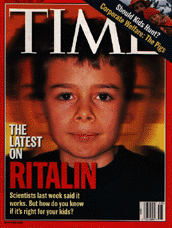 The Latest on Ritalin: Scientists
last week said it works. But how do you know if it's right for your
kids?
The Latest on Ritalin: Scientists
last week said it works. But how do you know if it's right for your
kids?
regarding a book, Boys Will Be Boys Or you can just drug them.
By George F. Will. A reaction is underway against drugging children
because they are behaving like children, especially boy children.
Colorado's elected school board recently voted to discourage what
looks like drug abuse in the service of an ideological agenda. The
board urged teachers and other school personnel to be more restrained
about recommending drugs such as Ritalin for behavior modification of
children, and to rely more on discipline and instruction.
One reason for the vote is that some school violence has been committed by students taking psychotropic drugs. But even absent a causal connection between the drugs and violence, there are sound reasons to recoil from the promiscuous drugging of children.
Consider the supposed epidemic of attention deficit/hyperactivity disorder (ADHD) that by 1996 had U.S. youngsters consuming 90 percent of the world's Ritalin. Boys, no parent of one will be surprised to learn, are much more likely than girls to be diagnosed with ADHD. In 1996, 10 percent to 12 percent of all American schoolboys were taking the addictive Ritalin. (After attending classes on the dangers of drugs?)
One theory holds that ADHD is epidemic because of the modern acceleration of life--the environmental blitzkrieg of MTV, video games, e-mail, cell phones, etc. But the magazine Lingua Franca reports that Ken Jacobson, a doctoral candidate in anthropology at the University of Massachusetts, conducted a cross-cultural study of ADHD that included observation of two groups of English schoolchildren, one diagnosed with ADHD, the other not. He observed them with reference to 35 behaviors (e.g., "giggling," "squirming," "blurting out") and found no significant differences between the groups.
Children, he says, tend to talk, fidget and fool around--"all the classical ADHD-type behaviors. If you're predisposed to label any child as ADHD, the distracted troublemaker or the model student, you'll find a way to observe these behaviors." So what might explain such a predisposition?
Paul R. McHugh, professor of psychiatry at Johns Hopkins, writing in Commentary, argues that ADHD, "social phobia" (usual symptom: fear of public speaking) and other disorders certified by the American Psychiatric Association's "Diagnostic and Statistical Manual of Mental Disorders" are proliferating rapidly. This is because of a growing tendency to regard as mental problems many characteristics that are really aspects of individuality. So pharmacology is employed to relieve burdensome aspects of temperament.
"Psychiatric conditions," says McHugh, "are routinely differentiated by appearances alone," even when it is "difficult to distinguish symptoms of illness from normal variations in human life," or from the normal responses of sensitive people to life's challenges. But if a condition can be described, it can be named; once named, a distinct disorder can be linked to a particular treatment. McHugh says some experts who certify new disorders "receive extravagant annual retainers from pharmaceutical companies that profit from the promotion of disorders treatable by the companies' medications."
The idea that most individuals deficient in attentiveness or confidence are sick encourages what McHugh calls pharmacological "mental cosmetics." This "should be offensive to anyone who values the richness of human psychological diversity. Both medically and morally, encumbering this naturally occurring diversity with the terminology of disease is a first step toward efforts, however camouflaged, to control it."
Clearly some children need Ritalin. However, Ken Livingston, of Vassar's department of psychology, writing in the Public Interest, says Ritalin is sometimes used as a diagnostic tool--if it improves a child's attention, ADHD is assumed. But Ritalin, like other stimulants such as caffeine and nicotine, improves almost everyone's attention. And Ritalin is a ready resource for teachers who blur the distinction between education and therapy.
One alternative to Ritalin might be school choice--parents finding schools suited to their children's temperaments. But, says Livingston, when it is difficult to change the institutional environment, "we don't think twice about changing the brain of the person who has to live in it."
This is an age that tries to medicalize every difficulty or defect. Gwen Broude, also of Vassar, believes that the rambunctiousness of boys is treated as a mental disorder by people eager to interpret sex differences as personal deficiencies. Danielle Crittenden of the Independent Women's Forum sees the "anti-boy lobby" behind hand wringing about the supposed dangers of reading the Harry Potter novels, which feature wizardry, witchcraft and other really neat stuff.
The androgyny agenda of progressive thinkers has reduced children's literature to bland gruel because, Crittenden says, there is "zero tolerance for male adventurousness." The Potter books recall those traditional boys' books that satisfied boys' zeal for strife and adventure. Today, Crittenden says, that zeal causes therapists--they are everywhere--to reach for Ritalin.
Harry is brave, good and constantly battling evil. He should point his broomstick toward Colorado, where perhaps boys can be boys.
(Editor - Just a reminder of the piece we reported re: the 11/98
article on Ritalin in Time magazine.
The Latest on Ritalin: Scientists last week said it
works. But how do you know if it's right for your kids? In the
11/30/98 issues of Time magazine, a report on this scary drug
often used to shut down the human spirit, especially in boys.) Also
see books Health-ADD.
A musical group from New York call themselves Abstinence. They are using the medium of music and theater to expose the current beliefs around "truth", which in many cases, especially medical ones, only proves to be temporary. One song talks about drugging the elderly and because no-one sees it, no-one does anything. I wonder if they saw it if people would still do anything about it. Not understanding that if we don't die, we're likely to become one of those who ends up being drugged for a good portion of our later years. Here's what they say, "One-percent of senior citizens have been diagnosed as psychotic. Why is it that 52% of all nursing home patients are given anti psychotic medication? That doesn't sound scientific to me. That seems like a form of social control. We're keeping people from living. We're keeping them shut out. Why don't you go tell all these hospitals and all those nursing homes to stop drugging people. The side effects are devastating. And none of it is curative. None of it. Do you think electric impulse Thoreau is curative? Where you give the brain a seizure which permanently ruptures and hemorrhages the brain so the person forgets what they were depressed about. I don't understand why it's so hard to challenge this concept. Where did it come from. Where did this big effort where pharmaceutical companies and the AMA and the FDA and private doctors and the medical community are all doing such an enormous job to denigrate something that is natural and has a long history of safety and efficacy - people taking responsibility for their health." This reminded me of the information in "Dead Men Walking" where, when a person is put to death through lethal injection, it "looks" like simple death when in fact the person's system is drugged so it can't react to the implosion that goes on in the person's body. Or a baby is circumcised against his wishes and some still believe he won't remember the terror that's on his face or in his scream while it's happening. It makes me question just how "civilized" this civilization is. Thinking about all those sci-fi movies with the droids with those glazed-over eyes and no emotion. Maybe those aren't droids. Maybe they're us after a couple more decades of the pharmaceutical influence in our lives. Think about it.
This effort to numb out comes from all directions. I attended the 1996 Supertournament of Champions wrestling tournament in February. I saw many wearing "No Fear" T-shirts. For those who don't know, it's a clothing line of shirts, pants and caps called "No Fear". The have a whole line of T-shirts with different statements that encourage No Fear. Numb out young. I remembered the story of the Samurai who knows fear yet doesn't suppress it and draws it from behind him to put it out in the front, placing it on the tip of his sword. He uses his fear and cuts with it. At the match, they had an airbrush artist who would put designs of mussel bound bulldogs and such on T-shirts. I decided to get my own made. It says, "No Fear, No Tears, Die Numb". Several people came up to me at the match and said they liked it. One dad, who had two sons in the competition, said he wanted to produce more of them. Go for it, I said. In fact, it's open for anyone to use, as long as they don't try to limit its use by trying to copyright it. I would like grade and high school kids everywhere to really understand what it means to start numbing out at such an early age and the serious impact it will have on the rest of their lives. And, maybe it will bring a few of you back to life - with all of your fear, pain and sadness. And to feel your joy.
This numbing out supports our lack of action towards the problems our planet in facing. They have not gone away. We know that public media is controlled. Whatever government, schools, medical profession says must be right. However, hundreds of things the medical profession has said are okay in the last 30 years, have proven not to be.
The study of feedback has given us a new of tool. Every single
branch of government continues to hold secrets that we should know
about. The group Abstinence took the computer and starting charting
all of the primary major health issues over the last 30 years. And
they took all of policies from the government, FDA, National Academy
of Science and many other agencies and noted what they had decided on
major issues. They then reviewed the information on those same issues
so reported on a radio show in New York called "The Wake-Up Call".
Here's the phenomena. In 98% of the cases, history shows that the
government has been wrong. They supported DDT, valcon shields,
silicon breast implants, and on and on. Now, after a 100 major
issues, wouldn't you think that if you were wrong 98% of the time,
the people would do something about it. Unfortunately, the
manipulation of major media, even talk-shows, is so well-done that
most of us fail to do anything about it when the news breaks, and
soon forget that it even happened. This demonstrates how important it
is to access independent media and ideas. The Net (before the
government controls kill it) and a series of small publications can
still be found at some of the more open bookstores. Some radio
programs like "The Wake-Up Call" on WBAI 99.5 FM from 6-10AM Mon-Thu
in New York. Try to get it syndicated in your city. Accurate
information outside of opinion is the only way we can truly find
solutions to the problems of our planet. We are proud to have access
to the research of Dr. Gary Null who studies the underlying assault
on deceitful people within our government and society that are
manipulating people by misinforming them. Please refer to the listing
of organizations/publications in the Resource section under Alternative
Information and then take some action. Any action. Do
something!
Let's Hear it for Testosterone!
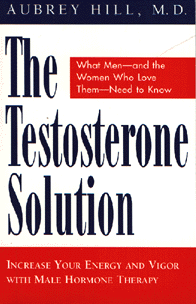 Hill, Aubrey, The Testosterone Solution: Increase your
energy and vigor with male hormone therapy, Prima Publishing,
www.primapubilshing.com
1997
Hill, Aubrey, The Testosterone Solution: Increase your
energy and vigor with male hormone therapy, Prima Publishing,
www.primapubilshing.com
1997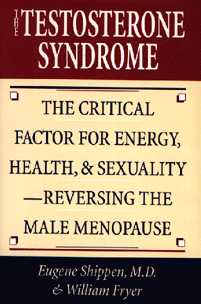 Shippen, Eugene & Fryer, William, The Testosterone
Syndrome: The critical factor for energy, health &
sexuality-reversing the male menopause, M. Evans
& Co, 1998
Shippen, Eugene & Fryer, William, The Testosterone
Syndrome: The critical factor for energy, health &
sexuality-reversing the male menopause, M. Evans
& Co, 1998
Of the fifteen leading causes of death in the U.S., it's a man's privilege to lead in every single category, yet little governmental interest is directed to reducing the incidence of death for boys/men. Men die at higher rates in every area of cancer except breast cancer. (Lip/oral 3.6M/1.3W; digestive organs 38.6M/23.1W; respiratory 59.3M/25.4W; genital 16.1M/12.0W; urinary 7.7M/3.0W; Leukemia 6.3M/3.9W; Other lymphatic & hematopoietix tissues 9.4M/6.2W; all other & unspecified sites 21.3M/13.8W.) And, according to the National Cancer Institute 1993, for the period 1950-1991, women's rate of death from breast cancer increased 2% to 16.7/100,000 while men's rate of death from prostate cancer increased 25% to 13.3/100,000. This ratio shows that 1.25 women die of breast cancer for every man who dies of prostate cancer. And it is the biggest cancer killer of men and ever great for black men. Furthermore, women have a slightly better survival rate from breast cancer (80.4) versus men from prostate cancer (79.6). Even with this information, considerably more attention and funding has been given to breast cancer (which is deserved attention), with little or no attention, and no federal health care provisions given to prostate or testicular cancer (which hits the virtually unaware adolescent population), which also deserves attention!
The Men's Defense Assoc of Forest Lake, MN contends that "gender gap" in health care works to the disadvantage of men. It points out that Congress has already been pressured to appropriate more than four times as much funds for breast cancer research as for prostate cancer research. In 1993, The National Cancer Institute spent $213.7 million on breast cancer research while $51.1 million was spent on the study of prostate cancer. Another group, the National Coalition for Free Men, issued a study showing that men's health has dramatically decreased over the past 70 years. In 1920, the group says, the life span of men and women was about the same. Today, women live 6 years longer on average.
Even when the Men's Health Network tried (and succeeded) to get a week specified for men's health for the year 1994, it was a major undertaking. It consumed too much time and effort to make it happen since.
In California, sufferers of prostate cancer lost a $36 million battle when the Assembly turned down a proposed 2-cents-a-pack cigarette tax that would have raised funds for research and treatment. The measure, which would have put the men's disease on equal par with breast cancer for cigarette tax revenues, was just three votes shy of the 54-vote, two-thirds margin needed for passage.
Sacramento Bee - A study released recently suggests that implanting radioactive "seeds" in men with early prostate cancer is not only as effective as surgery, but it also carries fewer side effects.
And, while many men hate to discuss the subject with their doctors, researchers say they should because impotence can be a sign of more than just age. Sexual problems often increase when a man is depressed; impotence also can be caused by heart disease, high blood pressure or high cholesterol. All these diseases can be life threatening, but they also can be treated.
Stanford University. Two prominent scientists, saying prospects
are dismal for a male pill, want men to share the burden of birth
control by freezing and banking their sperm, they getting
vasectomies.
On the issue of consumer protection and hazardous warnings, here's a new one Those yellow sponges with the green plastic fibers on the back for scrubbing pots-"Pot Scrubbers"-should be kept far away from our birds, fish, reptiles, cats and dogs, hamsters and whatevers. (Ed - We haven't been able to find any such product, by the name "Pot Scrubbers" nor any sponge that includes a listing of ingredients or a warning about a danger to anything.)
Proctor & Gamble, in its continuing search to make America look clean and smell great, has a new "improved" version of the sponge on the market that kills odor-causing fungi that get in the sponge after a few uses. They make a big deal out of this innovation on the outside packaging. (Ed. - It didn't make sense that P&G would go into this market. They only enter high volume markets where they can control the number 1 and 2 spot. Sponges is not in that league. So, I called P&G. They don't make a sponge product says Davon Jones (513.945.8432).
A friend of a friend of mine used one of these sponges to clean the glass on a 200-gallon aquarium. The abrasive backs are good for removing algae and smutz that collect on the inside of the tank. He refilled the tank and after the water had time to condition and rid itself of chlorine, he reintroduced his tropical fish collection of some 30 fish. Within five hours of putting the fish back in the tank, they were all dead!
Some began to die after only 30 minutes. He removed the survivors to another tank but they all died. Retracing his steps to clean the tank, the only thing that was different was using that new kind of sponge-he'd used the regular old Pot Scrubbers for years.
Lo and behold he discovered on the back of the packaging in about the finest print you could put on plastic a description of the fungicide (Triclosan) in the sponge and the warning in tiny boldface letters, "Not for use in aquariums. Keep away from other pets."
Thanks for the warning, Proctor & Gamble. It seems the fungicide is a derivative of the systemic pesticide-herbicide, 2-4-D, more popularly known as Agent Orange, the chemical we sprayed all over Southeast Asia during the Vietnam War that many veterans and war refugees say did them permanent damage to their lungs and nervous systems. (Ed. It is also an ingredient in such products as Colgate Total toothpaste.)
The package warning goes on to say they fungicide cannot be washed from the sponge even if it is placed in the dishwasher (in which case Agent Orange is now all over your dishes and drinking glasses). And, if you think it's there to kill disease-causing bacteria like Salmonella from contaminated chicken meat, think again-it's not an effective enough bactericide to kill those kind of bugs.
By the way, the same chemical in the sponge (Triclosan) is used now in many of those popular antibacterial, anti-viral disinfectant liquid soaps (Ultra-dawn Antibacterial dishwashing soap) and hand cleaners that are flooding the market. (Ed. This is true. Triclosan is the active ingredient in most of the antibacterial soaps we saw, including Dial for Kids. The only warning we say on any of these was on the Kids product which said not for consumption. The email we received didn't give any contact numbers to call and complain, which always makes me suspicious, almost guaranteeing a hoax. So, I've added the following contact numbers for those antibacterial soaps that contain Triclosan: Suave, Helene Curtis, 800.598.5005; Soft-soap by Colgate, 800.255.7552, Dial for Kids, 800.258.DIAL. There was one "Hand Sanitizer", Purell by Gold Industries that used 62% ethyl alcohol as the active ingredient which meets OSHA standards and leaves no harmful residue. And, that's it.)
If you are interested in looking at the research, you can go to
Quantex Laboratories on line at
http://www.quantexlabs.com/page0004.htm (Ed. - I haven't had access
to check this out. It's probably a hoax also. It's interesting that
all these products with Triclosan in them have no warning labels if
there really is any danger - washing my hands without water and then
eating food. It just doesn't make sense.)
Prevalence of Aspirin Use to Prevent Heart
Disease
Preventive Services Task Force (USPSTF) recommended that regular low-dose aspirin should be considered for men aged greater than or equal to 40 years who were at substantially increased risk for MI and who lacked contraindications to the drug (4). To assess the prevalence of self-reported, regular aspirin use to prevent heart disease among adults aged greater than or equal to 45 years, both the Wisconsin and Michigan state health departments collected information in their Behavioral Risk Factor Surveillance System (BRFSS) surveys (in 1991 and 1994, respectively). This report summarizes the results of these surveys, which indicate that a high proportion of adults in those states used aspirin regularly to prevent heart disease.
The BRFSS is a random-digit-dialed survey of the U.S. civilian, non institutionalized population aged greater than 18 years. In 1991, the Wisconsin BRFSS included the question "Do you take aspirin regularly to reduce your chances of having a heart attack?" In 1994, Michigan asked "Do you take aspirin daily or every other day to reduce your chance of a heart attack or stroke?" Responses were obtained from 548 and 1137 adults aged greater than or equal to 45 years in Wisconsin and Michigan, respectively. The overall prevalence of aspirin use was 19.5% in Wisconsin in 1991 and 25.3% in Michigan in 1994. Because univariate results in each state were similar, the data were combined for more detailed analyses using SUDAAN. Statistical associations between explanatory variables and aspirin use were tested using the chi-square test of association. For those variables with an overall statistically significant association with aspirin use (p less than 0.05), pairwise comparisons of age-adjusted prevalence estimates were performed (Table 1). Age-adjusted estimates were calculated using the pooled age distribution from both data sets. A composite risk-score variable also was constructed using a combination of three risk factors--current smoking, overweight, and inactivity.
The overall prevalence of aspirin use in the combined data was 23.3% (Table 1). Prevalences increased directly with age from 16.0% of persons aged 45-54 years to 22.0%, 28.8% and 33.3% for persons aged 55-64, 65-74, and greater than or equal to 75 years, respectively. Age-adjusted prevalences were higher for men (27.7%) than women (20.1%), current (25.5%) and former smokers (28.8%) than respondents who never smoked (18.0%) (Table 1), and persons who engaged in regular leisure-time physical activity (26.3%) than persons who were inactive (20.8%). There were no statistically significant associations between aspirin use and race, education, income, overweight, or composite risk-score. Prevalences were similar when the analysis was stratified by sex. Reported by: MJ Reeves, PhD, H McGee, MPH, AP Rafferty, PhD, Michigan Dept of Community Health, Lansing. P Remington, MD, E Cautley, MS, Wisconsin Div of Health and Family Svcs, Madison. Editorial Note: Approximately 40% of all deaths in the United States are attributed to CVD, and annual direct and indirect costs of CVD have been estimated to be $259 billion (5). In addition to population-based approaches to reducing CVD risk factors, prevention efforts should include efficacious and cost-effective therapies to both reduce the incidence of MI (primary prevention), and to prevent further cardiac events in persons who have had a CVD event (secondary prevention). Although the effectiveness of regular aspirin use for primary prevention has not been determined for the general population, aspirin use for secondary prevention has been documented to be effective and is widely recommended (6).
Although the 1989 USPSTF guidelines were specific to high-risk men, the findings in this report indicate that a high proportion of women reported taking aspirin regularly, despite the absence of any specific recommendations about prophylactic aspirin use in women. Some physicians may be prescribing aspirin for their female patients despite the USPSTF recommendations, and some women may be deciding independently to initiate aspirin use.
The proportion of adults in this survey who reported taking aspirin to reduce their risk for heart disease was higher than in a similar study in New York (7), possibly reflecting differences in physician practice patterns or differences in the age structure of the two populations. Other factors related to the prevalence of aspirin use for heart disease prevention include the underlying prevalences of CVD risk factors, of preexisting CVD, and variations in public awareness about prophylactic aspirin use.
Although this study did not distinguish between aspirin use for primary or secondary prevention, some of the findings suggest that aspirin use was more common among health-conscious persons. For example, the prevalence of aspirin use was higher among physically active persons. However, prevalence of aspirin use was higher among the elderly, men, and current and former smokers, suggesting that aspirin may have been used for secondary prevention.
The findings in this report are subject to at least three limitations. First, data about regular aspirin use for heart disease prevention was self-reported. As a result, respondents may have over reported aspirin use if they confused prophylactic use with the use of aspirin-like drugs (e.g., ibuprofen) for reasons other than CVD prevention. Second, because aspirin use for primary or secondary prevention was not distinguished, the extent to which the results represent use for primary prevention or for therapy initiated following important cardiovascular events (e.g., MI or stroke) could not be determined. However, based on National Health Interview Survey findings, the prevalence of ischemic heart disease was 6.1% for U.S. adults aged 45-64 years and 15.3% for adults aged greater than or equal to 65 years (8). By assuming that all patients with ischemic heart disease use aspirin regularly, most regular aspirin users in Wisconsin and Michigan probably were using this drug for primary prevention. Third, although the data were adjusted for age and separate analyses were performed for men and women, some of the findings may be confounded by unmeasured CVD risk factors (e.g., hypertension and high cholesterol).
Since collection of the BRFSS data in Wisconsin and Michigan, the second USPSTF report concluded that evidence was insufficient to recommend for or against prophylactic aspirin use for primary prevention of MI in asymptomatic men or women (9). Data were insufficient to determine whether the reduced risk for MI in low-risk men is outweighed by the potential risks for adverse effects associated with long-term aspirin use (e.g., gastrointestinal ulceration, hemorrhagic stroke, and sudden death) (3,9). The findings in this report indicate that substantial proportions of the populations in Wisconsin and Michigan used aspirin regularly to prevent heart disease, despite the lack of conclusive data on the relative benefits and harms when used for primary prevention. The state health departments in Michigan and Wisconsin are conducting studies to determine whether patients consult their physicians before initiating regular aspirin use for primary prevention of CVD and whether their prophylactic aspirin use is appropriate given their risk factor profile and possible contraindications.
References
1. Antiplatelet Trialists' Collaboration. Secondary prevention of
vascular disease by prolonged antiplatelet treatment. Br Med J
1988;296:320-31.
2. Fuster V, Cohen M, Chesebro JH. Usefulness of aspirin for coronary
artery disease. Am J Cardiol 1988;61:637-40.
3. Anonymous. Final report on the aspirin component of the ongoing
Physicians' Health Study. N Engl J Med 1989;321:129-35.
4. US Preventive Services Task Force. Aspirin prophylaxis. In: US
Preventive Services Task Force. Guide to clinical preventive
services. 1st ed. Baltimore, Maryland: Williams and Wilkins,
1989.
5. American Heart Association. Heart and stroke facts: 1997
statistical update. Dallas, Texas: National Center, 1997; AHA
publication no. 55-0524.
6. Smith SC Jr, Blair SN, Criqui MH, et al. Preventing heart attack
and death in patients with coronary disease. Circulation
1995;92:2-4.
7. Murray JA, Lewis C, Pearson TA, Jenkins PL, Nafziger AN.
Prevalence and population characteristics of aspirin use in the
primary and secondary prevention of cardiovascular disease. Am J
Epidemiol 1995;141:S71.
8. Adams PF, Marano MA. Current estimates from the National Health
Interview Survey, 1992. Vital Health Stat 1994;10:189.
9. US Preventive Services Task Force. Aspirin prophylaxis for the
primary prevention of myocardial infarction. In: US Preventive
Services Task Force. Guide to clinical preventive services. 2nd ed.
Baltimore, Maryland: Williams and Wilkins, 1996.
Clear urine
Run-of-the-mill urine is pale yellow and has little odor (with one notable exception -- keep reading). Assuming you don't have any pain with urination, you get an A+ for bladder health and hydration! Pale, clear-looking urine means that you are adequately hydrated. (Drinking water dilutes the yellowish pigment in urine.)
Bright-yellow or yellow-orange urine
Neon yellow or orange urine is often a sign of dehydration. If your Mellow Yellow-colored urine is paired with headaches and/or lethargy, it's time to drink some fluid. However, you might be perfectly hydrated, and your urine is simply reflecting that you're taking a multivitamin (B and C are big culprits for bright-yellow urine) -- an effect that should only last a few hours.
Pink or red urine
Don't freak out if your urine takes on a reddish tinge, Schlaudecker says. Eating blackberries, rhubarb or beets can tint your urine red. Interestingly, if you are anemic, you're more likely to have reddish urine after eating beets, he says. Other culprits: Iron sorbitol (a medication for anemia), ibuprofen or phenazopyridine (a med for urinary tract infections). The Mayo Clinic also reports that Ex-lax and some antipsychotic drugs can cause reddish urine.
Bloody urine
If your urine is reddish for reasons other than food or medication intake, it might be caused by blood. Still, this could be benign if you've engaged in strenuous exercise (such as distance running), because this often causes bloody urine. But it's best to call your doctor, especially if it lasts more than 24 hours. Schlaudecker says a simple urine test can determine what's going on. Don't panic: Blood in urine is often a sign of infection, he says, which can easily be treated. And if it's something more serious, catching it early is the best protocol.
Brownish urine
Your urine might look brown if you eat a lot of fava beans, rhubarb or aloe, according to the Mayo Clinic. Other culprits: anti-malaria drugs, nitrofurantoin (taken for UTI infections) or methocarbamol (taken to relax muscles). Brownish urine can also be a sign of a liver disorder, like hepatitis or cirrhosis -- however, there would be other symptoms as well (like a yellowing of the skin).
Cloudy, whitish urine
Whitish, cloudy urine is often a sign of infection (such as a UTI), Schlaudecker says. Phosphate crystals can also cause white urine (though Schlaudecker admits he's not sure why anyone would be consuming them), as well as the anesthesia medication propofol. Definitely call your doctor if your urine is cloudy and accompanied by pain or burning, or if you have fever or feel the need to urinate more often than usual.
Smelly urine
If you've been munching on asparagus, don't be surprised if your urine has a sweet, sulfur smell. When you eat asparagus, your body has to break up some volatile organic compounds that are pretty pungent, Schlaudecker says. Interestingly, it's determined genetically: Some people can break these down and some can't, and it's perfectly normal either way. Aside from this one exception, urine shouldn't have much of an odor -- if it does, it might be a sign of a UTI.
Painful urination
Simply put: If it hurts to pee, something is going on, such as an
infection, kidney stones or (for men), a prostate issue. Never be
embarrassed to call your doctor about urination problems.
Source: living.aol.com/morning-rush/coulter-unleashed-today/2378941?icid=200100397x1216010369x1201074023
Vegetarians Have Beef With Tennessee
Governor
From Designer Milk To 'Green' Cows:
Predictions For Milk And Dairy Products In The Next 50 Years
Study Records Elevated Mercury From Diets
Heavy With Fish
Pig Genes Modified For Organ Uses
Patients With Chronic Illness Not Benefiting From Advances In Care
Computerised
Guidelines Are No "Magic Bullet"
Many Don't Grasp Info on Risks of Medical
Research
Grandpa's Diet Affects Grandkids'
Well-Being
Scales Tip In Favor Of New Food Pyramid
Bread Crust And
Stuffing Rich In Healthy Antioxidants
Renewing CPR Skills Benefits Others
Iron Deficiency In The United States
2,000 Extra Steps A Day: Colorado
Walking It Off
Healthy Living: Get Moving! Add Daily
Exercise To Fitness Mix, Experts Say
Experts: Get Flu Shot Now If You're At
Risk
Patients Often Miss Out On Nutrition
Counseling, At Cost To Health
Blood-Test Labs Bypass Doctors, Spurring
Debate
In a suburban strip mall midway between downtown Denver and
health-conscious Boulder, there is a place where people can go and
order blood tests to detect any number of medical problems, like high
cholesterol, diabetes, HIV and prostate and ovarian cancer.
Source: www.intelihealth.com/IH/ihtIH/WSIHW000/333/8012/346997.html
A new study across 20 countries reveals for the first time just how much bigger the risk of premature death is for men than women, whatever their age.
In the US in 1998, for example, men up to the age of 50 were on average twice as likely as women to keel over, and the risk remained greater even for those men who had made it to their eighties and beyond. Less surprisingly, the discrepancy in death rates between men and women was most extreme between the ages of 20 and 24, when three times as many men die as women.
"Being male is now the single largest demographic factor for early death," says Randolph Nesse of the University of Michigan in Ann Arbor.
Heart disease to homicide
Nesse says that the finding has important implications for public health. "If you could make male mortality rates the same as female rates, you would do more good than curing cancer," he says.
Nesse's colleague Daniel Kruger estimates that over 375,000 lives would be saved in a single year in the US if men's risk of dying was as low as women's.
The US data is backed by death rates in countries including Ireland, Australia, Russia, Singapore and El Salvador. Nesse and Kruger found that everywhere they looked, it is more perilous to be male. In Colombia for example, men in their early twenties are five times as likely to die as women of the same age. Even more surprisingly, the pattern holds for every major cause of death, from car crashes to heart disease to homicide.
For external causes of death, such as accidents, the difference between the sexes is greatest for young adults. But the second largest disparity between men and women in the US occurs when they reach their sixties. At that point in their life, men are 1.68 times as likely to die as women, mainly due to disease.
Reproductive success
The gender gap has widened dramatically in recent years, but it has been on the rise since the 1940s, at least in the US, France, Japan and Sweden, where historical figures are available. The researchers suggest a number of factors that could be to blame for the trend.
Population growth and globetrotting have led to a rise in infectious diseases. And improvements in public health and medicine may have benefited women more than men: for instance, far fewer women now die at a relatively young age during childbirth. Technological advances may have played a part, too, by supplying men with more powerful guns and ever faster cars.
Nesse and Kruger say that sexual selection could also partly explain some of the differences. Men generally invest less in their children than women do, and as a result may compete more vigorously with each other for potential mate.
This rivalry could be what drives them to take greater risks, with
the result that men have evolved greater reproductive success at the
expense of longevity. The same may be true for chimpanzees and even
fruit flies, says Nesse.
Source: Betsy Mason, www.newscientist.com/news/news.jsp?id=ns99992586
Study Hints Lean Means Longer Life
Flu Vaccine Good For All Adults, Not
Just Elderly Or Ill
Study Offers New Insights Into Overcoming
Disparities In Health
Paying Cash for Medical Visits
Improved Drug Regimens Help Patients Take
Their Medicine
New York Men Tell It Like It Is
Compiled from focus groups held around the state, the report serves as the basis of understanding men's concerns in designing healthcare services that are more male-friendly. As one man put it, "As a man, if I'm sick, I have to be real sick…'can't get outa bed sick,' I have this thing inside me that says, `I can't go; I don't wanna go (to the doctor).' Other men mentioned insensitive attitudes among healthcare practitioners as the problem.
Source: The report was compiled by Joseph Zoske, a
men's health promotion specialist in Albany, NY. A free copy of the
report can be obtained by calling Ellen Mullen at 315.437.7026, Ext.
123, or at Ellen.Mullen@cancer.org
Men Needed To Solve Nurse Shortage
Improving Communications And
Support For Doctors, Patients And Partners
Husbands Of Fibromylagia Sufferers In
Slightly Poorer Health, More Depressed Than Other Men
Kellogg Foundation Releases Landmark Report
on Men's Health
The report examines health statistics, provides the social context, and includes case studies. The document concludes: "It is difficult to dispute the health crisis among men of color in the United States. Black men have a lower life expectancy at birth than White males and the lowest life expectancy of any racial group of either gender."
The Kellogg Foundation is one of the largest philanthropic
organizations in the United States. The 30-page report can be
obtained free of charge by calling 800.819.9997, or by going to the
website: www.communityvoices.org
Climate change linked to disease
epidemics
A team of researchers led by Drew Harvell at Cornell University have completed a two-year study into climate-disease links. "What is most surprising is the fact that climate sensitive outbreaks are happening with so many different types of pathogens - viruses, bacteria, fungi and parasites - as well as in such a wide range of hosts including corals, oysters, terrestrial plants and birds," Harvell says.
Co-researcher Richard Ostfeld, an animal ecologist at the Institute of Ecosystem Studies in Millbrook, New York adds: "This isn't just a question of coral bleaching for a few marine ecologists, nor just a question of malaria for a few health officials - the number of similar increases in disease incidence is astonishing. We don't want to be alarmist, but we are alarmed."
The US team found evidence for a variety of routes for climate warming to adversely affect disease spread. For instance, warmer winters could reduce seasonal die-off of many pathogens and their carriers, or allow them to move into areas that were previously too cold. Other possibilities include the spread of pathogens that thrive on warmer water, the joining of pathogen and potential hosts populations previously separated by climate factors.
The researchers examined a number of human diseases whose spread
researchers have connected to warming, including malaria, Lyme
disease, yellow fever and others. Most involved the expanded range of
carriers into higher latitudes. The authors concede that such
connections are controversial because countless factors besides
climate, such as economics and failed prevention measures, play roles
in the spread of human diseases. Men Talk.
Source: Mark Schrope, Journal reference:
Science (vol 296, p 2158) www.healthlinkusa.com/getpage.asp?http://www.newscientist.com/news/news.jsp?id=ns99992438
HHS Issues New
Statistical Look At Women's Health
Editor's Note: Two things of interest about this
story: 1. Is there going to be such a report on
men? Doubtful, because that list shows men leading in all 10 top
killers of people in the U.S. Things that generally don't kill like
osteoporosis and asthma, seem to be more important, so they get all
of the press.This is just one example of why having a Men's Health
Commission is important. 2. It is from the Harvard Medical
School's InteliHealth.com web site. If you want to know about why
that's important, click
here.
Tinea (Ringworm, Jock Itch, Athlete's
Foot)
Why Does Eating Ice Cream Give Me a
Headache?
What's It Like to Stay in the
Hospital?
In Folding Proteins, Clues To Many
Diseases
Why do doctors and
surgeons use stitches?
Declining Physical Activity Levels Are
Associated With Increasing Obesity
Regular Exercise And Blood
Pressure
The symptoms may resemble those of the so-called male menopause, but Lincoln believes the condition can affect men of any age when stress causes testosterone levels to plummet. If he's right, it's not just women who have their hormonal ups and downs.
Lincoln first pinpointed the syndrome in Soay sheep. In the autumn, the rams' testosterone levels soar and they rut. In the winter, testosterone levels plummet and they lose interest in sex. High testosterone is supposed to mean more aggression. But the rams were more likely to injure themselves when testosterone was low.
So Lincoln monitored the activity of eight rams, such as how often they struck out with their horns. As testosterone levels fell, the rams changed from competent males who addressed each other in a ritualistic fashion, to nervous, withdrawn animals that struck out irrationally, he says.
Reindeer and elephants
Red deer, reindeer, mouflon and Indian elephants also show clear signs of irritable male syndrome when testosterone levels fall off at the end of their breeding seasons, says Lincoln. "The mahouts sometimes starve the elephants after the musth, or tie them up to keep them under control."
But what does this mean for people? Here the evidence is shaky, Lincoln admits. But it's clear that testosterone has a major impact on human behaviour.
The brain is loaded with receptors for testosterone and its conversion products. What's more, Richard Anderson, also at Edinburgh, has found that when men who cannot produce testosterone come off hormone replacement therapy, they become irritable and depressed. Their mood improves when they resume treatment.
Lincoln thinks that stresses such as bereavement, divorce or life-threatening illnesses could send testosterone levels plummeting. There are few human studies on stress and testosterone, he says, but numerous studies on animals, including primates, show that testosterone levels fall when stress sends corticosteroid levels skywards.
Men behaving sadly
"It's right on the money," says reproductive endocrinologist David Abbott of the Wisconsin Regional Primate Research Center in Madison. "Testosterone effects have been missed. When a bloke gets grumpy and irritable, [researchers] try and explain it only in terms of cortisol levels and depression. They ignore the fact that testosterone levels are probably falling too."
But David Handelsman, an expert on male hormones at the University of Sydney, is more cautious. He says the changes in testosterone levels in normal adult men are far smaller than the dramatic swings seen in Soay rams, with one notable exception: levels fall by at least 90 per cent in men who undergo castration for advanced prostate cancer.
"The wives notice it first," says Keen-Hun Tai of the Peter MacCallum Cancer Institute in Melbourne. "The men become more withdrawn, but more emotional. They laugh and cry more easily."
Clearly, the jury's still out when it comes to people. But if irritable male syndrome does affect men, diagnosing it won't be easy. It's far from clear what normal testosterone levels are, while extra doses of the hormone may increase the risk of heart disease.
But the syndrome could still be worth investigating. "Instead of putting stressed men on Prozac, a little testosterone may do the job," says Abbott.
Source: Rachel Nowak, Melbourne. Exclusive
from New Scientist Print Edition, Journal reference:
Reproduction, Fertility and Development (vol 13, p 567)
www.newscientist.com/news/news.jsp?id=ns99991980
Tips for Vibrant
Health at Every Age
Source: The Saturday Evening Post,
www.ustoo.org/screamoutput/index.html
Losing Weight More Than Counting
Calories
Source: FDA Consumer, www.ustoo.org/screamoutput/index.html
Blood test labs bypass doctors
Not An Olympian? Get in Shape
Anyway
UNICEF Discriminates Against Men
Source: The UNICEF website at
www.unicefusa.org/alert/casia/landing.html
As a result of this mindset, international health programs often exclude men from their services. For example, Luis Benavente, MD, recently wrote this letter to the British Medical Journal:
"Although our international programs are usually focused on mothers and children, we included adult men in a survey in the Amazon Basin. Anemia prevalence rates were much higher among men than among women. But iron supplementation was available only to women. Since anemia is associated with low productivity, it could be expected that by preventing anemia among men, men could bring more food to the table.
Men's health has an impact in the health if the entire family, thus interventions based in the assumption that adult men are a low-risk group should be revised."
Source: bmj.com/cgi/eletters/323/7320/1014#EL1
Call UNICEF at 800-FOR-KIDS (800-367-5437). Let them know what you
think.
Women's Growing Health Insurance
Gap (10/01, p. 8)
Dear Mr. Service:
I am writing to convey my concerns about your recent blurb on "Women's Growing Health Insurance Gap."
The article correctly cites the fact that there are more uninsured men in the United States than uninsured women.
The article then goes on to quote Jane Lambrew of George Washington University, who identifies several sub-groups of women who are more likely to be uninsured, but neglects to mention any sub-groups of men who are more often uninsured.
Lambrew then goes on to make recommendations how health insurance for women can be improved, but again ignores the greater uninsurance problem among men.
This line of logic is based on the implicit assumption that the health of women is more important than the health of men, even though it's men who die 6 years sooner than women in this country. Such an assumption borders precariously on anti-male bigotry.
Sincerely,
Normally, the hormone insulin regulates glucose output and shifts blood sugar into the cells for energy. But when so much glucose is being released that insulin can't properly suppress it, that's tantamount to insulin resistance. Insulin resistance is a common harbinger of diabetes.
Previous studies have shown that lifestyle changes resulting in the reduction of abdominal fat can control blood sugar and insulin production. Diet and exercise have been found to lower levels of insulin, more so than diet alone.
The new report was presented at the annual meeting of the American Diabetes Association in Philadelphia.
Source: Men's
Fitness, 10/01
Source: Men's
Journal, 10/01
Female Hormone Stunts Male Growth
Scientists studying the genetic cause of height in males have found two genes involved in the production of male and female sex hormones determine height in more than a third of men.
"It's likely that the estrogen, which determines when you stop growing, is the final arbiter," said Stephen Harrap, a professor in the department of physiology at the University of Melbourne.
Professor Harrap and Justine Ellis, whose research is published in the international Journal of Clinical Endocrinology and Metabolism, found the genes could cause a height difference of up to 4.2cm.
They examined the genetic profiles of 413 men and 335 women and found a gene called CYP19 and another on the male Y chromosome affected men's height, but the link was weak in women.
CYP19 triggers production of aromatase, a protein that converts the male sex hormone testosterone into estrogen. Men and women produce testosterone and estrogen, but in different amounts. Professor Harrap said production of estrogen stopped teenagers growing and that height was set by the speed and length of growth. Previous studies have shown short men are more at risk of heart attack and cancer.
Professor Harrap hopes his research will lead to new insights into the growth process and the causes of osteoporosis in males. "Height is essentially a cosmetic issue, unless you bump into doors a lot or can't grab the tram rail," he said.
Source: Stephen Brook, The Advertiser (Australia)
www.theadvertiser.news.com.au/printpage/0,5942,2824677,00.html
Project Aims to Find Out about Men's Health
Needs
A limited amount is known about men's health, the board says, although recent reports indicate that on average men die six years younger than women.
Men are more likely to suffer accidents, injuries on the road and incidents in the workplace. They also have a higher rate of suicide, which is the leading cause of death among young men.
Ms Biddy O'Neill, the board's health promotion manager, said that while women's health had been placed at the top of the strategic agenda for health services in Ireland, men's health had had no specific targeted strategy.
With funding of £70,000 from the Department of Health and Children, the board is to undertake a region-wide consultation programme with men about health issues. A researcher to carry out the work is to be appointed shortly.
As men are not inclined to talk about their health, a proactive approach will be taken.
"We'll be targeting workplaces, sports organisations, community groups, wherever we can access men. We have to go to them because men are not great at coming to meetings," Ms O'Neill said.
A campaign to advise building workers of the dangers of working in the sun without adequate protection was highly successful when health board personnel went on site.
"We were telling them of the need to wear T-shirts and apply protection to the skin and we got a very good response. We even had calls from other building sites asking us to visit them. Now if we'd held a meeting in some hall and asked men to come along, it would not have been as successful," she said.
The research project follows the establishment by the board of a working group in 1999 to review the area of men's health and identify opportunities for development. The findings will be sent to the Department and will help inform a strategic approach to men's health at national level.
Source: Irish Times, www.ireland.com:80/newspaper/ireland/2001/0523/reg3.htm
Australian National Men's Health
Policy
The program also highlighted The Western Australian Pit Stop program as an example of a health program that has decided to go to where men are in an effort to increase men's involvement with health services.
A transcript of the program is available from the 7.30 Report
website at www.abc.net.au/7.30/s309211.htm
More information about the Centre for Advancement of Men's Health
can be found at their website: www.mannet.com.au
The Health Department of Western Australia issued a press release
about the Pit Stop program which can be downloaded from: www.health.wa.gov.au/press/view.cfm?id=153
The Wind Chill Factor: Impressive on TV,
but not in real life
Beefy male centerfolds mirror muscle
obsession
New polio symptoms can arise 30 years
later
Men's increased risk of severe asthma
cited
Waist circumference can help diagnose disease
Men help other men stay strong; family
helps women
Aerobic fitness slows down artery
disease
Man remarkably fit despite his
heaviness
Keeping yourself safe from drug
dangers
In faltering economy, older workers'
health at risk
Why can't women park a car -- is it depth
perception?
HMOs: 'Come and see us when you get
sick'
British Men Gobble the Chips, Skip the
Fish
What Are The Fit Or Fat Rules For Smart
Eating?
A: Smart eating the Fit or Fat way means eating a diet that is:
We use a circle divided into four sections to represent each of the four food groups -- the Milk Group, the Meat Group, the Bread and Cereal Group, and the Fruits and Vegetables Group. We use the Four-Food-Group system as the basis of the Fit or Fat Target Diet because it satisfies the most fundamental of our four basic rules -- eat a balanced diet.
We illustrate the other three rules -- low-fat, low-sugar, and high-fiber -- by adding inner circles to the Four-Food Group circle, making it into the Fit or Fat Target. Then, focusing on one food group at a time, foods are graded so that the best ones in each group are in the center of the Target and the worst ones are on the periphery. All the foods above the horizontal center line are graded according to their fat content. Foods below the horizontal center line are graded according to their fiber and sugar content.
For example, foods such as shredded wheat, skim milk and most vegetables are placed in the center of the Target, because they are low-fat, low-sugar, and high-fiber. But things like mayonnaise and butter are placed in the periphery of the Target. Other foods are placed somewhere inside the Target, depending on their fat, sugar and fiber content. For example, white meat is lower in fat than ground beef, so white meat is closer to the center of the Target than ground beef is.
The goal is to aim for the bull’s eye of the Target. This doesn’t mean that every single food you eat must come from the center. A healthy mix is expected. But, the fatter you are the more important it is that you stick closely to the center ring. Occasionally straying to the periphery only to quickly jump back to the center.
Examples of foods that are near the center of the Target:
Meats:
Breads and Cereals:
Milks:
Fruits and Vegetables:
Adapted from The Fit or Fat Target Diet by Covert Bailey.
www.healthcentral.com/FitOrFat/fitorfatfulltext.cfm?id=33659
Brain Scan Gives Baby's-Eye View of The
World
Children's Art Reflects Internal
Emoional World
mind, said Dr. Suzanne Dixon. www.healthcentral.com/news/newsfulltext.cfm?ID=44886&src=n49
Doctor Says Lasik may be Okay for Children,
Too
Infant Injuries Spur High Chair
Recall
New Moms Breast-Feed with Support from
Baby's Dad
Nutrition Lacking in Pregnant
Teens and Women
Scientists find Gene Possibly Linked
to Autism
Short Babies have Higher Adult Blood
Pressure
Australian Moms Calming Kids Down
with Antihistamines
How Stressing Women's Health Research
Over Men's Health Research Hurts Women
Buckling under the weight of enormous political pressure, the National Institutes of Health established the Office of Research on Women's Health. The purpose of the ORWH was to assure the inclusion of women in medical research, and was doled out $20 million a year to fix things up. It has now become clear that the hysterical campaign to helpwomen's health research play catchup is based on a superbly-crafted myth.
• Men face a 50% greater risk of dying of cancer than women. Yet reports from the National Cancer Institute reveal that as early as 1989, males represented only 43% of all participants in cancer research, and females 57%. Hardly an example of the "routine exclusion" of women.
• Beginning in 1988, the NIH began to analyze research funding on a sex-specific basis. That year, men's health garnered 4% of the NIH research budget, compared to 10% for women's health. Since then, the margin is swung even more sharply in favor of women. Where's the beef, Senator Mikulski?
Maybe political partisanship is excusable. But distorting the facts in official NIH documents is not. Repeatedly, I have come across NIH reports that are simply false. Last year, for example, the NIH issued a fact sheet on women and mental health research that categorically claims, "Historically, research studies were conducted with only men." But according to the 1979 NIH Inventory of Clinical Trials, women participated in 96% of all clinical trials in that year.
As a result of the belief that women's health research was shortchanged, men's health research has been pushed aside. Men now represent only 37% of participants in NIH research studies, according to the recent report on Women's Health from the General Accounting Office.
So why does this end up hurting women? Because of the historic neglect of men's health, men now die 6 years sooner than women. That translates into 40,000 premature male deaths each year. Many of these men are in their 20s, 30s, and 40s. They have wives and children.
Their children grow up without a daddy. And their wives lose the family breadwinner. When their widows reach their 70s and 80s, they are at four times greater risk of being placed in a nursing home, to spend their final years alone. Is this what we want for the women of this country?
Edward E. Bartlett, Senior Policy Advisor, Men's Health America,
Rockville, Maryland eba@intr.net
Women Feel Their Health Issues are
Ignored.By Karen Pallarito
Elected officials do not care enough about women's health issues, at least in part because most of these officials are men, according to results of a new survey of women around the US.
The survey found that most women do not think media and medical researchers care enough about women's health either.
Sponsored by the Kaiser Family Foundation and Lifetime Television, the survey included a national sample of 500 adult women and is the first of 12 in a year-long effort to find out what American women think and their concerns regarding healthcare policy.
"What we've learned in this first survey is that women feel that elected officials haven't given enough attention to women's healthcare concerns. Why? Women feel it's because women's health is not valued in our society and because most of the people making these decisions are men," said Project Director Marion Sullivan.
Overall, 70% of women said that elected officials do not give enough attention to women's health issues, and 44% said the same about the media. Almost two-thirds felt that medical research overlooks health concerns that are unique to women.
The survey reports that women think the most important policy issues are expanding healthcare coverage for individuals without insurance and making Medicare financially sound for the future. Other issues ranked as ``very important'' included prescription drug coverage for the elderly, increased research spending for women's health concerns, and helping families pay for long-term care.
In addition to the monthly surveys, which will address ``a wide range of issues affecting women's health,'' Sullivan said, the joint project between Kaiser and Lifetime Television includes a daily information program on the television network and on Lifetime's Web site at http://www.lifetimetv.com. The Web site also provides details about each survey and additional information about what women can do to voice their concerns and advocate for health issues.
"We're trying to empower women to become more informed participants in the healthcare debate, and to become better advocates for their own healthcare in a system that's becoming increasingly difficult to have your voice heard," Sullivan explained. "All over the country there are women who live and breathe these issues every day, but don't know how to make themselves heard," she added.
"Women want their healthcare concerns considered and given greater
priority in Washington and in the state capitals," she concluded.
"And women were a major force in the 2000 elections."
It's Time to End the Gender Gap in
Health Care
It's a well-known fact that women, on average, outlive men by six years. Between 15 and 44, men's mortality rates are more than twice as high as women's. These shortfalls are noted in ''Healthy People 2010,'' a report issued this year by the Surgeon General and the US Department of Health and Human Services outlining a health care agenda. But Edward Bartlett, senior policy advisor of a group called Men's Health America, points out that no action has been taken to address such concerns. There are no men's health committees or task forces; the HHS has an Office of Women's Health but no Office of Men's Health.
The reason for this neglect, Bartlett said at the press conference, is the belief that gender equity requires more attention to women's health concerns. A decade ago, claims that women had been shortchanged by a male-dominated medical establishment caused an outcry from activists and legislators. As it happens, these allegations were little more than a politically driven myth.
In 1990, the Congressional Women's Caucus raised a ruckus over a government report showing that less than 14 percent of the money spent by the National Institutes of Health in 1987 went to female- specific illnesses. Yet less than 7 percent of the NIH budget was allocated to male-specific problems; the rest was spent on studying diseases that afflict both sexes.
But weren't those diseases studied almost exclusively in men? No. In 1979, the earliest year for which such data are available, 268 of the 293 NIH-funded clinical trials included both male and female subjects - and of the remaining 25 studies, 13 were all-female.
An analysis of medical literature in the Medline database shows a similar picture. Over two-thirds of clinical trials in the 1970s and 80s included both sexes, while single-sex trials were almost evenly divided between all-male and all-female ones.
Women's ''exclusion'' from heart disease research has drawn especially harsh criticism. In fact, nearly a third of clinical trials of heart disease treatment and prevention in 1996-1991 were all-male. This was primarily because it often makes scientific sense to study a disease first in the population in which it occurs most often - and men under 65 are three times more likely to have heart attacks than women.
Remarkably, however, during the same period men were underrepresented as subjects in cancer-related trials (even though they suffer from cancer at higher rates than women).
Perhaps the biggest myth is that breast cancer research was put on the back burner due to sexism. Former congresswoman Patricia Schroeder of Colorado once commented that male researchers are ''more worried about prostate cancer than breast cancer.''
Yet from 1981 to 1991, the National Cancer Institute spent $658 million on breast cancer research and $113 million on prostate cancer. Long before the rise of breast cancer activism, medical journals published more reports on breast cancer than on any other type of cancer.
Thanks to the crusade to remedy perceived inequities, it seems that men's health is being short-shrifted. A May 2000 report by the US General Accounting Office shows that men now account for 37 percent of subjects enrolled in NIH research (down from 45 percent in 1994) and just 29 percent in cancer research. In recent years, both Republicans and Democrats have been sponsoring women s health measures such as minimum hospital stays for breast cancer surgery, while men are roundly ignored.
The myth of women's medical neglect has bred needless resentment in many women. It has also hampered efforts to improve health care for men, who are much less likely to get regular medical check-ups or to seek care promptly when they have symptoms of illness, and more likely to be uninsured. At Monday's press conference, Irvienne Goldson, a manager with the Men's Preventive Health Program in Boston, noted that fears of shortchanging women make it difficult for men's health programs to get funding.
But women and men are not isolated from each other. When men die prematurely, the women who love them are affected as well. Isn't it time to stop playing gender politics with medicine and redirect our energy toward providing better care for everyone?
Cathy Young, contributing editor at Reason magazine. Her
column appears regularly in the Globe.
1. Real men don't eat quiche (or go to doctors)
2. The little gland that can
3. Erectile dysfunction
4. Preventive health screenings
Each of these articles is followed by comments of members of a
men's health panel that convened June 7 in Chicago. Copies of the
report can be obtained by contacting: Ann Peterson, Business and
Health Special Reports, Medical Economics, 5 Paragon Dr.,
Montvale, NJ 07645-1742. Put the request on your business letterhead
and include the number of copies you would like.
 Thousands of Women Walked a Marathon in
Their Bras
Thousands of Women Walked a Marathon in
Their Bras
Discordant couples (couples in which one partner is HIV-positive and one is HIV-negative), singles dating, young people experimenting with early sexual encounters, and those involved in casual sex all need to understand some of the issues that may make oral sex more or less risky,. Some basic tenets: risk of HIV transmission is far less with unprotected oral sex than with unprotected anal or vaginal intercourse. Risk performing fellatio on an HIV-positive man may be small but distinctly present. Risk from fellatio is markedly increased if either semen or pre ejaculate is present in the mouth. The risk from receiving either cunnilingus or fellatio from an HIV-positive person is theoretical only. While there are very few cells in the mucous membrane of the mouth and throat that are vulnerable to HIV transmission, it does represent an important mode of transmission regardless of the lower risk factor, due to the frequency of occurrence. This is in contrast to the membranes of the rectum and vagina, which have a proliferation of cells, which are capable of acting as receptors for viral transmission.
There are four major factors contributing to the risk of transmission by having oral sex with an HIV-positive person:
The presence of active, untreated infections such as gonorrhea, Chlamydia, ulcerated herpes or syphilis, and even vaginal candidacies (thrush), will increase the level of white blood cells in the semen or cervio-vaginal fluids. This increase in blood cells is likely to increase the levels of HIV in these sexual fluids. Also, cuts and sores in the mouth, damaged gums and lips, can be sites for oral transmission of HIV. There are reports of individuals with gingivitis (a common gum disease in adults over the age of thirty, that can lead to bleeding, inflammation and abrasion) becoming infected after performing fellatio.
Despite guidelines recommending condom use during oral sex, the practice has been accepted by very few gay men and only a portion of females, though a greater number of sex workers are using it with their customers.
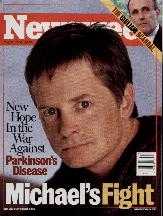 Michael's Fight: New hope in the war
against Parkinson's Disease
Michael's Fight: New hope in the war
against Parkinson's Disease
Men's Fear of Physicians, Washington
Times - By: Karen Goldberg Goff
"I think the primary problem was that this is a tough group to reach," says Dr. Sam Harrell, a family physician and one of the clinic's founders. "The great majority of the time a man comes into the office, it is because the woman in his life has kicked him in the tail to get him there." Indeed, women visit family physicians about 2 1/2 times as often as men, according to data from the American Academy of Family Physicians. A nationwide survey of 1,000 adults conducted by Men's Health magazine and CNN found that one-third of men would not go to the doctor even if they were experiencing chest pains or shortness of breath, two top indicators of a heart attack.
The National Men's Health Foundation estimates that nearly 7 million of the 87 million American men have not seen a doctor for a checkup in more than 10 years. "I hate going to the doctor," says Bob Eller, a 42-year-old Silver Spring businessman. "I had some mild chest pains, and my wife practically twisted my arm to get me to the doctor's office. I now go every couple of years for a physical, but I hate going. If you don't go, then you won't have to hear the bad news."
Avoiding the doctor can lead to worse news, however. It is important to have a relationship with a primary care doctor even if you are not sick, says Patrick Taylor, spokesman for the National Men's Health Foundation, a nonprofit organization that tries to educate and motivate men to take better care of themselves. "Men tend to only go to the doctor when there is something seriously wrong," Mr. Taylor says. "By then, they might have to rely on emergency care. When you are being wheeled into the ER, it is not exactly a place for an open dialogue." Men's perceptions of health care seem to be a mixture of fear, embarrassment and machismo, Mr. Taylor says.
The problem begins in the late teens and early 20s. Though women are taught the importance of seeing a doctor for an annual pap smear to detect cervical cancer, men have no such scheduled tests and, once they are on their own, no mother to press them into going. By contrast, reproductive issues such as birth control, childbirth and breast health generally ensure that women see a doctor at least once or twice a year. The fallout from that is that women usually are more amenable to seeing other specialists for various health problems, says Dr. Lanny Copeland, a family physician in Albany, Ga., and a board member of the American Academy of Family Physicians.
"We have done a good job of educating women about the importance of the pap smear and of family planning," he says. "And that has brought them into the office a great deal more than men. Men, particularly young men, just don't think anything is going to happen to them." (Editor - And the Health Services and educational system have done a lousy job educating boys about testicular checks, while spending a great deal of time and money educating the girls. Boys and men are left on their own by the same governmental and educational bodies that have spent millions making women aware of health hazards.)
"From 20 to 30, most men don't feel they need a doctor," says Dr. Matthew Mintz, an internal medicine specialist and professor of medicine at George Washington University. "You see a pediatrician every year until you go away to college. Then you go to the school clinic if you need something. After that, you are thrown out there on your own." The 20s should be a decade to educate oneself, Mr. Taylor says. It should be a time to establish a relationship with a doctor so when a man does need something simple, such as an antibiotic to treat a sinus infection, he will be able to get in to see a doctor as an established patient. While he is there, he can discuss other matters. "The 20s may be the Teflon years, but young men should get checked for testicular cancer and learn how to examine themselves," Mr. Taylor says. "They should start understanding the value of nutrition, about what bad eating and drinking habits can affect later. The 20s are more about information, not procedures." Dr. Mintz says two checkups should be enough to get a man through his 20s. However, by age 30, a man should see a doctor at least every three years or so, especially if he has a family history of such things as heart disease or colon cancer, which have a strong hereditary link, he says. "The risk of those types of disorders is stratified by decade," Dr. Mintz says. "High blood pressure can start then if we don't check it, as can diabetes and high cholesterol. Even if a man is a healthy, jock-type guy, he can have high cholesterol, which has a high genetic component."
Doctors recommend screening for those disorders by the late 30s or early 40s, particularly if there is a family history. Those without a strong family history can wait until age 50 to do annual tests for prostate and colon cancer, Dr. Copeland says. Mr. Taylor says black men need to be aware that they have a 66 percent higher incidence of prostate cancer and also have higher rates of high blood pressure and stomach, prostate and liver cancer than white men. "African-Americans, or anyone who is at high risk, should get screened for these things in their 40s," he says. The 40s also are the time to seriously think about heart health. Baseline tests such a stress test, a cholesterol test and an electrocardiogram (EKG) can help assess one's risk of a heart attack.
Through all the decades, it is important for men to recognize the signs of stress and depression, such as a racing heartbeat, loss of appetite, trouble sleeping or sadness that won't go away. "Mental health is one of the great, dark secrets that most men like to avoid," Mr. Taylor says. Even if men are reluctant to see a doctor, there are other tools they can use to at least get them thinking about their health. The wealth of information on the Internet can be a valuable tool, Dr. Copeland says. "I think the Internet is a good thing," he says. "The better educated the patient is, the easier my job is. Some doctors are offended when a patient comes into their office with something he has downloaded, but that is the way it is today." Dr. Copeland advises getting medical information from reputable sources such as hospitals, universities or medical association sites. "You had better be careful," he says. "There is some real garbage out there. But at least men are reading it, and it gets them in to see their doctor."
Another quick health-check tool is to take advantage of health
services that large companies sometimes offer. When the bloodmobile
or a free cholesterol screening is being offered in the cafeteria,
use it, Dr. Mintz says. "I definitely recommend office health," he
says. "Sometimes those tests are not totally accurate, but at least
it promotes conversation. Received from menshealth@egroups.com
1. Breast cancer screening
2. Cervical cancer screening
3. Chlamydia screening in women
4. Prenatal care in the first trimester
5. Checkups after delivery
6. Initiation of prenatal care
7. Frequency of ongoing prenatal care
8. Discharge and average length of stay - maternity care
9. Cesarean section
10. Vaginal birth after delivery
11. Management of menopause
12. Weeks of pregnancy at time of enrollment
These are the standards for men’s health:
0. No, that’s not a typographic error, as we understand it. There are 12 standards for women’s health, and none for men’s health.
Act now. Complain to your local HMO, elected representative,
whomever. Because people care about your life.
The Bad News:
Snippets on Men vs. Women Health Facts:
(Men/Women)
Other facts:
Information courtesy National Men's Health Foundation, 1999.
www.nationalmenshealthweek.org
Dietary Fat No Longer a Health Concern,
Says US Government
In a huge step forward, the US government has stopped
recommending that you restrict how much fat you eat.
The federally funded 2015
Dietary Guidelines for Americans
will be released later this year, but we now know that we won’t
be told to fear cholesterol or fat. We won’t be told we should
eat them – we just won’t be told to limit them, something
the guidelines have done ever since 1980.
This probably sounds completely topsy turvy to you. How did we get
things so wrong? (Editor: Actually I've been eating steak and
eggs for breakfast, every day since my stroke. I read "Why we get
fat" so haven't believed the lies the American Heart Association has
been spewing for years.)
Source: https://mail.aol.com/webmail-std/en-us/suite
Just a few years ago it was very simple - to keep your heart healthy, just keep the amount of fat in your diet low, and especially avoid saturated fats and high cholesterol foods.
But now we know that much of this “settled science” was shaky all along, if not outright mistaken. Accumulating evidence has slowly dragged our dietary experts out of their low-fat paradigm, and we find the official U.S. Dietary Guidelines in a state of flux.
The following articles summarize current thinking on dietary fats and the heart. If you’ve been trying to be a good citizen for many years, following official dietary recommendations as closely as possible, some of this information may surprise you.
1. Low-Fat Diets and the Heart
For over 30 years, the American Heart Association and the
government told us that fat is bad, and that a low-fat diet is the
keystone to a heart-healthy diet. Now? Not so much. More
2. Does the Ornish Diet Really Work?
If low-fat diets are no longer recommended by the experts, where
does this leave the ultra-low-fat Ornish diet? More
3. Saturated Fats and the Heart
That saturated fats are unremittingly bad for the heart has been a
cornerstone of dietary dogma for decades. However, accumulating
evidence strongly suggests that this dogma has been mistaken.
More
4. Dietary Cholesterol and Cardiac Risk
In February, 2015, Americans heard the startling news that
high-cholesterol foods, after decades of being relegated to the
forbidden list, are healthy again! Here's why. More
5. Polyunsaturated Fatty Acids and the Heart
If eating fats is now OK, but experts still urge limiting
saturated fats, that pretty much means that we'll be consuming lots
of polyunsaturated fatty acids (PUFA). And the experts say this is
great! But, it turns out, not all PUFA are the same. In particular,
the omega-6 PUFA may be a problem. Read about PUFA and the omega-6
controversy. More
6. Monounsaturated Fatty Acids - MUFA
Monounsaturated fatty acids (MUFA), such as are found in olive
oil, are widely regarded as being heart-healthy, largely thanks to
the success of the Mediterranean diet in reducing heart disease.
However, firm clinical evidence regarding MUFA themselves are
surprisingly sparse. More
7. Vegetable Oil and Heart Health
Current dietary guidelines call for the copious use of vegetable
oils to maintain heart health. But vegetable oils tend to contain
lots of omega-6 PUFA (which may increase cardiac risk). Worse,
vegetable oils are relatively easily oxidized under heat (i.e., with
cooking) which may render them dangerous. Be careful with that
vegetable oil! More
8. Dietary Guidelines And Global Warming
In the attempt to salvage its recommendations against saturated
fats, the government's Dietary Guidelines Advisory Committee has
taken the extraordinary step of expanding its mandate to include the
prevention of global warming. If you don't need to avoid saturated
fats for the sake of your heart, you need to avoid them for the sake
of our planet. Holy cow! More
What Does a Heart Healthy Diet Look Like?
Obviously, our idea of an "ideal" heart-friendly diet is in a
state of flux. However, a consensus is building that the
Mediterranean diet may come pretty close.
Source: heartdisease.about.com/od/reducingcardiacrisk/tp/Dietary-Fats-and-the-Heart.htm
2015 Dietary Guidelines Sneak
Peak: Cholesterol in Diet OK
A Peek into the 2015 Upcoming Dietary Guidelines
We're in a year ending in a 5 or zero, so it's time for the next iteration of the official Dietary Guidelines for Americans! Woohoo! What can we look forward to this year?
The first hints to come out of the committee working on this is that they are planning to dump the recommendation to limit dietary cholesterol, on the basis that there's no real science behind that recommendation. This has caused a huge stir!
Everyone is talking about it!
The thing is, there has NEVER been any science behind that recommendation!
20 years ago I used to yack about this with people on nutrition discussion groups. "Why oh why do they keep telling us to limit cholesterol in our diets?", I asked. "Many countries have never given this advice because....there is no reason to!"
The thinking back 50 years ago was that since they recently decided that cholesterol in the blood had something to do with heart disease, that eating cholesterol must be bad as well. So let's not eat it! It was more of a "thought" or an "idea" than anything we might want to call a "fact" or something that is "true".
So now they are apparently going to come out and say not to worry about cholesterol in the diet. But of course, they are still going to tell people to severely limit saturated fat and salt in the diet, both of which, again, are probably not necessary for most people.
Will it take another 20 years? 50 years? And what do we do in the meantime?
It wouldn't be such a big deal if so many things weren't based on the guidelines. Perhaps most importantly, our kids are given lunches that conform to the guidlines and are taught that this is the "right" way to eat. This will probably influence their food choices for the rest of their lives. There is still a bias away from fats and towards carbs, which our children pick up on.
Also, the Guidelines become the standard by which diets are judged. For example, I've written about the U.S. News and World Report Best Diets Web site, which ranks low-carb diets poorly not because of the science, but because the Dietary Guidelines insist that we need to eat lots and lots of glucose (in the form of starches and sugars). So then anyone who reads something like this concludes that cutting carbs is a dangerous thing.
If you're interested in this subject, I suggest checking out a scientific paper criticizing the Guidelines: “In the face of contradictory evidence: Report of the Dietary Guidelines for Americans Committee“
I'll be interested to see how the work on the new guidelines
progress, and I'll keep updating you.
Source: lowcarbdiets.about.com/od/Dietary-Guidelines/fl/2015-Dietary-Guidelines-Sneak-Peak-Cholesterol-in-Diet-OK.htm?utm_source=cn_nl&utm_medium=email&utm_term=Health%20Channel%20Newsletter&utm_campaign=healthsl&utm_content=20150630
5 Things Your Feet Are
Telling You About Your Health
But you don’t need to be a doctor to understand what your feet are saying about your health — you just need to know what warning signs to look for.
If you notice any of the following telltale signs or symptoms in your feet, you may want consult your doctor:
1. Dry, Flaking Skin
If the skin around your heel or on the ball of your foot is dry, cracked, or flaky, it may be a warning sign of a thyroid condition. Your thyroid gland produces hormones that control your metabolic rate, blood pressure, tissue growth, and nervous system functions. Dry skin can signify a problem with your thyroid.
Obviously, dry skin can also be the result of many less serious health issues, and sometimes your skin dries out simply because of changes in the weather. But if you notice that the skin on your feet is dry, and you also have symptoms like weight gain, numbness in your hands, or vision problems, set up an appointment with your doctor.
2. Balding Toes
While toe hair is more common and visible in men, women generally have fine hairs on their toes as well. If you notice that your toes are losing a little bit of hair, or if they’ve gone completely bald, it could be a sign of poor blood flow. One cause of insufficient blood supply to the feet and toes is peripheral arterial disease, or PAD for short.
When plaque builds up in the arteries of your legs, blood flow can be restricted and PAD can set in. If left untreated, PAD could lead to a heart attack or stroke, or even put you at risk for amputation.
If you suspect PAD, see a doctor. You can combat symptoms of PAD by giving up smoking, maintaining a balanced diet, getting regular exercise, and managing other health conditions, like hypertension or diabetes, that can contribute to the condition. If you already have it, try these foot care tips.
3. Foot Numbness
Like toe baldness, foot numbness due to a lack of blood flow in the area can be a sign of PAD. You’ve probably experienced numbness in your feet if you sat in one position for too long, or if you fell asleep at an awkward angle. But if it happens regularly or while you’re active, it’s a problem you shouldn’t ignore.
Foot numbness is also one of the more common symptoms of peripheral neuropathy related to type 2 diabetes, which affects millions of people. Diabetes complicates blood flow to your feet, which means wounds or cuts may take a longer time to heal, leaving you susceptible to infection.
If you have irregular bouts of foot numbness, and wounds on your feet just don’t seem to heal, talk to a doctor. To promote healthy blood flow and help prevent type 2 diabetes, be sure to get regular exercise and reach for healthy foods.
4. Black Spots or Lines Under Your Toenails
When someone steps on your toes or you drop a heavy object onto your foot, you’ll most likely have some toenail discoloration. Dark discoloration under your toenail isn’t typically concerning if you know what caused it.
But if you notice discoloration — or black and brown lines — under a toenail and you don’t remember injuring your toe, you might want to talk to your doctor. Dark, vertical lines under a toenail could be a sign of a hidden melanoma. We’re getting better at fighting cancer every day, but hidden melanomas often go overlooked and untreated.
Toenail discoloration could also be caused by a fungal infection, and while that’s much less severe than a potential cancer diagnosis, you should not ignore it. My advice is to check your toenails for discoloration every time you cut your nails.
5. Morning Foot Pain
A number of patients have asked me why they experience foot pain in the morning. Burning or shooting foot pain that happens when you take your first few steps out of bed can indicate of a number of potential issues.
First, it could be a sign of rheumatoid arthritis (RA), which inflames your joints and can cause pain even in the small joints of your feet. You can control foot pain and other of rheumatoid arthritis symptoms with medication and regular exercise; ask your doctor about this if you haven’t already.
It’s also possible that your morning foot pain is caused by plantar fasciitis, a condition caused by inflammation in the thick band of tissue that connects your heel to your toes; the band remains in a contracted state while you sleep. When you take your first steps of the day, the tissues stretch. If you’re dealing with inflammation, you’ll notice pain. Stretching your feet before you get out of bed, or doing foot-strengthening exercises, can help prevent the onset of plantar fasciitis.
Lastly, morning foot pain could be caused by a muscle cramp. As with plantar faciitis, you can avoid foot cramps by stretching your foot muscles before you get out of bed.
But cramps may also be a sign of dehydration or a lack of certain nutrients in your diet.
Cramps mean your body isn’t getting enough calcium,
potassium, and magnesium. You can help prevent morning foot cramps by
eating a balanced diet and drinking water before heading to bed.
Source: www.everydayhealth.com/columns/health-answers/things-your-feet-telling-you-about-your-health/?xid=aol_eh-arth_1_20151228_&aolcat=AJA&icid=maing-fluid%7Camp-bon%7Cdl1%7Csec1_lnk2%26pLid%3D54829861
5 Reasons You Should Eat Oatmeal Every
Day
In the tender movie Ratatouille, a food critic sits down at a restaurant table and tastes a dish of ratatouille, a combination of eggplant, zucchini, tomatoes, bell peppers, and a blend of seasonings and spices. As soon as his fork hits his lips, he’s immediately transposed to his childhood. He traveled back to sitting at his mother’s table, filling himself with this comforting dish laced with bursting flavors and, of course, love.
For me, oatmeal brings a Ratatouille moment. When I was a young child, my dad worked a very early shift. He used to wake me up in the wee hours of the morning and welcome me to the table with a steamy bowl of oatmeal. I never knew or cared about what time it was, I only knew that it was dark outside and that I was going to be surrounded by a dish of warmth. To this day, when I’m stressed or I’m just in the mood for a hug from my plate, I know I can count on the comfort of this guilt-free food that somehow feels indulgent.
Breakfast With Benefits
Since October 29 is National Oatmeal Day, it’s a good time to point out that if you’re not eating oatmeal, here’s why you oat-to:
1.Oats contain both soluble and insoluble fiber. Soluble fibers form a viscous gel that helps to lower cholesterol and stabilize blood glucose levels. The insoluble fiber in oats helps provide a “moving” experience by curtailing constipation and improving intestinal health. What a delicious way to make your heart and colon smile.
2.Oats make an easy, balanced breakfast. One cup of cooked oatmeal contains about 150 calories, four grams of fiber (about half soluble and half insoluble), and six grams of protein. To boost protein further, my favorite way to eat oatmeal is with a swirl of almond butter nestled within. This powerful combo will keep you away from that mid-morning visit to the vending machine.
3.Oats provide important minerals. Nutrient-rich oatmeal contains thiamin, magnesium, phosphorus, zinc, manganese, selenium, and iron.
4.Oats are naturally gluten-free, but check with manufacturers to ensure that their products are not made using the same equipment as other potentially contaminating grains. (Always purchase gluten-free products from reputable companies and read food labels carefully.)
5.Oats could help you control your weight by keeping you feeling fuller longer. Sadly, carbs are often shunned and feared by those looking to drop a few pounds, yet choosing whole grains could squash hunger and simultaneously provide that pleasant “ahhhh” feeling carb-lovers crave. But, as with any other food, be mindful of portion sizes.
Foods that bring back comforting memories are precious and should
be savored slowly. But proceed with caution when it comes to what I
call “Ratatouille impersonators.” Those are foods that
remind you of a past experience, but taste nothing like the original
dish. For example, let’s say you noticed an apple strudel in a
box on the supermarket shelf and it made you remember the way your
grandmother baked this recipe. If you purchased it, tasted it, and it
didn’t taste like grandma’s … then hopefully, you
ditched it! These impostors usually come with a side of angst,
leading to discomfort instead of comfort.
Source: www.everydayhealth.com/columns/bonnie-taub-dix-nutrition-intuition/reasons-why-you-should-eat-oatmeal-every-day/
Male Health:
Medical Concerns for Men
Information on male health conditions and specific health care needs that effect men.
Main Document
Male health is defined as health issues specific to human male anatomy. These often relate to structures such as male genitalia or to conditions caused by hormones specific to, or most notable in, males.
Male members of society have a number of health concerns specific to their gender. Other health concerns males experience are ones that affect not only the male gender. These health issues include Alopecia, Heart Attack, Hypertension, Heart Disease, High Cholesterol, Incontinence, and Urinary Tract Infection. Issues involving Ejaculation, the Prostate, and the Testes are others that males face. Health concerns related to Testosterone deficiency, Alcoholism, Narcotic abuse, Smoking, Obesity, and Stress are additional concerns for males in society today.
Male Health Check Up - Things Men Should Have Checked in Medical Exam - Disabled World - (2013-08-21).
Male Health Facts
Most men need to pay more attention to their health. Compared to women, men are more likely to:
Many of the major health risks that men face, like colon cancer or heart disease, can be prevented and treated with early diagnosis. Screening tests such as a Colonoscopy can find diseases early, when they are easier to treat.
The Vienna Declaration:
The Vienna Declaration serves as a plan of action for improving the state of men's health. The main points of the Vienna Declaration are:
Alopecia
Alopecia is better known as, 'Balding,' or, 'Baldness.' The American Medical Association states that ninety-five percent of persons with baldness have, 'Androgenetic Alopecia,' or, 'Pattern Baldness,' an inherited condition affecting approximately twenty-five percent of the male population. Androgenetic Alopecia affects most of these men before they reach the age of thirty, and two-thirds of all men prior to age sixty. This form of baldness may develop in older adults as well, with a resulting overall thinning of their scalp hair instead of complete baldness. (see our When will I go bald calculator)
Heart Attack
The American Heart Association states that Coronary Heart Disease (CHD) is the leading cause of death among Americans. Heart attacks are responsible for one out of every five deaths among American adults. The National Institutes of Health (NIH) states that 1.2 million heart attacks happen every year in America; 460,000 of them result in a fatality. Three-hundred thousand people die every year from a heart attack before they can receive medical attention. One estimate suggests that by 2010, heart disease will be the leading cause of death world-wide.
Hypertension
The force of blood through a person's arteries is known as their, 'Blood Pressure.' When their heart beats it pushes blood through their arteries with a certain amount of force, referred to as their, 'Systolic Blood Pressure.' When the person's heart relaxes after each beat, the force of the blood decreases; this is referred to as their, 'Diastolic Blood Pressure.' Hypertension is a chronically elevated state of pressure in a person's arteries. Persons whose blood pressure is above 120/80 mm Hg are diagnosed with Hypertension.
Hypertension is a risk factor for congestive heart failure, heart disease, impaired vision, stroke, and kidney disease. The higher a person's blood pressure is, the greater the risk the person is at. Hypertension that is untreated can affect all of the person's organ systems, and may shorten the person's life by ten to twenty years.
Heart Disease
'Heart Disease,' is a term that may be used to describe any disorder of a person's cardiovascular system which affects their heart's ability to function. Other names for Heart Disease include, 'Coronary Heart Disease (CHD),' 'Cardiovascular Disease,' or, 'Coronary Artery Disease.' Heart Disease causes congestive heart failure, angina pectoris, heart attack, ischemia, and sudden cardiac arrest. Arthrosclerosis is the most common form of heart disease, and is the result of continued narrowing of a person's blood vessels which supply both blood and oxygen to their heart.
High Cholesterol
Cholesterol is a soft and waxy fat particle that circulates through a person's blood, produced by their liver. Cholesterol is a common steroid, and is an essential building block for cell membranes. Cholesterol is needed for the formation of bile, something that helps people to digest fats, as well as in the formation of hormones, other steroids, and vitamin D. Many of the foods that are popular today contain cholesterol in amounts that the body does not need, increasing levels of it in the person's blood and causing the accumulation of plaque deposits in their arteries. Plaque buildup in a person's arteries can lead to Atherosclerosis, or Coronary Heart Disease, increasing their risk for stroke, heart attack, circulatory issues, and even death. (See our Blood Cholesterol Level Chart)
Male Incontinence
Enlargement of the prostate or, 'Benign Prostatic Hyperplasia (BPH),' is one contributing factor to male incontinence, although there are a number of factors that may contribute to it. Male incontinence may be considered Acute, Temporary, or Chronic. Acute male incontinence occurs suddenly, while Temporary male incontinence is transient. Chronic male incontinence is long-lasting. Male incontinence may be Congenital, in that it is present at the time of the person's birth, or it may be, Acquired,' in that it developed as the result of a disease or an injury the person experienced.
Urinary Tract Infection
Urinary tract infections are common and may occur in men, women or children. A urinary tract infection happens when bacteria enter the opening of a person's urethra and multiply in their urinary tract. A person's urinary tract involves not only their urethra, but their kidneys and bladder. Urinary tract infections that develop into kidney infections can become painful and quite serious.
Prostate Cancer
The clinical term for a cancerous growth on the prostate gland is, 'Adenocarcinoma.' A growing prostate cancer may spread to the interior of the prostate gland and tissues near to the gland, as well as to other, more distant parts of the person's body. Untreated prostate cancer can affect the man's lungs, liver, bones and additional parts of their body. When prostate cancer is confined to the prostate gland, it can often be treated successfully, making prostate examinations very worthwhile.
Enlarged Prostate (BPH)
Growth of the prostate involves hormones, not just prostate cells. The hormones affect various types of tissues, including both glandular and muscular tissues, and affect men differently. Because of the different affects on men, treatment of BPH is individual. Once BPH has begun it will continue in many cases unless therapy is started. There is no cure for BPH. There are two different ways that the prostate grows. One way the prostate grows involves multiplication of cells around the man's urethra, resulting in a,' squeezing,' effect. The second way the prostate may grow is described as, 'middle-lobe prostate growth,' where cells grow into the man's urethra and bladder outlet area, commonly requiring surgical intervention.
Erectile Health Issues
Men may experience some different erectile health issues. One of these issues involves Erectile Dysfunction. Another health issue men may face is Delayed Ejaculation. Premature Ejaculation is a health problem that some men experience. A health care provider can assist men in working with these health-related issues, as well as infertility.
Testicular Health Issues
There are several Testicular health problems that men may experience in life. Testicular Pain, or Scrotal Pain, Epididymitis/Orchitis, and Hydrocele are among the Testicular health concerns men may have. Varicocele, Peyronie's Disease, and Testicular Cancer are others. Men may also experience a Testosterone deficiency. Keeping appointments with a doctor is important, as well as annual physical examinations.
Alcohol Abuse
Alcoholism is a chronic disease that is also known as, 'Alcohol Dependence,' and is potentially fatal. Characteristics of an alcoholic include the inability to stop drinking despite psychological, medical or social complications; an increased tolerance for alcohol, drinking in excessive amounts, and the presence of withdrawal symptoms when the person stops drinking. The person may drink when it is dangerous to, such as when they drive, and their drinking may cause family and other social problems. Five times as many men are dependent on alcohol as women in America.
Narcotic Abuse
Narcotic abusers have both impaired function and a great amount of interference in their ability to live daily life. They develop social, mental health, and physical health problems that affect not only themselves, but their family members and friends. Estimates place the cost of treating, caring for, and loss of productivity on the part of narcotics users above ten-billion dollars each year; not including the cost of treating narcotic-user related diseases. Slightly more men than women use narcotics in America, particularly in urban areas.
Smoking
Smoking produces short-term effects such as respiratory illnesses like colds, coughs, pneumonia, and bronchitis. Children exposed to second-hand smoke from adult smokers experience higher rates of ear infections, asthma, and lower respiratory infections than children who live with non-smokers. The long-term effects of smoking are extensive, including a number of diseases that have been linked specifically to smoking. Smoking causes cancers of the lungs, mouth, throat, kidneys, bladder, stomach, pancreas, and cervix. Approximately one-third of all forms of cancer have been linked to smoking and tobacco use in general. Ninety-percent of lung cancers have been linked to smoking. Smoking causes Chronic Obstructive Pulmonary Disease (COPD), Emphysema, and Chronic Bronchitis, and also doubles the risk for stroke.
Obesity/Overweight
Persons who are overweight or obese risk developing coronary heart disease, diabetes, hypertension, cardiovascular disease, and gallbladder disease, as well as several other forms of illnesses. Obesity increases a person's risk for breathing issues, including asthma and sleep apnea. Persons who are overweight or obese are more likely to experience a stroke, or may suffer from depression or other forms of emotional disorders. The National Health and Nutritional Examination Survey found that ninety-seven million people in America are either overweight or obese.
Stress
As human beings we all experience certain amounts of stress. Stress can become an issue when we experience too much of it, and there are descriptions for excessive stress. Stress may be described as, 'Acute,' when it is short term, 'Episodic,' when it is experienced frequently, or, 'Chronic,' when it is experienced over long periods of time. Chronic stress is considered to be a serious condition and often times causes severe emotional and physical symptoms in people. An example of Chronic stress is Post-Traumatic Stress Disorder (PTSD) which can follow life-threatening events.
Men's Health Statistics
More than a third (34%) of men aged over 40 years report having one or more reproductive health problems, all being more common amongst older men.
Emerging research suggests that there are strong links between reproductive health disorders and chronic disease (such as cardiovascular disease and diabetes).
Testicular cancer is the second most common cancer in men aged from 18 to 39: in 2007, nearly 700 men were diagnosed with testicular cancer. But it is easy to treat and, when found early, nearly all men (over 95 per cent) are cured.
Most common in older men, about 1 in 7 males over 40 will suffer from problems with their prostate: the most common prostate disease is a non-cancerous growth (enlargement) of the prostate called Benign Prostatic Hyperplasia (BPH).
Klinefelter's Syndrome is the most common chromosomal disorder in men: about one in 650 men have an extra X chromosome, so instead of having the normal 46XY chromosomes in their genes, there are 47XXY or similar variations. It is suspected that as many as three quarters of men with Klinefelter's syndrome are not diagnosed and so remain untreated for life.
Related Information
1 - Male
Prostate Exam: PSA, DRE and PVR Tests : Dr. David Samadi
(2015/10/30)
2 - Male
Kegel Exercises Help Urinary Incontinence : Case Western Reserve
University (2015/10/30)
3 - Longer
Colonoscopies Equal Lower Cancer Rates : Veterans Affairs
Research Communications (2015/09/03)
4 - Circumcision:
Good or Bad Debate : Thomas C. Weiss (2015/08/12)
5 - Male
Reproductive Health Information : Disabled World (2015/06/02)
6 - Movember:
Male Health Issues Awareness : LUGPA (2014/11/01)
7 - Majority
of Male Adults Unaware of Osteoporosis Risk : National
Osteoporosis Foundation (2014/10/22)
Male
Health List : RSS
Source: www.disabled-world.com/health/male/
Jim Fixx, author of The Complete Book on Running, died while running.

 |